What 1,284 Reiki Sessions Actually Show: An Honest Read of a New Study on the Subjective Experience
A 2026 study analyzed 1,284 Reiki sessions and linked deeper felt experience to greater self-reported improvement. A Reiki Shihan's honest read of what the study does and doesn't show — association is not proof, and why that still matters.

Japanese Reiki Shihan (師範) · traditional Usui Reiki · 20+ years of daily practice

A large new study asked a question I find genuinely interesting: does how deeply a person experiences a Reiki session relate to how much their symptoms improve? As a Reiki Shihan (teacher), I want to walk through what this research does and does not show — plainly, without hype, and without turning a modest finding into an overblown promise. If you have ever wondered whether "feeling more" during Reiki matters, this one is for you.
According to reports, a 2026 study published in the Journal of Integrative and Complementary Medicine analyzed data from 1,284 Reiki sessions carried out in private practices in the United States. Participants filled out short surveys before and after their sessions, rating their health-related concerns. The researchers found that the subjective experience of receiving Reiki was associated with varying levels of symptom improvement — and that people who reported deeper relaxation and stronger internal experiences during a session tended to report greater improvement in both physical discomfort and emotional wellbeing.
What the Study Actually Did
Let me describe the design in plain terms, because the details are where honesty lives.
This was a large collection of before-and-after surveys. People rated how they felt before a Reiki session and again afterward, and they also rated how deep or strong their inner experience of the session was. The researchers then looked for a relationship between the two: did a deeper felt experience go along with a bigger reported change?
Two things are worth noticing right away. First, the numbers are self-reported. Participants described their own symptoms and their own experience — there is no blood test or scan here, only how people said they felt. Second, and most importantly, this design shows association, not cause. It can tell us that "deeper experience" and "more improvement" tended to appear together. It cannot tell us that the deeper experience caused the improvement.
Related: Ten Minutes of Reiki for 1,724 First Responders: What a Big Community Study Does and Doesn't Show explains this in detail.
Why the Findings Are Interesting but Not Proof
I want to be fair to this study in both directions, because it deserves neither dismissal nor exaggeration.
What is genuinely interesting is the size and the honesty of the question. Over a thousand sessions is a lot of data, and the researchers did not ask "does Reiki cure disease?" They asked a subtler, more careful question about the relationship between felt experience and reported change. That is the kind of modest, well-scoped question good research is made of.
But here is where I put on my old rational, former-engineer hat. An association between "feeling more" and "improving more" has several possible explanations, and the study cannot separate them:
- Perhaps a deeper experience genuinely helps a person feel more settled afterward.
- Perhaps people who were already going to feel better were, for that same reason, more open to a deep experience in the first place.
- Perhaps those who relaxed deeply simply remembered and reported their session more positively.
All three would produce the same pattern in the data. That is why one before-and-after survey study, however large, is a signal to look further — not a finished conclusion. Anyone who tells you this "proves Reiki works" is reading more into it than the study allows.
Related: 10-Minute Reiki Study: What the Chicago Data Shows explains this in detail.
What It Confirms About How I Teach
Even read this cautiously, the finding echoes something I have watched for years in my own practice: the depth of a person's experience matters. A rushed, distracted session and a slow, settled one are not the same, and the people who let themselves arrive fully — who stop bracing and actually rest — tend to be the ones who tell me afterward that they feel lighter.
This is exactly why, in the tradition I follow, we treat Reiki first as a calm, unhurried practice and not as a quick procedure. It is also why I never promise a specific result. What I can honestly offer is the conditions for a deep, restful experience — quiet, presence, no rush — and let each person's own experience be what it is. I will say plainly what I always say: Reiki is a practice of relaxation and calm attention. It does not diagnose, treat, or remove illness, and this study does not claim otherwise.
Related: Reiki, Mindfulness & Knee Pain: A 2026 Study explains this in detail.
FAQ
Q: Does this study prove that Reiki improves health?
A: No. It found an association between deeper felt experience and greater self-reported improvement across 1,284 sessions. Association is not proof of cause, and the measures were self-reported. It is an interesting signal worth studying further, not a settled conclusion.
Q: If I don't "feel much" during Reiki, is it not working for me?
A: Not necessarily. People experience Reiki very differently, and a quiet session with little dramatic sensation can still leave you rested. Please do not treat "feeling more" as a scoreboard — arriving and resting is enough, whatever the intensity.
Q: Should I choose Reiki over medical care based on studies like this?
A: No, and please be wary of anyone who suggests it. Reiki supports relaxation and wellbeing; it is not a substitute for medical care. Keep your medical concerns with medical professionals — a responsible practitioner will always say the same.
Q: Why do you, as a teacher, still value a study that "proves" nothing?
A: Because honest, modest research is how a practice earns trust the slow way. A careful question asked of a thousand sessions is worth far more to me than one dramatic claim. I would rather stand on cautious findings, plainly described, than on hype.
A Shihan's Closing Thought
The most valuable thing about this study is not its result but its posture: it asked a careful question, gathered a lot of data, and reported an association without overclaiming. That is the spirit I try to bring to teaching Reiki, too. I cannot promise you what a session will do. What I can do is make the space quiet, unhurried, and safe enough that your own experience — whatever it turns out to be — has room to happen. If deeper rest tends to travel with feeling a little lighter, as this study gently suggests, then the honest work is simply to help people rest more deeply, and let the rest follow.
If you would like to learn the practice itself, my online Reiki certification courses teach it from the ground up, at your own pace, with the same honest framing you have read here.
Sources & References
About the author
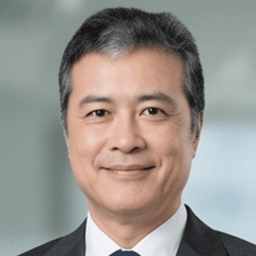
Japanese Reiki Shihan · traditional Usui Reiki, taught and certified in person
- ●Japanese Reiki Shihan (師範 / Reiki Master)
- ●Trained in the traditional Japanese Usui lineage
- ●20+ years of daily practice · teaches in person
- ●Former IT engineer & founder — grounded, no hype
I'm a Japanese Reiki Shihan who learned in the traditional Usui lineage and has practised every morning for over twenty years. My background is in IT and business, not the spiritual scene, so I write about Reiki plainly — what it is, how to practise it, and what it's honestly like — with no medical claims. Based in the Philippines, where I teach in person.
Enjoy this article?
Get honest, grounded writing on traditional Japanese Usui Reiki straight to your inbox.
Related Articles

Eight Practitioners, One Word That Matters: Reading a Preprint on Reiki in Hospitals Honestly
A new preprint interviews eight Reiki practitioners working in hospitals and hospices. An honest read of what qualitative research can show, what a preprint means, and why clear language is Reiki's real infrastructure.
8/11/2026
Free Reiki at a Community Mental-Health Clinic: What 91 Patients Reported, and What the Study Cannot Say
A 2025 pilot study gave free Reiki sessions to 91 low-income patients in a mental-health clinic. I read it honestly: real reports of feeling calmer, no control group, and why the free-of-charge design matters most.
8/11/2026
A Hospital Is Hiring a Reiki Program Administrator. What the Job Posting Actually Tells Us
A Boston hospital is hiring a Reiki Program Administrator, and the requirements reveal more about where Reiki really sits in healthcare than any press release does.
8/10/2026

272 Patients, No Difference: Reading the Largest Reiki Trial That Found Nothing
A randomised trial gave 136 heart surgery patients Reiki plus manual therapy and 136 quiet time. On every outcome measured, the two groups came out the same. Here is my honest reading.
8/7/2026
Twenty-One Nurses, No Control Group: What a Reiki Pilot Study Can and Cannot Tell Us
A 2025 mixed-methods pilot on Reiki and Japanese nurses found psychological stress measures improved while physical ones did not, and it had no control group at all.
8/6/2026
The Same Practice, Tested Two Ways: What a Dialysis Trial Without a Sham Arm Can and Cannot Tell Us
A randomised trial gave 74 haemodialysis patients ten Reiki sessions over five weeks and reported reduced pain, fatigue and itching. The control group received routine treatment only — no sham. Why that single design choice changes what the results can support.
8/5/2026