Reiki and the Burnout-Era Energy Healing Trend
Vogue Singapore's energy healing feature covers Reiki, Pranic Healing and Qigong. An honest read on what a wellness trend piece can and can't show.

Japanese Reiki Shihan (師範) · traditional Usui Reiki · 20+ years of daily practice
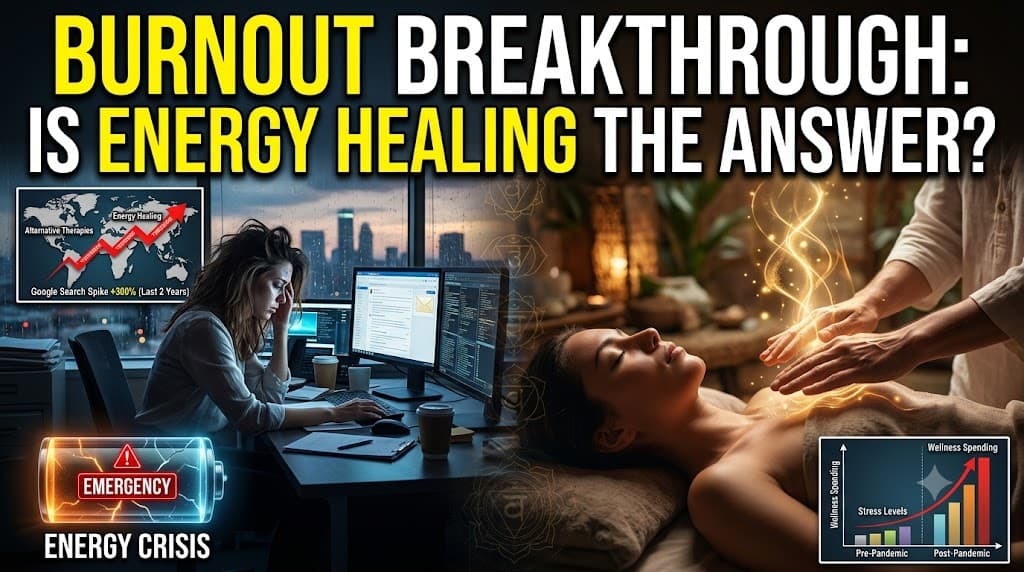
Energy Healing in the Age of Burnout: What Vogue Singapore's Feature Shows About Reiki — and What It Doesn't
A grounded look at Vogue Singapore's energy healing feature — and what it does and doesn't show about Reiki.
In June 2026, Vogue Singapore published a wellness feature on the resurgence of energy-healing practices among people worn down by chronic stress and overstimulation. The piece profiles three traditions — Pranic Healing, Reiki, and Qigong — through interviews with practitioners across India and Singapore, describing the sensations clients report and the framework each system uses. It is a trend and lifestyle article, not a scientific study, and it makes no claim to be one. Still, it is a useful window into how Reiki is being talked about today — and worth reading carefully if you are curious about the practice but want to keep your feet on the ground.
Part 1: What the Source Says
Key Points
The article frames energy healing as a response to modern burnout, then walks through three practices, each explained by a named practitioner. It reports the sensations clients describe and the beliefs behind each system. It cites no studies, sample sizes, or measured outcomes — the material is interviews and description.
| Practice (origin stated in article) | How it is described | Sensations clients reportedly notice |
|---|---|---|
| Pranic Healing (Vedic India; no physical touch) | Practitioner "scans" the aura for congestion or depletion, cleanses it, then re-energises chakras with fresh prana; each session begins with a consultation and a bioenergetic scan | Warmth, tingling, lightness, deep meditative calm; sometimes emotional release; described as "grounding" |
| Reiki (1900s Japan; "palm healing") | Begins with an in-depth conversation the practitioner treats as diagnostic, then moves to hands-on healing, often with crystals and a prepared environment; extended with meditation, affirmations, daily rituals | Calm, warmth, tingling, emotions rising and releasing |
| Qigong (described as Neolithic China; rooted in Traditional Chinese Medicine) | "Meditation in motion" — synchronising breath, slow movement, focus and intention; may include acupuncture; framed as shifting the nervous system from "fight or flight" to "rest and digest" | De qi — heaviness, warmth, or a mild electric tingle |
A recurring note in the piece is that these are positioned as complements to conventional medicine, not replacements: one practitioner explicitly states that Pranic Healing is not an alternative to Western medicine but a complement to it, working on balance and resilience rather than treating symptoms.
Vogue Singapore — "Ebb and flow: The rise of energy healing in the age of burnout" (23 June 2026) This summary was written from publicly available facts for explanatory purposes; see the original at the link above.
Part 2: What It Does — and Doesn't — Show
The most important thing to understand about this source is its category. It is a magazine wellness feature, not research. That is not a criticism — it is simply what it is, and reading it as if it were evidence would be a mistake in either direction.
What it fairly shows. It shows that energy-healing practices are drawing renewed interest, and it accurately conveys their traditions and vocabulary. It reports, honestly, that clients describe pleasant sensations — warmth, tingling, calm, a sense of lightness or emotional release. Those descriptions are real: people do report feeling more settled after these sessions. The article also does something responsible by including the practitioner's caveat that this is a complement to, not a substitute for, conventional medical care.
What it cannot show. Because there is no study here, there is nothing to conclude about why people feel better, or whether the effect comes from the specific technique versus rest, attention, a calm room, and the expectation of relief. There is no comparison group, no sham or placebo control, no blinding, and no measured before-and-after data. Interviews with practitioners are, by nature, accounts from people invested in the practice — valuable for understanding what a session involves, but not designed to test whether it works beyond relaxation.
A few framings in the piece are worth reading as beliefs rather than established facts. The idea that "before a physical issue manifests, it often exists as an energetic disturbance," or that balancing chakras "positively influences physical health," are statements of a tradition's worldview. They describe how a system understands the body; they are not demonstrated mechanisms, and the article does not present evidence for them.
For context, independent scientific bodies remain cautious here. The U.S. National Center for Complementary and Integrative Health (NCCIH) describes the research on Reiki as limited and considers the evidence insufficient to conclude it is effective for any health condition — the "evidence is limited / inconclusive" posture that a grounded reader should keep in mind. That is not the same as saying nothing happens; it is saying the careful answer is we don't have strong proof, and honesty means holding that line.
A few terms, defined plainly for first-time readers: prana (life-force energy in the Vedic tradition), chakra (energy centres said to correspond to organs and emotional states), de qi 得氣 (in Chinese practice, a felt sensation of heaviness or tingling), and Reiki 霊気 — from rei (universal) and ki (life-force energy).
Part 3: A Grounded Practitioner's Take
Reading a piece like this, I notice how naturally energy healing gets wrapped in mystical language — "something greater than logic," auras, life force. I understand why. But it is not how I came to this work, and I think the honest framing matters.
I didn't arrive at Reiki through the spiritual world at all. The person who first told me about it was already successful in business — someone getting real results in the real world, not a "spiritual" type in the slightest. That shaped my very first impression: Reiki, to me, had nothing to do with the mystical image most people expect. I came to it as a former engineer would, wanting to see whether it changed anything in practice before I decided what I believed.
So when I read an article like this, I don't need it to prove a grand mechanism, and I'd be wary of anyone who claimed it did. What I recognise in the clients' descriptions — warmth, calm, a feeling of lightness, emotions settling — is the ordinary, valuable experience of the nervous system slowing down. In the traditional Japanese Usui stream I was taught, that is largely the point: you relax, you connect, you let the day's tension loosen. The Five Precepts (五戒 / Gokai) — just for today, do not anger, do not worry, be grateful, work diligently, be kind to others — are not a cure for anything. They are a quiet daily discipline that helps a person feel steadier. My own morning practice these days is about five minutes. That is not a small confession; it is the honest scale of the thing.
Where I'd gently push back on the article's tone is the suggestion that healing is about elaborate ritual, careful environments, and intensity. In my experience the opposite is true. Relaxation matters more than effort, and a short, unforced session is enough. If Reiki leaves you feeling lighter and calmer, that is a genuine and worthwhile thing — and it is also exactly what it promises, no more and no less. I'd never dress it up as treatment for illness, and I'd steer anyone with a medical concern to a doctor.
FAQ
Q: Does this Vogue article prove that Reiki works? A: No — and it doesn't try to. It is a wellness feature built on interviews and description, with no study, control group, or measured results. It shows that people find these practices calming and are turning to them; it cannot show anything about medical effectiveness. The careful scientific position remains that evidence for Reiki is limited and inconclusive.
Q: People in the article report warmth and tingling. Is that "energy"? A: Those sensations are commonly reported, and they're real experiences. But the article can't tell us their cause. They may come from the specific technique, or from rest, calm surroundings, focused attention, and expectation. A grounded practitioner is comfortable saying we don't fully know, and doesn't need to over-explain a pleasant, relaxing experience.
Q: Is Reiki a treatment for stress, burnout, or illness? A: No. Reiki is not medical care, diagnosis, treatment, or a cure, and it shouldn't replace it. Many people find it helps them feel relaxed and more settled, which is worthwhile on its own terms. Anyone dealing with burnout or a health condition should still see a qualified medical professional.
Q: The article makes energy healing sound very spiritual. Do I need to believe in all of that? A: Not to feel the calming, relaxing side of a session. Some people approach Reiki through a spiritual lens; others, myself included, came to it plainly and practically. You can be curious, keep your skepticism, and simply see whether it leaves you feeling lighter — that's a perfectly reasonable way in.
The Bottom Line
- The source is a June 23, 2026 Vogue Singapore wellness feature framing energy healing as a response to burnout, profiling Pranic Healing, Reiki, and Qigong through practitioner interviews.
- It fairly shows renewed interest and accurately conveys each tradition's vocabulary and the calm, warmth, and lightness clients report — and it responsibly notes these are complements to, not replacements for, medical care.
- It cannot show why people feel better: there's no study, no control group, no measurement, and framings like "an issue exists as an energetic disturbance before it manifests physically" are a tradition's worldview, not a demonstrated mechanism.
- The honest scientific posture (per the U.S. NCCIH) stays "limited and inconclusive" — which isn't "nothing happens," just "no strong proof."
What's real and worth having is the ordinary calm of a nervous system slowing down — no grand mechanism required, and no substitute for a doctor.
Sources
About the author
Japanese Reiki Shihan · traditional Usui Reiki, taught and certified in person
- ●Japanese Reiki Shihan (師範 / Reiki Master)
- ●Trained in the traditional Japanese Usui lineage
- ●20+ years of daily practice · teaches in person
- ●Former IT engineer & founder — grounded, no hype
I'm a Japanese Reiki Shihan who learned in the traditional Usui lineage and has practised every morning for over twenty years. My background is in IT and business, not the spiritual scene, so I write about Reiki plainly — what it is, how to practise it, and what it's honestly like — with no medical claims. Based in the Philippines, where I teach in person.
Enjoy this article?
Get honest, grounded writing on traditional Japanese Usui Reiki straight to your inbox.
Related Articles
Reiki, "Energy Healing," and Religious Worry
A Reiki teacher's honest read of a 2026 Salt Lake Tribune commentary on "energy healing," "frequency" language, and religious concern.
7/4/2026

Self-Reiki for Sleep: What "Reiki Lite" Shows
A grounded look at "self-Reiki" for sleep from a Bustle wellness piece: what the calming hands-on ritual genuinely offers, and what it doesn't.
7/3/2026
Does Reiki Actually Work? A Grounded Reading
A Reiki Master's honest look at a Verywell Mind explainer: what the small studies on relaxation and blood pressure show, and what they don't.
7/1/2026
10-Minute Reiki Study: What the Chicago Data Shows
A 2025 Chicago study tested 10-minute Reiki on 1,700+ people. See what the stress and pain data really shows — and what it can't prove.
7/1/2026