Reiki for Exhausted Health Workers
A collaboration offers remote Reiki to doctors, nurses, and paramedics. What it can and cannot claim, and why consent matters.

Japanese Reiki Shihan (師範) · traditional Usui Reiki · 20+ years of daily practice

Doctors, nurses, and paramedics are among the most exhausted people in any society, and a new collaboration aims to offer them a little rest. The Center for Reiki Research has partnered with Reiki Medic-Care, a UK-based non-profit that supports the wellbeing of hospital doctors, nurses, and ambulance staff by arranging remote Reiki sessions from certified practitioners. As a Reiki Shihan (師範: master-teacher), I find this genuinely heartening — and, as always, I want to look at it honestly, without hype. This article explains what the collaboration is, what it can and cannot claim, and why the model itself matters.
According to reports, the Center for Reiki Research announced a collaboration with Reiki Medic-Care, a non-profit organization in the UK that supports the wellbeing of hospital doctors, nurses, and ambulance paramedics by providing remote Reiki treatments from certified practitioners. The arrangement connects volunteer practitioners with health workers who want to receive distant Reiki, and it feeds into the Center's ongoing interest in documenting how Reiki is used in real-world settings.
What This Collaboration Actually Is
Let me describe it plainly, because the details matter more than the headline.
This is a service, not a study. Its purpose is to offer tired frontline health workers a calm, restful experience — remote Reiki sessions, given by trained volunteers, to people who ask for them. The collaboration with a research center means the activity is being documented and observed, but the core of it is a wellbeing offering: someone stretched thin by a brutal job is given a few quiet minutes of attention.
Two features are worth noticing. First, it is remote. The Reiki is sent at a distance, which makes it practical for people with no time to attend an appointment. Second, it is consent-based and voluntary — health workers opt in and request it. That matters to me as a teacher: in the tradition I follow, distant Reiki is only ever sent to someone who has asked for it, never uninvited. It is good to see that principle respected here.
Related: How Distant Reiki Works — and Why I Never Send It Uninvited explains this in detail.
What It Can and Cannot Claim
Here is where I put on my rational, former-engineer hat, because honesty runs in both directions.
What the collaboration can reasonably offer is a moment of rest and calm attention to people who rarely get either. Frontline health work grinds people down, and a service that says "here is a quiet few minutes that are just for you" is doing something kind and, in my experience, genuinely settling. That is a real and worthwhile thing.
What it cannot claim is medical benefit. A collaboration like this does not demonstrate that Reiki removes burnout, fixes stress-related illness, or treats any condition. It is a wellbeing service being documented, not a controlled trial proving an effect. I will say plainly what I always say: Reiki is a practice of relaxation and calm attention. It does not diagnose, treat, or remove illness, and neither this collaboration nor I would claim otherwise. When the people offering it keep that framing honest — rest and support, not a cure — the whole thing stays trustworthy.
Related: Sending Reiki to the Past and Future: What Clients Actually Report Back explains this in detail.
Why the Model Matters, Regardless of the Mechanism
You can be completely undecided about how Reiki works and still see why this model is worth noticing.
Frontline health workers are often the last to receive care themselves. They spend their days attending to everyone else, and structures that turn attention back toward them are rare. Whatever one believes about energy, the act of a trained volunteer setting aside time to offer a health worker a calm, unhurried few minutes is a humane gesture. The remote format removes the biggest barrier — time — and the consent-based approach keeps it respectful.
I would add one grounded note, as someone who has sent distant Reiki for many years. People who ask me to send it "whenever is convenient," without knowing the time, have more than once told me afterward that they felt lighter at exactly the moment I did it, even though they did not know it in advance. I offer that not as proof of anything — it is a personal account, not evidence — but as a reason I take these remote arrangements seriously enough to want them done honestly. The value I can stand behind without hesitation is simpler: exhausted people being offered rest, and being allowed to receive it on their own terms.
FAQ
Q: Does this collaboration prove Reiki helps health workers medically?
A: No. It is a wellbeing service being documented, not a controlled study proving a medical effect. What it offers is rest and calm attention to exhausted people — worthwhile in itself, but not proof of a clinical benefit.
Q: How can Reiki be sent remotely to a nurse who isn't present?
A: In this tradition, distant Reiki is sent with the person's consent, at a distance, without needing them to attend. Whether or not you accept how it works, the practical point is that it removes the time barrier for people who have none. Approach it as offered rest, not as a medical treatment.
Q: Is it appropriate to offer Reiki to people in a demanding medical job?
A: When it is voluntary, consent-based, and honestly framed as rest rather than a cure, yes. The key safeguards are that health workers opt in themselves and that no one implies it replaces medical or mental-health care. Those conditions appear to be respected here.
Q: As a teacher, why do you support something that "proves" nothing?
A: Because kindness to exhausted people, done with consent and honest framing, does not need to prove anything to be worthwhile. I value the model — rest offered respectfully — and I trust it precisely because it does not overclaim.
A Shihan's Closing Thought
What moves me about the Reiki Medic-Care collaboration is not any claim it makes, because it wisely makes very few. It is the shape of the gesture: turning calm, unhurried attention toward the people who spend their lives giving it to others, and letting them receive it only if they ask. That is Reiki at its most honest — not a cure, not a grand promise, but a few quiet minutes offered to someone who badly needs them. If the practice speaks to you, whether as a health worker or anyone else carrying too much, it is learnable and yours to keep.
If you would like to learn the practice for yourself, my online Reiki certification courses teach it from the ground up, at your own pace, with the same honest framing you have read here.
Sources & References
About the author
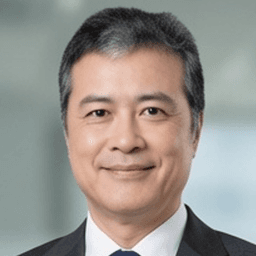
Japanese Reiki Shihan · traditional Usui Reiki, taught and certified in person
- ●Japanese Reiki Shihan (師範 / Reiki Master)
- ●Trained in the traditional Japanese Usui lineage
- ●20+ years of daily practice · teaches in person
- ●Former IT engineer & founder — grounded, no hype
I'm a Japanese Reiki Shihan who learned in the traditional Usui lineage and has practised every morning for over twenty years. My background is in IT and business, not the spiritual scene, so I write about Reiki plainly — what it is, how to practise it, and what it's honestly like — with no medical claims. Based in the Philippines, where I teach in person.
Enjoy this article?
Get honest, grounded writing on traditional Japanese Usui Reiki straight to your inbox.
Related Articles
A Reiki Trial That Included a Sham Group
A 2026 trial compared Reiki against sham Reiki in 60 ventilated ICU patients. An honest reading of what the results support.
8/18/2026

Why Most Reiki Studies Cannot Be Compared With Each Other
People ask what the research says as though the studies can be added together. Four ordinary differences block comparison.
8/17/2026

What the Reiki Trials Now Running Will and Will Not Settle
Fourteen Reiki trials are registered as recruiting or active. Twelve enrol under 100 people and four have no blinding.
8/16/2026

Why I Send People to NCCIH: Reiki Not Clearly Shown to Work
A federal health agency says Reiki has not been shown effective. A practitioner explains why he quotes it in full.
8/15/2026
Ten Brazilian Nurses, Five Reiki Sessions, No Control Group
A 2025 Brazilian study interviewed ten nurses after five Reiki sessions. Reading it honestly means knowing what it cannot show.
8/14/2026

Ten Years of Hospital Reiki and What the Anxiety Data Says
A cancer institute's ten-year Reiki programme and an 824-person anxiety meta-analysis say different things, and the honest reading sits in the gap between them.
8/13/2026