A Reiki Trial That Included a Sham Group
A 2026 trial compared Reiki against sham Reiki in 60 ventilated ICU patients. An honest reading of what the results support.

Japanese Reiki Shihan (師範) · traditional Usui Reiki · 20+ years of daily practice
Key Takeaways
- A 2026 trial in an intensive care unit compared Reiki against sham Reiki — a 30-minute simulated session by a non-certified person with no intent to transmit energy. Most published Reiki trials have no sham arm, so this design answers a criticism I have raised about earlier studies — though it is not the first trial to use one.
- With 60 patients on invasive mechanical ventilation, the Reiki group showed lower pain (p = .002) and anxiety (p = .006) scores than the sham group, along with lower diastolic blood pressure (p = 0.019) and heart rate (p = 0.001).
- The design is stronger than most, and the study is still small, single-site, single-blind, and short-term. A better comparison group does not by itself make a finding general.
Key Terms Explained
- 靈氣 (Reiki) / Reiki — a Japanese practice usually involving light touch or hands held just above the body.
- Sham Reiki — a session that looks like Reiki but is given by someone without training or intent. Used to test whether the effect comes from the practice or from the situation.
- Single-blind — only one side of the study is kept unaware of group assignment. The person delivering a real Reiki session necessarily knows it is real.
- p value — a number describing how likely a result this large would be if there were no real difference. A small p value does not indicate a large or lasting effect.
The Objection I Kept Raising
I have written before about Reiki studies that had no comparison group, or a comparison group that received nothing at all. My objection was always the same: if one group gets thirty quiet minutes with a person paying attention to them and the other group gets nothing, you have not tested Reiki. You have tested attention.
That objection is uncomfortable for a practitioner to keep making. I trained all the way to Shihan because this practice changed my life, and I teach it. Pointing out that the research supporting it is weakly designed is not what a person in my position is expected to do.
But I would rather be honest than encouraging. And this new study is one where my usual objection does not apply.
The comparison group here received a full 30-minute session from someone standing over them, moving their hands, giving them the situation without the practice. If the effect were purely the attention and the quiet, both groups should have improved equally.
They did not. That is worth taking seriously — and it is also worth being careful about what it means.
It is also not the first sham-controlled Reiki trial. A 2008 trial of 100 adults with fibromyalgia compared a Reiki master with an actor and found no effect on pain from either. A 2011 trial of 189 people at a chemotherapy centre compared Reiki, sham Reiki, and standard care, and found that Reiki and sham both raised comfort and well-being. Against that background, a trial where Reiki did better than sham is notable, and the three trials do not yet point the same way.
Related: Reiki Shares and Group Sessions: What They Are Good For, and Where They Quietly Go Wrong explains this in detail.
What the Study Actually Did
Sixty patients receiving invasive mechanical ventilation in an adult intensive care unit were randomly assigned to two groups of thirty. One group received a 30-minute Reiki session. The other received a 30-minute simulated session delivered by a non-certified individual with no intent to transmit energy.
The reported results were as follows. The figures are from the published abstract; the journal has also published a corrigendum to this paper, which I have not been able to read.
| Measure | Result |
|---|---|
| Pain | Lower in the Reiki group (p = .002) |
| Anxiety | Lower in the Reiki group (p = .006) |
| Diastolic blood pressure | Lower in the Reiki group (p = 0.019) |
| Heart rate | Lower in the Reiki group (p = 0.001) |
| Systolic blood pressure | Marginal (p = 0.052) |
| Respiratory rate | Group effect (p = 0.047), no time × group interaction |
Two things in that table deserve attention rather than celebration.
The systolic blood pressure result did not reach the conventional threshold. It is reported as marginal, and marginal means it did not clear the bar the authors set for themselves.
The respiratory rate result is more subtle. There was a group effect, but no interaction between time and group. In plain terms, the groups differed, but the study did not show the difference developing over the course of the session in the way you would expect if the session caused it.
I point these out because a summary that lists only the significant findings would misrepresent the paper. The authors reported the weaker results too, and a reader who quotes only the strong ones is not reporting the study.
Related: An Engineer's Honest Take on Reiki: What I Am Willing to Claim, and What I Am Not explains this in detail.
Why the Setting Matters More Than the Numbers
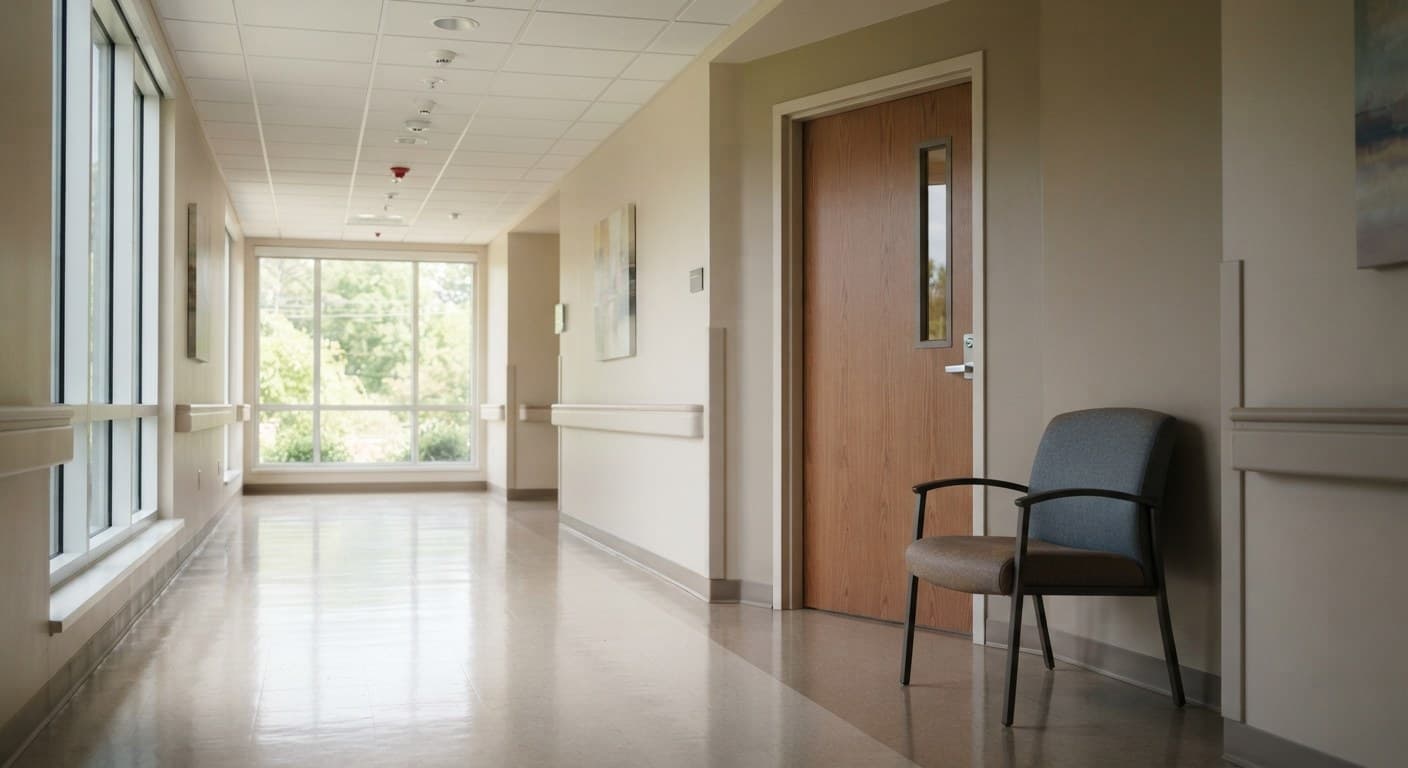
The patients in this study were on invasive mechanical ventilation in intensive care. This is not a group I have ever worked with, and it is not a group I would seek out.
That setting is why the trial could be conducted the way it was, and it is also the sharpest limit on what the result means. These patients were sedated or heavily restricted in movement and unable to speak. Pain and anxiety were assessed in ways appropriate to that state, not by conversation.
Whether an effect measured in that setting says anything about a person walking into a quiet room for an hour is an open question. I do not think it does, in either direction. Different situation, different measurements, different baseline.
There is also the single-blind design. Only one side was blinded, and the practitioner giving real Reiki necessarily knew it. Whoever gives a session and knows which arm they are in can behave differently without intending to — spend a moment longer, position their hands more carefully. Sham-controlled is better than uncontrolled. Double-blind would be better still, and in a practice delivered by a trained person, genuinely hard to arrange.
And sixty patients at one hospital is sixty patients at one hospital. Replication elsewhere is what would move this from interesting to established.
FAQ
Q: Does this study prove Reiki works? A: No. It reports that in one intensive care unit, with sixty patients, a Reiki session was followed by lower pain and anxiety scores than a simulated session. That is a stronger finding than most Reiki research produces, and it is one study at one site. Proof is not what single trials produce.
Q: Why does having a sham group matter so much? A: Because without one, you cannot separate the practice from the circumstances. Thirty minutes of quiet with someone attending to you is likely to help most people. A sham group receives those circumstances without the practice, so a difference between the groups points at the practice rather than the situation.
Q: Should this change how someone thinks about booking a Reiki session? A: Not really. The study was conducted with ventilated patients in intensive care, which has almost nothing in common with a person choosing to lie down in a quiet room. Reiki in my tradition is a relaxation practice, not medical care, and this study does not change that.
Q: Is it strange for a Reiki teacher to emphasise the limits? A: It should not be. If I only pass on the findings that flatter the practice, my reporting is worth nothing when a study is unflattering — and I have written about those too. Respecting the research means reporting the design and the limits, not only the result.
Q: What would make the next study more convincing? A: A larger sample, more than one site, and a design where the person delivering the session does not know which arm they are in. Longer follow-up would help as well, since this study measured what happened around a single 30-minute session.
Key Insights to Remember
- This trial includes the sham comparison group that most earlier Reiki studies lacked (the earlier sham-controlled trials found little difference between Reiki and sham), and the reported differences favour Reiki over sham on pain, anxiety, diastolic blood pressure, and heart rate. That is a real improvement in study design.
- Two of the reported outcomes were weak — systolic blood pressure was marginal, and respiratory rate showed no time × group interaction. Reporting only the strong results would misrepresent the paper.
- The setting is the binding limit. Sedated, ventilated patients in intensive care are not comparable to someone choosing a quiet hour, and a single 60-patient site does not establish a general finding.
Sources
- Karacan Y, Parlak AG, Coşar Ertem A. "Effect of Reiki on Pain, Anxiety, and Hemodynamic Parameters in Mechanically Ventilated Patients: A Randomized, Single-Blind, and Placebo-Controlled Trial." Journal of Integrative and Complementary Medicine, 2026
- ClinicalTrials.gov, NCT06526949 — The Effect of Reiki on Pain, Anxiety and Haemodynamic Parameters in Patients Receiving Mechanical Ventilator Support
- National Center for Complementary and Integrative Health, "Reiki"
- Assefi N, Bogart A, Goldberg J, Buchwald D. "Reiki for the treatment of fibromyalgia: a randomized controlled trial." Journal of Alternative and Complementary Medicine, 2008 (PMID 18991519)
- Catlin A, Taylor-Ford RL. "Investigation of standard care versus sham Reiki placebo versus actual Reiki therapy to enhance comfort and well-being in a chemotherapy infusion center." Oncology Nursing Forum, 2011 (PMID 21531671)
About the author
Japanese Reiki Shihan · traditional Usui Reiki, taught and certified in person
- ●Japanese Reiki Shihan (師範 / Reiki Master)
- ●Trained in the traditional Japanese Usui lineage
- ●20+ years of daily practice · teaches in person
- ●Former IT engineer & founder — grounded, no hype
I'm a Japanese Reiki Shihan who learned in the traditional Usui lineage and has practised every morning for over twenty years. My background is in IT and business, not the spiritual scene, so I write about Reiki plainly — what it is, how to practise it, and what it's honestly like — with no medical claims. Based in the Philippines, where I teach in person.
Enjoy this article?
Get honest, grounded writing on traditional Japanese Usui Reiki straight to your inbox.
Related Articles

Why Most Reiki Studies Cannot Be Compared With Each Other
People ask what the research says as though the studies can be added together. Four ordinary differences block comparison.
8/17/2026

What the Reiki Trials Now Running Will and Will Not Settle
Fourteen Reiki trials are registered as recruiting or active. Twelve enrol under 100 people and four have no blinding.
8/16/2026

Why I Send People to NCCIH: Reiki Not Clearly Shown to Work
A federal health agency says Reiki has not been shown effective. A practitioner explains why he quotes it in full.
8/15/2026
Ten Brazilian Nurses, Five Reiki Sessions, No Control Group
A 2025 Brazilian study interviewed ten nurses after five Reiki sessions. Reading it honestly means knowing what it cannot show.
8/14/2026
Ten Years of Hospital Reiki and What the Anxiety Data Says
A cancer institute's ten-year Reiki programme and an 824-person anxiety meta-analysis say different things, and the honest reading sits in the gap between them.
8/13/2026
When the Authors Corrected Their Own Headline
A 2026 meta-analysis put Reiki among four biofield therapies and then corrected its own pain estimate from 0.72 down to 0.16, which is the part worth reading.
8/12/2026