An Engineer's Honest Take on Reiki
Two short lists: what I am willing to claim about Reiki after twenty years of daily practice, and what I refuse to say.

Japanese Reiki Shihan (師範) · traditional Usui Reiki · 20+ years of daily practice

Key Takeaways
- I spent my working life as an engineer and a founder, and I have never found a way to explain what Reiki does. That has not stopped me practising daily for over twenty years, and I think the gap between those two facts is worth being precise about rather than papering over.
- There is a short list of things I am willing to say about Reiki, and a much longer list of things I will not say. Knowing which is which is, in my view, the main professional skill in this field.
- The question that would change my mind is a specific one, and I can state it. Anyone who cannot state theirs is not making a claim — they are expressing a preference.
Key Terms Explained
- 靈氣 (Reiki) / Universal Energy — The practice of working with universal energy through quiet, attentive hands.
- 師範 (Shihan) / Master-Teacher — A teaching rank in the traditional lineage, carrying responsibility for how the practice is passed on.
- 五戒 (Gokai) / The Five Precepts — Usui's daily principles, and in my experience the least mystical and most useful part of the whole tradition.
- 靈授 (Reiju) / Attunement — The transmission a teacher offers a student, traditionally in person and repeated over time.
The Spreadsheet I Kept for Four Months
When I started practising, I did what an engineer does. I made a table.
Date, time of day, minutes practised, and then a column I labelled something like "effect," scored one to five. My intention was entirely sincere and, I now realise, slightly absurd: I was going to find out whether this worked by collecting data on myself.
I kept it for about four months. Then I stopped, not because the numbers were bad but because I had understood something about the numbers.
The scores drifted upward over those months. My sleep column improved. My "settled" column improved. And I could not use any of it, because I was the person practising, the person scoring, and the person who wanted it to work. Every one of those three roles contaminates the other two. I had built, with real effort, a measurement instrument that could only ever return the answer I was hoping for.
That was, I think, the most useful thing my old profession gave me for this practice. Not scepticism exactly — engineers are not sceptics, we are people who have been burned by our own confidence often enough to distrust it. What it gave me was the habit of asking what a piece of evidence can actually support, which is almost always less than it feels like it supports.
I should say plainly how I arrived here, because it matters to the story. I did not come to Reiki through the spiritual world. I came through a businessperson I respected — someone successful and entirely unsentimental, the last person I would have expected to talk about energy. That is the frame I brought in, and I never really put it down.
Related: From Quick-Tempered to Calmer: What One of My Students Noticed After Level 1 explains this in detail.
The Two Lists
After twenty years I have settled into something like a professional discipline about this. There are things I will say, and things I will not. I keep the lists short and I do not blur them.
What I am willing to claim
I will say that people who practise regularly tend to report feeling calmer and more settled. I will say it because I have watched it happen in many students and in myself, and because "reports feeling calmer" is a claim at the right size for the evidence I have.
I will say that a few unhurried minutes with quiet hands is a reliable way to interrupt a day. That one I would defend fairly robustly, because it does not actually require Reiki to be anything in particular. Deliberate stillness with attention has effects whatever you believe is happening.
I will say that 五戒 (Gokai: the Five Precepts) are good advice. Do not anger, do not worry, be grateful, work diligently, be kind. There is nothing mystical there. It is a short list of daily reminders that I would recommend to an atheist engineer without hesitation, and in fact I have.
I will say that the practice is low risk when it stays in its lane — offered gently, with consent, alongside whatever medical care a person is receiving.
Related: What Twenty Years of Daily Practice Did — and Did Not — Do explains this in detail.
What I will not claim
I will not say that Reiki treats, diagnoses, or removes any illness. Not cancer, not depression, not chronic pain, not anything. This is not caution imposed on me from outside; it is what my own honest reading of the evidence requires, and I would say the same if no regulator existed.
I will not explain the mechanism, because I do not know it. I have heard many confident explanations involving energy fields and frequencies, and I have never encountered one that would survive a technical review. When a student asks me how it works, my answer is that I do not know, and that I have made peace with not knowing.
I will not tell anyone to delay or replace medical care. If a student ever told me they were considering that, I would consider it my responsibility to talk them out of it plainly, and I have.
I will not promise outcomes. Not to students, not to anyone receiving a session. What I can offer is a practice and honest instruction in it.
Related: A New Survey Asks Who Actually Knows What Reiki Is — and the Honest Answer Is Uncomfortable for Everyone explains this in detail.
The Question That Would Change My Mind
Here is the part I think is missing from most conversations about this practice, in both directions.
If I claim something, I should be able to say what would falsify it. So: my claim is that Reiki practice helps people feel calmer and more settled. What would show me I am wrong? A well-designed study in which people practising Reiki report no more improvement in subjective calm than people doing an equivalent quiet activity with no Reiki framing at all — and, importantly, in which practitioners themselves cannot tell the difference either.
I want to be careful here, because that finding would not actually devastate me, and I should be honest about why. It would tell me that the specific tradition I follow is not the active ingredient — that what is helping is the stillness, the attention, the ten minutes. I would find that genuinely interesting rather than crushing, because I never claimed the tradition was the active ingredient. I claimed the practice helps people feel calmer, and that claim would survive.
What that finding would kill is any claim about Reiki being a distinct force acting on the world. I have never made that claim, which is why I can look at the possibility without flinching.
Now the other direction, which people ask about less. What would count as evidence for something more? Not my own experience, however vivid — see the spreadsheet. Not testimonials, including my students'. It would take repeated, well-controlled work by people with no stake in the answer, showing an effect that survives blinding. As far as I am aware, that does not exist. So I do not claim it.
I find this position comfortable, though I notice it satisfies almost nobody. The enthusiasts want me to say more. The sceptics want me to admit it is nothing, which is also a claim beyond the evidence — "we have not demonstrated a mechanism" and "there is nothing here" are different statements, and only the first one is established.
What Is Left, and Why I Still Do It
So what remains, after subtracting everything I refuse to say?
Something quite small, and quite durable. Every morning for more than twenty years I have spent a few minutes with my hands quiet and my attention on one thing. Over that span, the accumulated effect on how I meet a difficult day has been, as far as I can tell, considerable. I cannot prove the mechanism and I do not need to in order to keep doing it, in the same way I do not need a theory of exercise physiology to notice that walking helps.
The honest framing is not a compromise position I adopted for legal safety. It is the framing that makes the practice worth teaching. If I told students it would fix their health, I would be lying, and eventually they would find out and reasonably conclude that everything else I taught them was also inflated. By keeping the claims small, the small claims stay trustworthy.
There is one more thing my engineering years gave me, and it is the piece I would most like to pass on. In technical work, the people you trust are not the ones who sound most certain. They are the ones who tell you where the edges of their knowledge are. I have tried to teach this practice the same way — here is what I know, here is what I do not, and here is exactly where the line falls.
FAQ
Q: If you cannot explain how Reiki works, why practise it at all? A: Because "I cannot explain the mechanism" and "nothing useful happens" are different statements. I practise for the effect I can observe honestly — feeling steadier — and I hold the mechanism as an open question. Most useful daily habits were adopted before anyone understood why they worked.
Q: Does your engineering background make you a sceptic about Reiki? A: It makes me careful about claims, which is not the same thing. Engineering taught me to distrust my own confidence, and that discipline cuts in both directions: it stops me overstating what Reiki does, and it also stops me declaring that nothing is there when that has not been established either.
Q: Would you teach Reiki to someone who does not believe in it? A: Yes, and I have. Belief is not a requirement — I have written elsewhere about why. What is required is willingness to actually do the daily practice, which turns out to be a much higher bar than belief.
Q: Should someone use Reiki instead of seeing a doctor? A: No, and I would say so directly to anyone considering it. Reiki supports rest and calm attention. Illness belongs with medical professionals, and a practice like this only ever sits alongside that care.
Key Insights to Remember
-
The most valuable thing I brought from engineering to this practice was not scepticism but a habit: asking what a given piece of evidence can actually support. Applied honestly to Reiki, the answer is "less than practitioners usually claim, and more than critics usually concede" — and living in that narrow space is the whole professional discipline of the field.
-
A claim you cannot falsify is not a claim. I can state precisely what finding would change my mind about Reiki, and the fact that it would not devastate me tells you something important about how modestly I have pitched the claim in the first place. Anyone in this field who cannot answer that question is expressing a preference, not asserting anything.
-
Keeping the claims small is what makes them worth anything. If I promised health outcomes, the honest parts of what I teach would be contaminated by the dishonest parts. Twenty years in, the only thing I am confident I can offer is a practice, honest instruction, and a clear account of where my knowledge stops.
Sources
About the author
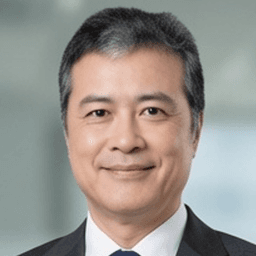
Japanese Reiki Shihan · traditional Usui Reiki, taught and certified in person
- ●Japanese Reiki Shihan (師範 / Reiki Master)
- ●Trained in the traditional Japanese Usui lineage
- ●20+ years of daily practice · teaches in person
- ●Former IT engineer & founder — grounded, no hype
I'm a Japanese Reiki Shihan who learned in the traditional Usui lineage and has practised every morning for over twenty years. My background is in IT and business, not the spiritual scene, so I write about Reiki plainly — what it is, how to practise it, and what it's honestly like — with no medical claims. Based in the Philippines, where I teach in person.
Enjoy this article?
Get honest, grounded writing on traditional Japanese Usui Reiki straight to your inbox.
Related Articles
Do You Have to 'Believe' in Reiki for It to Work?
No, you do not have to believe in Reiki for a session to be worth doing. How openness differs from faith, and the placebo question.
7/28/2026

Reiki Has Nothing to Do With Ghosts or the Occult
Why Reiki has nothing to do with ghosts, spirits, or the occult — where the confusion comes from, and what the practice is.
7/27/2026
Is Reiki a Religion? No — Here's What It Actually Is
Reiki is not a religion — it has no deity, doctrine, or worship. What it actually is, and why it sits beside any faith.
7/25/2026
I Don't Feel Anything: Why That's Normal at First
After my first attunement I felt almost nothing for two whole weeks, and that is normal — here is what Reiki quietly does before you ever notice it.
7/12/2026
Who Was Mikao Usui? Reiki's Founder Beyond the Legends
Mikao Usui was a Japanese seeker who framed Reiki as connecting with universal energy, and much of the legend around him was added long after his death.
7/1/2026