Reiki in Children's Hospitals: Where I Tighten Every Rule
Why paediatric wards demand stricter rules — consent that is really the parent's, and promises a child cannot evaluate.

Japanese Reiki Shihan (師範) · traditional Usui Reiki · 20+ years of daily practice
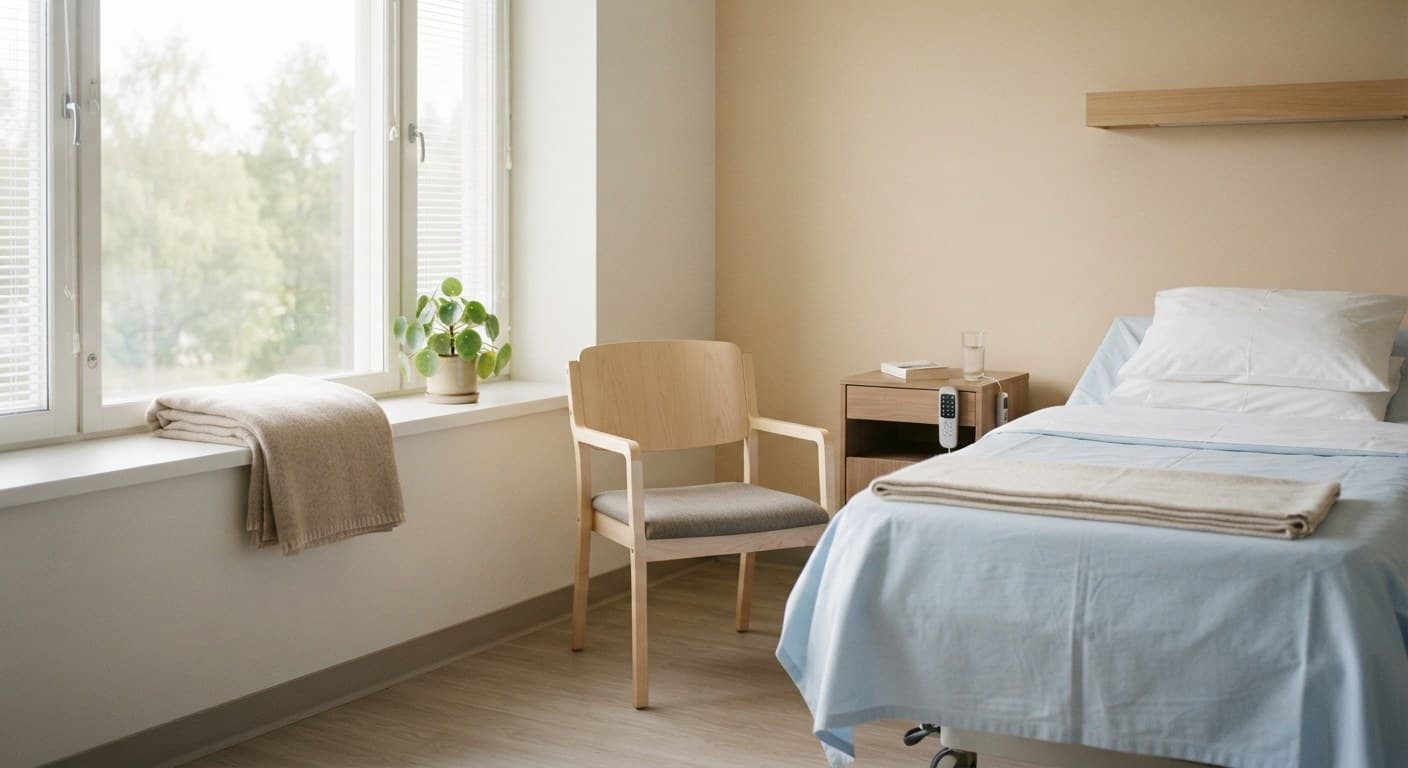
Reiki is being taught for paediatric hospital settings — a webinar on the subject ran earlier this month, and hospital programmes offering it to children exist in a number of institutions. As a Reiki Shihan (師範: master-teacher), I find this the most demanding context the practice can enter, and the one where the honest framing I usually argue for stops being a preference and becomes a requirement.
According to the published programme information, a webinar titled "Reiki in the Pediatric Hospital Setting" was scheduled for 7 July 2026, part of a broader picture in which a substantial number of hospitals now offer Reiki alongside conventional care, including in cancer services. Children's wards are one of the environments where these programmes operate.
I want to think carefully about this rather than simply approve of it, because children are not small adults, and almost every safeguard I rely on with adult students works differently here.
Why This Setting Is Different
With an adult, the practice rests on a straightforward exchange. The person understands what is being offered, agrees to it, can say stop, and can judge for themselves afterwards whether it did anything. Remove any one of those and the ethics change.
With a sick child, all four are complicated at once.
Consent is given by a parent, not by the person receiving. A child in a hospital bed has spent weeks being touched by adults who did not ask, and has learned that saying no is usually not an available option. Their report afterwards — "it was nice" — is offered to an adult they want to please, in an environment where pleasing adults has become a survival skill.
None of that makes the practice wrong here. It means the ordinary safeguards need to be rebuilt from scratch rather than assumed.
Related: Where Reiki Needs Extra Care: Pregnancy, Children, and the Very Elderly explains this in detail.
What I Would Insist On
If I were designing or teaching a paediatric programme, four things would be non-negotiable.
The child's refusal outranks the parent's consent. A parent may agree; the child still decides. If a child says no, turns away, or simply goes still and compliant in the way frightened children do, that is a no. This inverts the usual hierarchy and it should.
Hands-off should be the default offer. Reiki does not require contact, and in a paediatric ward it should generally be offered without it. A child who has been handled a great deal has every reason to be wary of another adult reaching towards them.
The language must be small. Not "this will help you feel better," which is a promise. Something closer to "I am going to sit here quietly for a few minutes; you can tell me to stop whenever you like." A promise made to a child in a hospital is heavier than the same promise made to an adult, because the child cannot evaluate it.
Nobody says anything about the illness. Not the practitioner, not in front of the child, not to the parent in the corridor. In a paediatric oncology setting, a parent is desperate in a way that makes them vulnerable to any suggestion of hope. Suggesting that Reiki affects the disease would be, in my view, among the worst things a practitioner could do.
Related: An Engineer's Honest Take on Reiki: What I Am Willing to Claim, and What I Am Not explains this in detail.
The Question of Parents
This is the part I have thought about most, and where I have the least comfortable answer.
The person most affected by Reiki in a children's ward is often not the child. It is the parent sitting beside the bed, who has been there for weeks, who cannot fix anything, and who is being offered something to do.
That is a real need and I do not want to be dismissive of it. Sitting quietly with attention, for a few minutes, is a reasonable thing to offer an exhausted parent, and several hospital programmes explicitly include family and staff for exactly this reason.
But it needs to be named honestly rather than smuggled in. If a practice is being offered partly for the parent's benefit, say so. The failure mode I would guard against is a practitioner who tells themselves they are helping the child while actually managing the parent's distress — because the moment that confusion sets in, the temptation to overstate what is happening becomes very strong.
What I Would Not Claim, Especially Here
Everything I normally refuse to say, I would refuse more firmly in a children's ward.
Reiki does not diagnose, treat, or remove illness. It does not affect a tumour, an infection, or a course of treatment. It is a quiet practice that some people find settling, offered alongside medical care and never in place of it — and in paediatrics, "never in place of" is not a legal formality but the whole ethical foundation.
I would go further. In this setting I would avoid even the softer claims I am usually comfortable with. "Many people find it relaxing" is fine for an adult who can weigh it. Said to a parent whose child is seriously ill, the same sentence can be heard as far more than it is.
The honest offer is smaller than that: some quiet time, no promises, stop whenever you want.
Why I Still Think It Belongs There
Having listed all of that, I want to be clear that I am in favour.
Hospitals are frightening for children largely because everything that happens to them is done to them, on a schedule they do not control, by people who do not ask. A practice that is offered rather than administered, that the child can refuse, that involves an adult sitting quietly and paying attention without doing anything to them — that is a genuinely unusual experience in a hospital, and I think its value may lie mostly there.
Not in energy. In the structure of the encounter.
That is a modest claim, and I would rather make a modest claim that is defensible than a large one that comforts everyone in the room for an afternoon.
FAQ
Q: Is Reiki safe for children?
A: The practice itself is low risk — quiet attention, usually without contact. The risks in a paediatric setting are not physical but relational: consent that is really the parent's, promises a child cannot evaluate, and hope offered to a frightened family. Those are what programmes need to design around.
Q: Should Reiki be offered to a child with a serious illness?
A: Alongside their medical care, gently, with the child able to refuse, and with nothing said about the illness — I think it can be appropriate. What would not be appropriate is any suggestion that it affects the disease or its treatment. Serious illness belongs entirely to the medical team.
Q: Can a parent learn Reiki to practise on their own child?
A: Many do, and I understand the impulse. My caution is about expectations rather than the practice: a parent who learns it hoping to change the outcome of an illness is setting themselves up for a particular kind of grief. Learning it as a way to sit calmly with your child is a different and much sounder reason.
Q: Why do hospitals allow this if the evidence is limited?
A: Because the question hospitals ask about comfort measures is not the same as the question they ask about treatments. Low-risk, voluntary, offered alongside care and making no medical claim is a different bar from proving therapeutic effect. That distinction is reasonable — and it is also exactly why practitioners must not blur it.
A Shihan's Closing Thought
I have argued for years that Reiki should be described modestly, and I am aware that this sounds like caution for its own sake. A children's ward is where I would point to show why it is not.
There, the gap between what the practice actually offers and what a frightened parent might hear is at its widest, and the person least able to consent is the one in the bed. Every discipline I ask of practitioners — no medical claims, no promises, consent that can be withdrawn, small language — exists for exactly that situation.
If a practitioner cannot hold those lines in a children's hospital, they should not be in one. If they can, then what they are offering is a few quiet minutes in a place with very few of them, which is worth something on its own.
Sources & References
About the author

Japanese Reiki Shihan · traditional Usui Reiki, taught and certified in person
- ●Japanese Reiki Shihan (師範 / Reiki Master)
- ●Trained in the traditional Japanese Usui lineage
- ●20+ years of daily practice · teaches in person
- ●Former IT engineer & founder — grounded, no hype
I'm a Japanese Reiki Shihan who learned in the traditional Usui lineage and has practised every morning for over twenty years. My background is in IT and business, not the spiritual scene, so I write about Reiki plainly — what it is, how to practise it, and what it's honestly like — with no medical claims. Based in the Philippines, where I teach in person.
Enjoy this article?
Get honest, grounded writing on traditional Japanese Usui Reiki straight to your inbox.
Related Articles
A Reiki Trial That Included a Sham Group
A 2026 trial compared Reiki against sham Reiki in 60 ventilated ICU patients. An honest reading of what the results support.
8/18/2026

Why Most Reiki Studies Cannot Be Compared With Each Other
People ask what the research says as though the studies can be added together. Four ordinary differences block comparison.
8/17/2026

What the Reiki Trials Now Running Will and Will Not Settle
Fourteen Reiki trials are registered as recruiting or active. Twelve enrol under 100 people and four have no blinding.
8/16/2026

Why I Send People to NCCIH: Reiki Not Clearly Shown to Work
A federal health agency says Reiki has not been shown effective. A practitioner explains why he quotes it in full.
8/15/2026
Ten Brazilian Nurses, Five Reiki Sessions, No Control Group
A 2025 Brazilian study interviewed ten nurses after five Reiki sessions. Reading it honestly means knowing what it cannot show.
8/14/2026
Ten Years of Hospital Reiki and What the Anxiety Data Says
A cancer institute's ten-year Reiki programme and an 824-person anxiety meta-analysis say different things, and the honest reading sits in the gap between them.
8/13/2026