What Actually Happens in a Reiki Attunement (Reiju)
An honest look at the Usui Reiki attunement, or reiju: what the ceremony is, what you may or may not feel, and why receiving it in person still matters.

Japanese Reiki Shihan (師範) · traditional Usui Reiki · 20+ years of daily practice
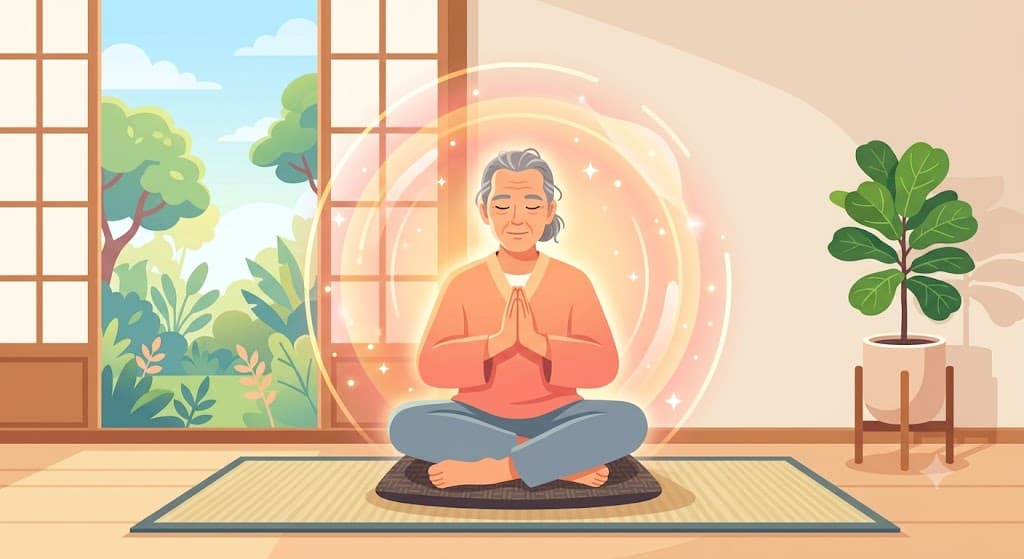
A Reiki attunement — in Japanese, 靈授 (Reiju) / Attunement — is often the part beginners are most curious and most nervous about. People tend to picture a ritual with visible energy, sudden heat in the palms, maybe a moment they will never forget. The honest reality is quieter than that, and I think saying so plainly is more respectful than building it up. The reiju is simply the moment a teacher passes on the connection to 靈氣 (Reiki) / Universal Energy. What follows — the daily practice, over weeks and then years — is where the real work actually lives.
Key Takeaways
- The reiju is the moment a teacher passes on the Reiki connection; the daily practice that follows is what makes it your own.
- Many honest students feel very little during their first attunement, and that quiet beginning is normal rather than a failure.
- Reiki is neither a religion nor anything to do with the occult; it is a way of connecting with universal energy so that daily life can settle.
Key Terms Explained
- 靈氣 (Reiki) / Universal Energy — the practice of connecting with the energy of the universe.
- 靈授 (Reiju) / Attunement — the in-person ceremony in which a teacher passes on the Reiki connection.
- 師範 (Shihan) / Master Teacher — a qualified teacher in the traditional Usui lineage who can give attunements.
- 五戒 (Gokai) / The Five Precepts — Usui's daily principles for living gently.
The First Reiju, and the Two Weeks That Followed
I did not arrive at Reiki through the spiritual world. The person who first told me about it was already successful in business, getting real results in the ordinary world, not a "spiritual" type at all. That coloured my whole first impression: Reiki, to me, had nothing to do with the mystical picture most people carry into it.
 The simple daily routine that follows a first attunement matters more than the ceremony itself.
After my own first attunement — the Level 1 reiju — I kept a simple daily routine of about twenty minutes, every day, for two weeks without missing once. Honestly, I didn't feel much at first. So many introductions promise instant heat or tingling that I want to say this plainly: for me, nothing dramatic happened in those early weeks. I mention it because a beginner who expects fireworks and gets stillness can quietly conclude they did something wrong. They almost certainly did not. The connection is passed in the ceremony; the sensations, if they come at all, come later and gently.
Related: Why I Teach Reiju (Attunement) In Person, Not Over Zoom explains this in detail.
Inside a Traditional Usui Attunement
What the Teacher Actually Does
 In a traditional Usui reiju, the student simply sits in gasshō while the teacher works quietly.
In a traditional Usui reiju, the student sits with eyes closed and hands together in 合掌 (Gasshō) / Palms Together, the simple prayer-hands posture. The teacher moves quietly around and behind the student and performs the attunement without fuss. There is no chanting to follow, nothing frightening, nothing you have to perform. As a 師範 (Shihan) / Master Teacher in the Usui lineage, my job in that moment is mostly to be steady and let the process happen. Many of us also keep the 五戒 (Gokai) / The Five Precepts close to the practice, as a daily frame rather than a doctrine.
Related: Yawning and Shivers: The Body Signs You're Receiving Reiki explains this in detail.
Why It Has to Be Received in Person
The Reiki symbols were traditionally meant to be kept private, passed only through attunement. These days a quick search turns up plenty of images, which is exactly why receiving them properly, in person, still matters. A picture on a screen is information; an attunement is transmission. I am not being precious about secrecy for its own sake — I simply think something is lost when a living tradition is reduced to a downloadable file. Face to face, a teacher can see how you are sitting, answer what you actually ask, and pass the connection the way it has been passed for generations.
What You Might Feel — and What You Might Not
When I practise, I often shiver, and I almost always yawn. Over the years I have come to read the yawn as a sign that the energy is being received — a small, physical, repeatable marker that is especially useful for beginners who worry they "aren't feeling anything." It is not proof of anything cosmic; it is just a reliable signpost.
People often arrive at an attunement braced for something, as though the result depended on how hard they tried. It does not work that way round. If you finish an attunement feeling calm and slightly lighter, that is plenty. If you finish feeling nothing in particular, that is also completely fine.
Related: What 1,284 Reiki Sessions Actually Show: An Honest Read of a New Study on the Subjective Experience explains this in detail.
An Engineer's Take on Something You Can't Measure
My background is in IT and engineering, and I still work as an AI engineer, so I am not naturally drawn to things I cannot measure. I want to be straight about the evidence rather than paper over it. If you look at the best available research, Reiki has not been clearly shown to be effective for any specific medical condition, and there is no scientific proof of the energy field it describes. A teacher who hides that from you is not being honest, and Reiki is not a substitute for medical care.
 After years of practice, conviction comes from life settling, not from any dramatic experience.
So why do I keep practising after more than twenty years? What turned my own half-belief into conviction was not a mystical experience. It was my life slowly turning for the better. Back in Japan I left a decade of salaried work, became independent in 2000, built businesses, and published books along the way. I do not share that to boast, but because it is the quiet evidence behind what I actually value. To me, Reiki is connecting with the energy of the universe and letting it turn my life in a better direction — nothing more mystical than that, and nothing less.
And if Reiki does not interest you right now, I think it simply means it is not your time yet. There is a right moment to learn anything, and when yours comes you will often find you started before you even decided to. I never push.
FAQ
Q: Does a Reiki attunement hurt, or feel strange?
A: No. It is a calm, seated ceremony with your eyes closed and your hands together. Some people feel warmth or a light shiver, some yawn, and some feel almost nothing at all — every one of those responses is normal.
Q: What if I feel nothing during or after my attunement?
A: That is a very common and completely fine starting point. I felt very little myself for the first couple of weeks. The connection is passed regardless of sensation, and the steady daily practice afterward is what gradually develops it.
Q: Can I get attuned properly through a video or online course?
A: The tradition passes the attunement and the symbols in person, and I would gently encourage you to receive it that way. A face-to-face reiju lets a teacher guide you directly, which a recording cannot do.
Key Insights to Remember
- The attunement is not the finish line; it is the doorway. What you receive in a few quiet minutes only becomes meaningful through the ordinary, unglamorous daily practice that follows, so treat the reiju as a beginning rather than an achievement.
- Sensation and effect are not the same thing. Feeling nothing at your reiju says nothing about whether the connection was passed. It is the steadiness of your practice, not the drama of the moment, that carries you forward.
- Honesty is the whole point. Reiki asks nothing you must believe in advance, makes no medical promises, and does not pretend to be more than it is — a way of connecting with universal energy so that life can settle a little.
Sources & References
About the author

Japanese Reiki Shihan · traditional Usui Reiki, taught and certified in person
- ●Japanese Reiki Shihan (師範 / Reiki Master)
- ●Trained in the traditional Japanese Usui lineage
- ●20+ years of daily practice · teaches in person
- ●Former IT engineer & founder — grounded, no hype
I'm a Japanese Reiki Shihan who learned in the traditional Usui lineage and has practised every morning for over twenty years. My background is in IT and business, not the spiritual scene, so I write about Reiki plainly — what it is, how to practise it, and what it's honestly like — with no medical claims. Based in the Philippines, where I teach in person.
Enjoy this article?
Get honest, grounded writing on traditional Japanese Usui Reiki straight to your inbox.
Related Articles

Usui Reiki Level 2 (Okuden): What You Learn and When
Usui Reiki Level 2 (Okuden) from a Shihan: what you learn, the 21-day rule after Level 1, what the one-day class covers, and what it does not promise.
10/2/2026

Reiki Training in the Philippines: How to Choose a Course
Choosing Reiki training in the Philippines? Here are seven questions to ask before you book, how the levels are spaced, and what a Makati course involves.
9/24/2026
Usui Reiki Level 1 (Shoden): What the Course Actually Covers in One Day
Usui Reiki Level 1 (Shoden) is one in-person day: one attunement, a self-practice routine, and the Five Precepts. Here is what it covers and leaves out.
9/16/2026
The 21 Days After an Attunement: What I Ask Students
Why I give new Reiki students an instruction rather than an explanation for their first three weeks, and why I refuse to call any of it purification.
8/14/2026
The Questions I Ask Before Agreeing to Teach
A Japanese Reiki Shihan on the questions asked before accepting a student, and why 'not yet' is sometimes the kindest answer.
8/9/2026

What Reiki Should Cost: Pricing and Red Flags
There is no standard price for Reiki, which is what makes it hard to judge. Four pricing patterns worth walking away from.
8/5/2026