How Long Does It Take to Become a Reiki Master?
Becoming a Reiki master has no fixed timeline; you can receive the attunements quickly, but real Usui Reiki mastery is built through years of daily practice.

Japanese Reiki Shihan (師範) · traditional Usui Reiki · 20+ years of daily practice
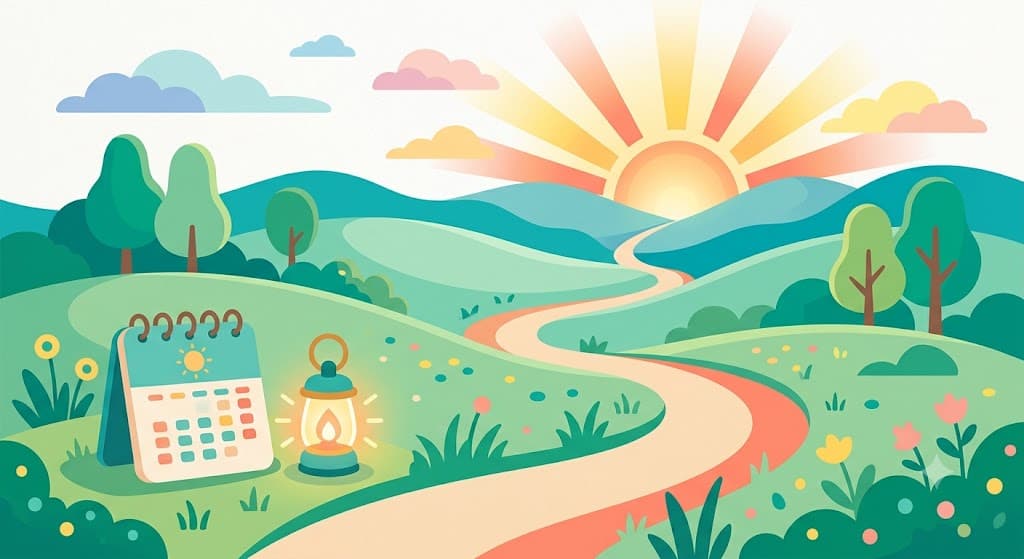
The honest answer is not the one most course pages give. On paper, you can hold a Reiki master certificate surprisingly fast — some Western programmes offer all levels inside a single year, sometimes a single intensive weekend. What the paper cannot tell you is whether you have actually become anything. Those are two different questions, and confusing them is where most of the disappointment around Reiki begins.
I want to separate them cleanly here: how long it takes to receive the levels, and how long it takes to grow into them. The first is a schedule. The second is a practice.
Key Takeaways
- Receiving all three levels of traditional Usui Reiki can happen within months, but being a master in any meaningful sense is counted in years of quiet practice, not weeks.
- The Japanese path runs through 初伝 (Shoden), 奥伝 (Okuden), and 神秘伝 (Shinpiden), and reaching the teaching level, 師範 (Shihan), is a separate step from simply having attended the classes.
- Progress in Reiki is felt as feeling settled, lighter, and more relaxed across time — never as a sudden, dramatic event you can put a date on.
Key Terms Explained
- 靈氣 (Reiki) / Universal Energy — the practice of connecting with the energy of the universe and letting it turn daily life in a better direction.
- 初伝 (Shoden) / First Teachings — the first level, called Level 1 in the West, where self-practice begins.
- 奥伝 (Okuden) / Inner Teachings — the second level, Level 2 in the West, where the symbols and distant practice are introduced.
- 神秘伝 (Shinpiden) / Mystery Teachings — the third level, what the West usually calls Master.
- 師範 (Shihan) / Master Teacher — the level qualified to teach Reiki and to pass on attunements to others.
The Two Weeks After My First Reiju
I did not arrive at Reiki through the spiritual world. The person who first told me about it was already successful in business and getting real results in the ordinary world — not a "spiritual" type at all. That mattered to me: my very first impression of Reiki had nothing to do with the mystical image most people expect.
 The first reiju opens the door, but the early weeks often feel undramatic — and that is normal.
After my first attunement — the Level 1 reiju, 靈授 (Reiju) being the traditional word for the initiation — I kept the simple daily routine, about twenty minutes, for two weeks without missing a day. And honestly, I did not feel much. I say this plainly because so many introductions promise instant heat or tingling. For me, nothing dramatic happened in those early weeks. If I had been grading Reiki on the first fortnight, I might have walked away.
What eventually turned my half-belief into conviction was not a mystical experience at all. It was my life slowly turning for the better over the years. I left a decade of salaried work, became independent in 2000, and built things from there. I do not mention that to boast — I mention it because it is the actual evidence behind what I now value, and because it explains why I measure a Reiki timeline in years rather than weekends. Nothing about that arc happened in two weeks.
Related: Reiki Level 1, 2, and Master: What You Learn at Each explains this in detail.
The Three Doors of Usui Reiki: Shoden, Okuden, Shinpiden
Usui Mikao taught his method in Tokyo in the 1920s, and the structure has come down to us in three degrees. Each is a door, not a finish line.
 Shoden, Okuden, and Shinpiden are three doors along the path, each one an opening rather than a finish line.
Related: What a Reiki Certificate Should (and Shouldn't) Mean: The Attunement Behind the Paper explains this in detail.
Shoden and Okuden: The First Two Doors
初伝 (Shoden), the First Teachings, is where you learn to practise on yourself and the basics of working with others. It is the foundation, and most of a practitioner's real life with Reiki is lived here. 奥伝 (Okuden), the Inner Teachings, turns the practice inward and adds the symbols and the distant methods that let you send Reiki beyond the room.
Between these two doors, tradition asks for something modern schedules often skip: time to practise. After Shoden, it takes weeks or months of daily use for the practice to settle into the body before the next level makes sense. How long depends entirely on your life — someone with an open year moves differently from a parent working full-time. There is no correct speed, only an honest one.
Related: Teaching Reiki Over Zoom, Ending In Person explains this in detail.
Shinpiden and Shihan: Master and Teacher
神秘伝 (Shinpiden), the Mystery Teachings, is what the West calls Master level. Here is the detail that trips people up: within Shinpiden, the tradition further distinguishes the teaching role, 師範 (Shihan), the one authorised to instruct and to give attunements. In other words, "master" in the everyday Western sense and "qualified to teach" are not automatically the same thing. Completing Shinpiden opens the door; becoming someone a student should learn from is a longer road that no ceremony finishes for you.
Reiju: Why It Must Be Received in Person
The symbols were traditionally kept private, passed only through attunement. These days a quick search turns up plenty of images of them, which is exactly why receiving them properly, in person, still matters. An image on a screen is information. A reiju given hand to hand is transmission. The timeline of becoming a master is, in part, the accumulation of these in-person moments — something no download shortens.
What the Certificate Cannot Give You
Decades of working in IT left me with a stubborn habit: I separate a certificate from competence. A certificate records that you were present on a date and met a requirement. Competence is a trajectory you are still on. The two are related but not equal, and Reiki is one of the clearest places I know to watch the gap between them.
 A five-minute morning practice: the quiet, unhurried repetition that a certificate can never grant on a date.
So when someone asks how long it takes to become a Reiki master, the rational answer is: the paperwork can be quick, and the person cannot. I teach in person here in the Philippines precisely because the part that takes time — settling, steadying, learning to feel the energy rather than think about it — only happens through repetition, not through a faster syllabus.
Here is my own quiet proof. These days my morning practice is about five minutes. I used to recite the precepts out loud; now I simply open my arms toward the window, let the energy in, and take it into my body. After all these years I feel it with my body rather than through words, and that shift is one small sign of how far the practice carries you. It is not a skill any certificate granted me on a date. It arrived slowly, and it is still arriving. A common misunderstanding is that harder concentration or longer sitting makes Reiki work better; in my experience it is the opposite. Relaxation matters most, and a short honest session is enough.
And if this is reading like pressure, let me remove it. If Reiki does not interest you right now, I think it simply means it is not your time yet. There is a right moment to learn anything, and when yours comes you often find you have started before you even decided to. I never push. A timeline you are forced onto is not really yours.
FAQ
Q: Can I really become a Reiki master in a weekend?
A: You can receive master-level attunement in a short intensive, yes, and hold the certificate afterward. What a weekend cannot give you is the years of daily practice that turn the title into something real. Treat the certificate as a starting line, not a finish line.
Q: How long should I wait between Reiki levels?
A: There is no fixed rule, but the tradition favours real practice time between levels rather than rushing them back to back. Weeks to months of daily practice after Shoden lets the first teachings settle before Okuden. The honest measure is not the calendar but whether the practice has become steady in you.
Q: Do I need to become a master to practise Reiki on myself?
A: No. First-level Shoden is enough to keep a daily self-practice for the rest of your life, and many people never feel a need to go further. The master levels matter mainly if you want to teach others or work more deeply. Self-practice is available from the very first door.
Key Insights to Remember
- The fastest thing about becoming a Reiki master is the paperwork, and the slowest is the person. Once you separate the certificate from the competence, the whole question of "how long" stops being about scheduling and starts being about practice. That reframing is worth more than any timeline.
- The gaps between Shoden, Okuden, and Shinpiden are not delays to minimise — they are where the actual growing happens. A student who practises daily between levels arrives at Shinpiden as a different person than one who rushed through. The pace that respects the practice is the pace that produces a real teacher.
- Depth in Reiki announces itself quietly, not dramatically. After enough years, you stop reaching for the right words and simply feel the energy settle in the body, and even five honest minutes carries further than a long, forced sitting. If you are waiting for a single moment that certifies you have "arrived," you may be measuring the wrong thing entirely.
Sources & References
About the author

Japanese Reiki Shihan · traditional Usui Reiki, taught and certified in person
- ●Japanese Reiki Shihan (師範 / Reiki Master)
- ●Trained in the traditional Japanese Usui lineage
- ●20+ years of daily practice · teaches in person
- ●Former IT engineer & founder — grounded, no hype
I'm a Japanese Reiki Shihan who learned in the traditional Usui lineage and has practised every morning for over twenty years. My background is in IT and business, not the spiritual scene, so I write about Reiki plainly — what it is, how to practise it, and what it's honestly like — with no medical claims. Based in the Philippines, where I teach in person.
Enjoy this article?
Get honest, grounded writing on traditional Japanese Usui Reiki straight to your inbox.
Related Articles

Usui Reiki Level 2 (Okuden): What You Learn and When
Usui Reiki Level 2 (Okuden) from a Shihan: what you learn, the 21-day rule after Level 1, what the one-day class covers, and what it does not promise.
10/2/2026

Reiki Training in the Philippines: How to Choose a Course
Choosing Reiki training in the Philippines? Here are seven questions to ask before you book, how the levels are spaced, and what a Makati course involves.
9/24/2026
Usui Reiki Level 1 (Shoden): What the Course Actually Covers in One Day
Usui Reiki Level 1 (Shoden) is one in-person day: one attunement, a self-practice routine, and the Five Precepts. Here is what it covers and leaves out.
9/16/2026
The 21 Days After an Attunement: What I Ask Students
Why I give new Reiki students an instruction rather than an explanation for their first three weeks, and why I refuse to call any of it purification.
8/14/2026
The Questions I Ask Before Agreeing to Teach
A Japanese Reiki Shihan on the questions asked before accepting a student, and why 'not yet' is sometimes the kindest answer.
8/9/2026
What Reiki Should Cost: Pricing and Red Flags
There is no standard price for Reiki, which is what makes it hard to judge. Four pricing patterns worth walking away from.
8/5/2026