What Reiki Should Cost: Pricing and Red Flags
There is no standard price for Reiki, which is what makes it hard to judge. Four pricing patterns worth walking away from.

Japanese Reiki Shihan (師範) · traditional Usui Reiki · 20+ years of daily practice

Key Takeaways
- There is no standard price for Reiki anywhere in the world, and no body that sets one. Anyone quoting you a "normal" rate is describing their own market, not a rule.
- What you are paying for in a session is a practitioner's time and attention; what you are paying for in a course is teaching, attunement, and whatever support comes afterwards. Those are different products and should be priced differently.
- The warning signs are not high prices. They are pricing structures designed so that the amount you have already paid makes it hard to stop.
Key Terms Explained
- 靈氣 (Reiki) / Universal Energy — Connecting with the energy of the universe and letting it settle life in a better direction.
- 霊授 (Reiju) / Attunement — The transmission given in person by a teacher, traditionally the true beginning of a student's practice.
- 師範 (Shihan) / Master Teacher — The level qualified to teach and to give attunements in the traditional lineage.
- Level 1 / Level 2 / Master — The three commonly taught stages, each usually involving its own attunement and its own fee.
- 五戒 (Gokai) / The Five Precepts — Usui's daily principles, held quietly or recited as a way of living.
The Question Nobody Wants to Ask Out Loud
People email me about Reiki fees more often than they ask about Reiki itself, and almost always with an apology attached. Sorry to ask about money, but…
The apology is telling. There is a widespread assumption that asking what something costs is somehow at odds with the spirit of the practice, and that assumption benefits exactly one group of people: those charging more than they should.
So let me be direct. Asking about price is not crude. It is what you would do before any other significant purchase, and there is no reason this should be the exception.
What makes it difficult is that there is nothing to compare against. No professional body sets Reiki fees. No country regulates them. A session might cost the equivalent of a haircut or of a week's groceries, both from practitioners with genuine training.
That does not mean the price is arbitrary. It means you have to know what actually drives it.
Related: What a Reiki Retreat Actually Is, and Whether You Need One explains this in detail.
What Actually Drives the Price
| Factor | Why it moves the price | Reasonable? |
|---|---|---|
| Local cost of living | A practitioner in central Tokyo has different overheads than one in a small town | Yes, entirely |
| Premises | A rented treatment room costs money; a spare room does not | Yes |
| Session length | Sixty minutes costs more than thirty | Yes |
| Years of practice | Experience is worth something, as in any craft | Within reason |
| Distance or in-person | Distant sessions have no travel or room cost | Yes |
| Claimed rarity of lineage | "Only three teachers in the world hold this" | Almost never |
The first five rows explain most legitimate price differences you will encounter. If a practitioner charges more than another nearby, it is usually the room, the time, or the years.
The last row is where the trouble starts, and it deserves its own attention.
Related: Free Reiki at a Community Mental-Health Clinic: What 91 Patients Reported, and What the Study Cannot Say explains this in detail.
On Claims of Rare Lineage
I learned in the traditional Japanese Usui stream, and I will happily discuss lineage with anyone who asks. What I will not do is price on it.
Reiki lineage is a matter of who taught whom. It is worth knowing, and it tells you something about what you are being taught. It does not create scarcity, because a teacher who can teach can teach as many students as they have time for. Any pricing argument built on artificial rarity is a pricing argument, not a Reiki argument.
Related: Reiki Shares and Group Sessions: What They Are Good For, and Where They Quietly Go Wrong explains this in detail.
Sessions and Courses Are Different Products
Much of the confusion comes from treating these as one thing.
A session is a practitioner's time and attention, usually thirty to ninety minutes, in person or at a distance. You are buying an hour of someone's working life. Priced against other one-to-one services in the same area, it should look broadly comparable — closer to a therapeutic massage than to a medical consultation.
A course is teaching plus attunement plus, in a good case, ongoing support. This is a much larger thing and reasonably costs more. The question worth asking is what is included after the day itself. A course that ends when you walk out of the room is worth less than one where you can come back with questions for a year, and the price should reflect that difference.
Level structure is where costs accumulate. Level 1, Level 2 and Master are usually taught and priced separately, which is legitimate — they are different bodies of teaching. What is not legitimate is a structure where each level is presented as necessary to make the previous one work.
Level 1 is a complete practice. A person who takes only Level 1 and practises daily for twenty years has done the thing properly. If someone implies otherwise while holding a price list for Level 2, that is a sales technique.
When Free Is Fine, and When It Is a Warning
Free Reiki is common and mostly good.
Fine: volunteer practitioners in hospitals and hospices, students practising to build hours, community sessions, a practitioner giving a first session at no cost so you can see whether you get on. All of this is ordinary and healthy.
Warning: a free session that arrives with a diagnosis of something wrong with you that a paid course would fix.
That is the pattern to watch. The free part is not the problem — the sequence is. A first session should tell you whether you find the experience useful and whether you trust the person. It should not produce a finding that only further purchases can resolve.
I do not charge for the initial conversation with anyone considering learning, and I say plainly when I think the answer is that it is not their time yet. That is not generosity; it is the only honest way to run it. Someone who signs up while unconvinced will not practise, and a student who does not practise has bought nothing.
Four Pricing Patterns Worth Walking Away From
| Pattern | What it sounds like | Why it is a problem |
|---|---|---|
| Escalating necessity | "Level 1 won't hold without Level 2" | Level 1 is complete on its own |
| Urgency | "This price ends Friday" | A practice measured in decades does not have a Friday deadline |
| Health claims | "This will treat your condition" | Reiki is not medical care and makes no such claims |
| Sunk-cost packages | Large prepaid blocks, non-refundable | Designed so leaving costs you money |
The fourth is the one people fall into most easily, and it is worth being specific about.
A discounted block of ten sessions paid upfront is not automatically wrong. It becomes wrong when the discount is steep enough that stopping after three feels like throwing money away. At that point the structure is doing the retention work that the practice should be doing.
My own view: pay for one session, or one level, and decide afterwards. If a practitioner is good, you will come back. If they need you locked in beforehand, ask yourself why.
The third row is not negotiable, and it is the reason I keep saying the same limited thing about my own practice. Reiki is not medical care. It does not diagnose or treat anything. Any price attached to a medical claim is being charged for something that is not being delivered.
What I Would Tell a Friend
Four questions, before any money changes hands.
- What exactly am I paying for? Minutes, or teaching, or teaching plus support. Get it stated.
- What happens afterwards? For a course especially — can you come back with questions, and for how long?
- What if I stop? Refund terms on anything prepaid, in writing.
- Would this price be reasonable for an hour of any other skilled person's time here? If it is far outside that range, ask what accounts for the difference. The answer may be fine. It should exist.
That is all. Reiki does not need a special framework for evaluating cost, and the suggestion that it does is usually made by people who would rather you did not apply the ordinary one.
And if the price is simply beyond what you can spend right now, that is a real answer and not a failure. There is no rush. The right moment to learn arrives when it arrives, and it is not made righter by borrowing to get there.
FAQ
Q: Is a more expensive teacher a better teacher? A: Not reliably. Price tracks premises, location and marketing more closely than it tracks teaching quality. Ask about what happens after the course and about the teacher's own daily practice; those tell you more than the fee does.
Q: Should I expect to pay separately for each level? A: Yes, that is normal and reasonable — each level involves its own teaching and its own attunement. What is not reasonable is being told that an earlier level does not work without a later one.
Q: Are distant sessions cheaper? A: Often, and there is a sound reason: no room, no travel, and easier scheduling. If a practitioner charges the same for distant as for in-person, it is fair to ask what accounts for it.
Q: Is it rude to ask a practitioner about their fees before booking? A: Not remotely. Anyone who makes you feel awkward for asking has told you something useful about how they operate. A clear answer, given without discomfort, is a good sign.
Q: What if I have already paid into a package I no longer want? A: Ask about the refund terms, in writing, and be prepared for the answer to be no. Then treat the money already spent as spent, and decide whether to continue on the merits of the practice alone. Continuing only because of what you have paid is the exact trap the structure was built to create.
Key Insights to Remember
- The absence of a standard price is a feature of the field, not a scandal, but it does put the work of judgement on you. Prices vary legitimately with premises, time, experience and location, and once you know that, most of the range you will encounter stops being mysterious.
- Warning signs live in the structure, not the number. A high price honestly explained is far less concerning than a moderate price arranged so that stopping feels like a loss. Look at what happens if you walk away after the first payment — that tells you what the pricing was designed to do.
- Level 1 is a complete practice, and any pricing built on the suggestion that it is not deserves to be refused. Twenty years of daily practice have not made me think the beginning was incomplete. It was the whole thing; everything since has been repetition.
Sources
About the author
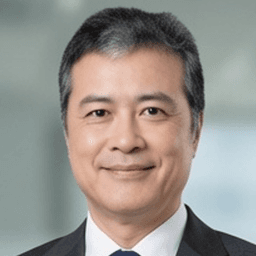
Japanese Reiki Shihan · traditional Usui Reiki, taught and certified in person
- ●Japanese Reiki Shihan (師範 / Reiki Master)
- ●Trained in the traditional Japanese Usui lineage
- ●20+ years of daily practice · teaches in person
- ●Former IT engineer & founder — grounded, no hype
I'm a Japanese Reiki Shihan who learned in the traditional Usui lineage and has practised every morning for over twenty years. My background is in IT and business, not the spiritual scene, so I write about Reiki plainly — what it is, how to practise it, and what it's honestly like — with no medical claims. Based in the Philippines, where I teach in person.
Enjoy this article?
Get honest, grounded writing on traditional Japanese Usui Reiki straight to your inbox.
Related Articles

Reiki Training in the Philippines: How to Choose a Course
Choosing Reiki training in the Philippines? Here are seven questions to ask before you book, how the levels are spaced, and what a Makati course involves.
9/24/2026
Usui Reiki Level 1 (Shoden): What the Course Actually Covers in One Day
Usui Reiki Level 1 (Shoden) is one in-person day: one attunement, a self-practice routine, and the Five Precepts. Here is what it covers and leaves out.
9/16/2026

The 21 Days After an Attunement: What I Ask Students
Why I give new Reiki students an instruction rather than an explanation for their first three weeks, and why I refuse to call any of it purification.
8/14/2026
The Questions I Ask Before Agreeing to Teach
A Japanese Reiki Shihan on the questions asked before accepting a student, and why 'not yet' is sometimes the kindest answer.
8/9/2026
What a Reiki Certificate Should and Shouldn't Mean
A Reiki certificate records that you received reiju in person — it never certifies healing power, and that honest distinction is the heart of the Usui path.
7/10/2026
Why I Teach Reiju (Attunement) In Person, Not Over Zoom
Reiju, the traditional Usui attunement, is a transmission of presence — the honest reason I still teach it in the same room, never over a screen.
7/9/2026