Reiki in a Cancer Center: Reading CURE's Interview
A grounded look at CURE's interview with a Reiki master at a cancer center: what her account actually shows, and what it honestly does not.

Japanese Reiki Shihan (師範) · traditional Usui Reiki · 20+ years of daily practice
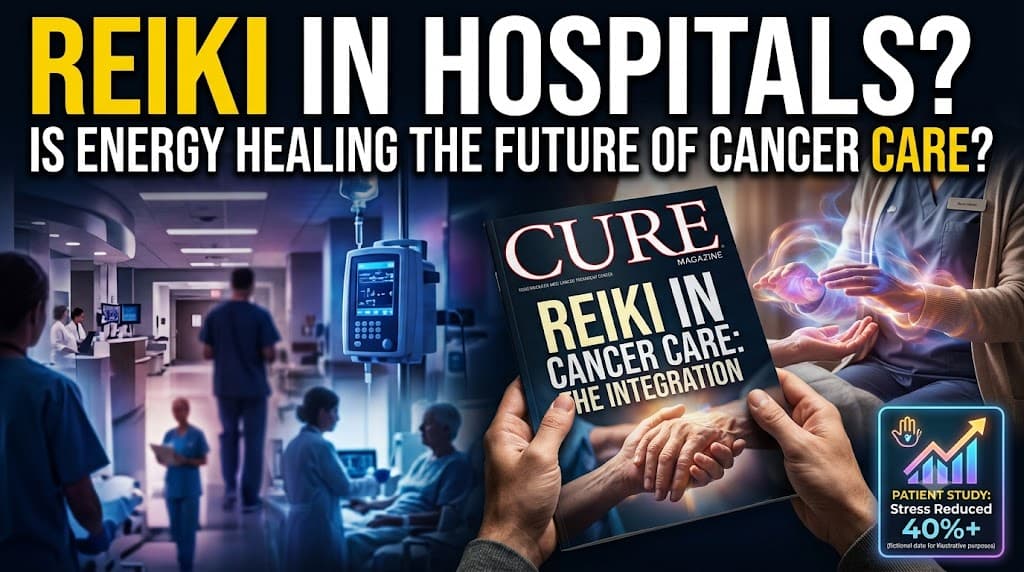
Reiki Inside a Cancer Center: How to Read CURE's Interview With a Reiki Master Honestly
A grounded look at a Reiki master's CURE interview — what her account shows, and what it honestly can't.
The source is a short video interview and edited transcript published by the cancer-focused outlet CURE on October 27, 2025, featuring Twanda Frazier, a Reiki master who offers sessions at the Montefiore Einstein Comprehensive Cancer Center in New York. In it she describes Reiki as an old, energy-based practice and explains what she sees it offering people living with cancer: a sense of emotional and spiritual balance, and space to let go of what she calls things that no longer serve them. It is a personal, first-person account — not a study, and not a set of measured results. For anyone curious about Reiki, a piece like this is worth reading slowly, because how we read it says a lot about whether we understand what Reiki honestly is and isn't.
Part 1: What the Source Says
Key Points
| Item | What the interview conveys |
|---|---|
| Format & date | CURE video interview with an edited transcript, published October 27, 2025 |
| Speaker | Twanda Frazier, described as a Reiki master |
| Fact-checked by | Spencer Feldman and Alex Biese (per CURE's byline) |
| Setting | She administers Reiki at the Montefiore Einstein Comprehensive Cancer Center in New York |
| How she defines Reiki | A very old Asian technique built on the idea that everything is energy — around us, within us, and between people |
| Focus for cancer patients | Emotional and spiritual balance, and releasing what she says no longer serves a person |
| Session pattern | People often return for more than one session and continue their own practice between visits |
| Her framing | She suggests that signing up is never a coincidence and that a person's "soul" already knows what it needs |
CURE — "What is Reiki Healing for Patients With Cancer?" (October 27, 2025) This summary was written from publicly available facts for explanatory purposes; see the original at the link above.
Part 2: What It Does — and Doesn't — Show
The first thing to be clear about is the kind of source this is. It is an interview, not a research paper. There is no study here: no group of participants, no sample size, no comparison or control group, no sham Reiki (a convincing fake version used to test whether an effect is specific to the real thing), no blinding (keeping participants or assessors unaware of who received what), and no measured before-and-after outcomes. So it cannot show that Reiki does or doesn't "work" in any scientific sense. It is one experienced practitioner describing, in her own words, how she understands and offers the practice.
It helps to separate plain fact from personal framing. The facts are straightforward: a named practitioner offers Reiki sessions at a named cancer center, and some patients choose to come back. The framing — that a person's soul knows what it needs, that signing up is never a coincidence, that a session releases "what no longer serves you" — is her spiritual interpretation. That's a perfectly reasonable thing for a practitioner to believe and say, but it is not a tested claim, and it is not a medical one.
This is the honest boundary that matters most: the interview does not claim that Reiki treats, shrinks, or cures cancer, and neither should anyone reading it. It speaks about emotional and spiritual experience. When a comprehensive cancer center makes a practice like this available, it is generally offered as complementary or supportive care — something a person may do alongside their medical treatment for comfort and relaxation — never as a replacement for it.
As for the wider evidence, the careful position is the honest one. In the United States, the National Center for Complementary and Integrative Health (NCCIH) — part of the National Institutes of Health — has long characterized the scientific evidence for Reiki's usefulness in treating health conditions as limited and inconclusive, in part because the studies that exist tend to be small and often lack sham controls or blinding. This interview is a human perspective, warmly told. It adds a voice; it does not add evidence.
A note on terms. Reiki (霊気 / "spiritual" or "universal energy") in its traditional Japanese form traces to Mikao Usui (臼井甕男). The word "healing" in the article's own title refers, in this context, to emotional and spiritual experience rather than to medical treatment — a distinction worth holding onto.
Part 3: A Grounded Practitioner's Take
Reading this as a traditional Japanese Usui practitioner, I recognize the warmth in it, and I'd gently pull one thing back down to earth: the framing that a person's soul "always knows." That's a beautiful sentiment, and I don't doubt it comforts people. But it isn't where I'd want a curious newcomer — least of all someone facing cancer — to start.
My own entry into Reiki had nothing to do with the mystical image most people expect. I didn't come to it through the spiritual world at all. The person who first told me about it was someone already successful in business, getting real results in the real world, not a "spiritual" type in the slightest. That first impression stayed with me, and it's the lens I still use: Reiki, honestly described, is relaxation and settling — a way to feel a little lighter and steadier. Not diagnosis, not treatment, not a cure.
That's also why the setting here matters more than any single phrase in the interview. Offered inside a cancer center, alongside a person's medical care, Reiki has a modest and honest role: a quiet, restful practice that some people find genuinely soothing during a very hard season. In my own tradition, the daily backbone isn't dramatic energy — it's the Five Precepts (五戒 / Gokai): just for today, do not anger, do not worry, be grateful, work diligently, and be kind to others. A short, calm practice, done regularly, is the whole of it. No pressure, no promises, and never a reason to step away from a doctor.
FAQ
Q: Does this interview prove Reiki helps people with cancer? A: No. It's one practitioner's first-person account, not a study — there's no control group, no measurement, no way to draw a conclusion about outcomes. At most, it describes an experience some people find relaxing and emotionally settling.
Q: If a hospital or cancer center offers Reiki, does that mean it's a proven treatment? A: Not on its own. Practices like this are typically offered as complementary or supportive care — something done alongside medical treatment for comfort — rather than as a treatment for the illness itself.
Q: What does "releasing what no longer serves you" actually mean? A: In plain terms, it's the practitioner's way of describing emotional release and relaxation during a quiet session. It's a feeling-oriented, personal framing — not a medical process.
Q: Should I ever choose Reiki instead of medical treatment? A: No. Reiki is not medical care and makes no claim to be. Anyone with a health condition should stay with their medical team; Reiki, if it appeals, sits beside that care, never in place of it.
The Bottom Line
- The source is a CURE interview (October 27, 2025) with a Reiki master who offers sessions at a New York cancer center, framing Reiki as energy work for emotional and spiritual balance.
- It's an interview, not research — no sample, no controls, no measured outcomes — so it can't show whether Reiki "works," and it makes no claim to treat or cure cancer.
- The wider scientific evidence for Reiki's effect on health conditions remains limited and inconclusive, and pieces like this add a human voice rather than new evidence.
- A grounded practitioner reads it plainly: Reiki, honestly described, is relaxation and settling offered alongside medical care — comforting for some, but never a substitute for it.
Read that way, the interview is a warm portrait of one person's practice — nothing more mystical than that, and nothing that should ever pull anyone away from their doctor.
Sources
About the author
Japanese Reiki Shihan · traditional Usui Reiki, taught and certified in person
- ●Japanese Reiki Shihan (師範 / Reiki Master)
- ●Trained in the traditional Japanese Usui lineage
- ●20+ years of daily practice · teaches in person
- ●Former IT engineer & founder — grounded, no hype
I'm a Japanese Reiki Shihan who learned in the traditional Usui lineage and has practised every morning for over twenty years. My background is in IT and business, not the spiritual scene, so I write about Reiki plainly — what it is, how to practise it, and what it's honestly like — with no medical claims. Based in the Philippines, where I teach in person.
Enjoy this article?
Get honest, grounded writing on traditional Japanese Usui Reiki straight to your inbox.
Related Articles
Reiki and Grief: Reading One Mother's BBC Story
A grounded look at a BBC story where Reiki, CBT and meditation helped a mother grieve — and what a single personal account can and can't show.
7/9/2026
When a Sceptic Tries Reiki: An Honest FT Read
An FT sceptic tries two Reiki sessions and finds calm but no fireworks. A grounded look at what the column shows — and what it honestly can't.
7/8/2026
Reiki for Shelter Cats: What the Forbes Story Shows
A Forbes feature on a volunteer using Reiki to settle shelter cats — an honest look at what it shows, what it can't, and how to read it.
7/6/2026
Reiki and the Burnout-Era Energy Healing Trend
Vogue Singapore's energy healing feature covers Reiki, Pranic Healing and Qigong. An honest read on what a wellness trend piece can and can't show.
7/5/2026
Reiki, "Energy Healing," and Religious Worry
A Reiki teacher's honest read of a 2026 Salt Lake Tribune commentary on "energy healing," "frequency" language, and religious concern.
7/4/2026
Self-Reiki for Sleep: What "Reiki Lite" Shows
A grounded look at "self-Reiki" for sleep from a Bustle wellness piece: what the calming hands-on ritual genuinely offers, and what it doesn't.
7/3/2026