Reiki Level 1, 2, and Master: What You Learn at Each
In traditional Usui Reiki, Level 1, Level 2, and Master each add a distinct layer — from daily self-practice to distant work to attuning and teaching others.

Japanese Reiki Shihan (師範) · traditional Usui Reiki · 20+ years of daily practice
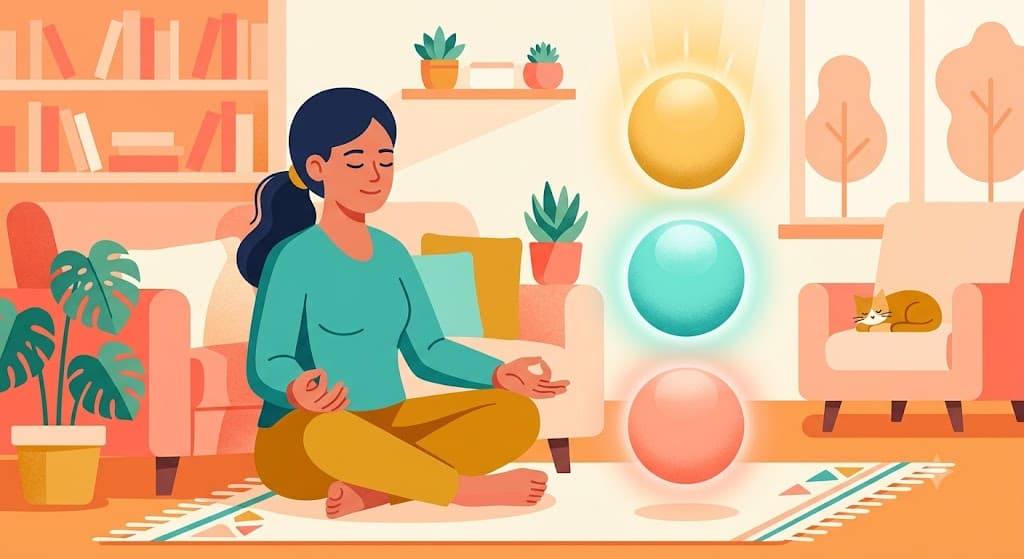
| Level | Japanese Name | Core Focus |
|---|---|---|
| Level 1 | 初伝 (Shoden) | Daily self-practice |
| Level 2 | 奥伝 (Okuden) | Symbols and distant work |
| Master | 神秘伝 (Shinpiden) | Attuning and teaching others |
People often ask me which level of Reiki they should aim for, as though the goal were to climb as high as possible as fast as possible. In the traditional Usui system there are three stages — 初伝 (Shoden), 奥伝 (Okuden), and 神秘伝 (Shinpiden) — and each one adds a different layer of practice rather than a stronger version of the same thing. Here is what actually happens at each stage, drawn from my own training and more than twenty years of daily practice.
Key Takeaways
| Point | In Short |
|---|---|
| The levels build on each other | Different kinds of practice, not a ranking of stronger energy |
| Distant Reiki | Always given with consent, never uninvited |
| The Master level | A teaching responsibility, not a reward |
- The three traditional stages of Usui Reiki build on one another; they mark different kinds of practice, not a ranking of who holds stronger energy.
- Distant Reiki, introduced at Level 2, is always given with consent — I never send it to someone who has not asked.
- Reaching the Master level (師範 / Shihan) means taking on the work of attuning and teaching others, which is a responsibility rather than a reward.
Key Terms Explained
| Term | Reading | English Meaning |
|---|---|---|
| 初伝 | Shoden | First Teachings |
| 奥伝 | Okuden | Inner Teachings |
| 神秘伝 | Shinpiden | Mystery Teachings |
| 靈授 | Reiju | Spiritual Blessing |
| 師範 | Shihan | Master Teacher |
- 初伝 (Shoden) / First Teachings — Level 1, focused on self-practice and the daily routine.
- 奥伝 (Okuden) / Inner Teachings — Level 2, where the symbols and distant work are introduced.
- 神秘伝 (Shinpiden) / Mystery Teachings — the Master level, which includes attuning and teaching others.
- 靈授 (Reiju) / Spiritual Blessing — the attunement passed in person from teacher to student.
- 師範 (Shihan) / Master Teacher — the traditional title for someone able to teach and attune.
The Two Weeks After My First Attunement
| First Two Weeks | What Happened |
|---|---|
| The routine | About twenty minutes daily |
| Consistency | Two weeks, no missed days |
| What I felt | Little at first — and that is normal |
I did not come to Reiki through the spiritual world. The person who first told me about it was already successful in business and getting real results in the ordinary world — not a "spiritual" type at all. That first impression mattered, because it had nothing to do with the mystical image most people expect.
 The first weeks of Level 1 are mostly quiet self-practice, and feeling little at first is completely normal.
When I received my first 靈授 (Reiju), the Level 1 attunement, I decided to test it the way I test most things. I kept a simple daily routine, about twenty minutes, every day for two weeks without missing once. And honestly, at first I did not feel much. I say this plainly because so many introductions promise instant heat or tingling the moment you are attuned. For me, nothing dramatic happened in those early weeks. If you are just starting and worried that you are "not feeling anything," I want you to know this is normal, and it is not a sign that Reiki is passing you by.
Related: How Long Does It Take to Become a Reiki Master? explains this in detail.
The Three Stages of Usui Reiki, Level by Level
| Stage | Level | What You Learn |
|---|---|---|
| 初伝 (Shoden) | Level 1 | Self-practice, daily routine, the precepts |
| 奥伝 (Okuden) | Level 2 | Symbols and distant work |
| 神秘伝 (Shinpiden) | Master | Attuning and teaching others |
In the traditional Japanese system, Reiki is taught in three levels, each given in person and each building on the one before. They are not grades in the sense of a school report. They are more like three different rooms in the same house.
 Each of the three stages — Shoden, Okuden, and Shinpiden — is taught in person and builds on the one before.
Related: Usui Reiki Level 2 (Okuden): What You Learn and When explains this in detail.
初伝 (Shoden): Level 1 — Practising on Yourself First
Level 1 is where everyone begins. The teacher gives the 靈授 (Reiju), and from there the work is mostly turned inward: hands-on self-practice, a simple daily routine, and living with the 五戒 (Gokai) / The Five Precepts, Usui's short set of daily principles for meeting the day. Nothing here is medical. The aim is to feel a little more settled, a little lighter, a little more relaxed in your own body.
Beginners often worry that they cannot feel the energy. A small, repeatable marker helps: when I practise, I frequently shiver, and I almost always yawn. Over the years I have come to read that yawn as a simple sign that the energy is being received. It is physical, ordinary, and it gives you something honest to notice while the subtler sensitivity develops.
One more thing I tell every Level 1 student: relaxation matters more than effort. Students arrive expecting the course to be difficult, and the part they find hardest is being told to stop trying so hard.
Related: Teaching Reiki Over Zoom, Ending In Person explains this in detail.
奥伝 (Okuden): Level 2 — Symbols and Distant Work
Level 2 opens two doors. The first is the Reiki symbols. Traditionally these were meant to be kept private, passed only through attunement. These days a quick search online turns up plenty of images, which is exactly why receiving them properly, in person, still matters — an image on a screen is not the same as the transmission.
The second door is 遠隔 (Enkaku) / distant Reiki, the practice of sending Reiki across distance. Distant Reiki is not bound by time or place. Clients have asked me to send Reiki to a past version of themselves who was struggling, or to a future self facing a hard decision, and I treat those requests as completely natural. People often ask me to send it "whenever is convenient," without setting a time. When I tell them afterwards the exact moment I did it, more than once they have said they suddenly felt lighter at precisely that time, even though they had not known it in advance.
That said, distant work comes with a rule I want every Level 2 student to hold firmly: consent always. I never send distant Reiki to a person who has not asked. Even when I would love to help someone, I do not send it uninvited. The same applies to animals — Reiki can be given gently to a dog or cat, but only ever with the owner's permission and at their request. Working with a beloved pet can be a lovely first reason for someone to learn at all.
神秘伝 (Shinpiden): Master — Attuning and Teaching Others
The Master level, 神秘伝 (Shinpiden), is the one most misunderstood. People imagine it means the strongest, purest, most powerful Reiki. That is not what it is. Shinpiden is where you learn to give the 靈授 (Reiju) to others and to teach — to become a 師範 (Shihan), a teacher in the lineage. It is less a reward than a responsibility.
The part I treasure most is watching the practice pass onward. One student of mine used to be quick-tempered and took every setback badly. After learning Reiki he told me he had come to see things more positively, and he went on to recommend it to his own mother. Watching a student become the one who passes it on is, to me, what the Master level is actually for.
What "Advancing" Does and Doesn't Mean
| Advancing a Level | The Reality |
|---|---|
| Does it give stronger energy? | No |
| What actually changes | Your relationship to the practice and its range |
| A quiet sign of progress | The practice often grows simpler and shorter over time |
I spent a long career in IT and now work as an AI engineer here in Manila, so the engineer in me always wants to know what genuinely changes and what does not. With Reiki levels, the honest answer is this: advancing does not hand you a stronger current of energy. What changes is your relationship to the practice and the range of what you can do with it.
 After years of practice, mornings often shrink to a few quiet minutes — a subtler feel for the energy, not a stronger one.
Here is a sign of that, from my own routine. These days my morning practice is about five minutes. I used to recite the precepts out loud; now I simply open my arms toward the window, let the energy in, and take it into my body. After all these years I feel the energy with my body rather than through words. That shift is quiet, and it did not arrive from reaching a higher level — it came from time and repetition.
What turned my own half-belief into conviction was never a mystical event. It was my life slowly turning in a better direction over the years. I don't mention that to impress anyone; I mention it because it is the actual evidence behind what I value. Reiki, to me, is simply connecting with the energy of the universe and letting it turn life in a better direction. Nothing more mystical than that, and nothing less.
And if none of this appeals to you right now, that is completely fine. I think it just means it is not your time yet. There is a right moment to learn anything, and when yours comes, you will often find you have already started before you consciously decided to. I never push.
FAQ
Q: Do I need to complete all three levels?
A: No. Many people stay at Level 1 for a long time, or for good, and get everything they need from daily self-practice. Level 2 makes sense if you want to work with the symbols and offer distant Reiki to others; the Master level is for those who feel called to teach. There is no obligation to climb.
Q: Does the Master level mean my Reiki is more powerful?
A: No. The Master level (神秘伝 / Shinpiden) adds the ability to attune and teach others. It is a change in role and responsibility, not an upgrade to a stronger form of energy. A committed Level 1 practitioner and a Shihan draw on the same universal energy.
Q: Can I just learn the symbols online instead of receiving an attunement?
A: You can certainly find the images online, but that is not the same as receiving them in person through the 靈授 (Reiju). The symbols were traditionally kept private and passed by attunement for a reason. If they matter to you, I would encourage learning them properly with a teacher.
Key Insights to Remember
-
The three levels are not a ladder of power. Shoden, Okuden, and Shinpiden mark different kinds of practice — self-care, distant work, and teaching — and each is complete in its own right. Choosing to stay where you are is a valid choice, not a failure to progress.
-
Consent is not a formality; it is part of the practice itself. Distant and animal Reiki are only ever given when asked for. That restraint is one of the first things I want any student to understand, because it protects the honesty of the whole thing.
-
Progress in Reiki is quiet and inward. It tends to show up as a subtler feel for the energy and a calmer relationship to daily life, not as dramatic sensations or special powers. If your practice has become simpler and shorter over the years, that is often a good sign rather than a lazy one.
Sources & References
About the author

Japanese Reiki Shihan · traditional Usui Reiki, taught and certified in person
- ●Japanese Reiki Shihan (師範 / Reiki Master)
- ●Trained in the traditional Japanese Usui lineage
- ●20+ years of daily practice · teaches in person
- ●Former IT engineer & founder — grounded, no hype
I'm a Japanese Reiki Shihan who learned in the traditional Usui lineage and has practised every morning for over twenty years. My background is in IT and business, not the spiritual scene, so I write about Reiki plainly — what it is, how to practise it, and what it's honestly like — with no medical claims. Based in the Philippines, where I teach in person.
Enjoy this article?
Get honest, grounded writing on traditional Japanese Usui Reiki straight to your inbox.
Related Articles

Usui Reiki Level 2 (Okuden): What You Learn and When
Usui Reiki Level 2 (Okuden) from a Shihan: what you learn, the 21-day rule after Level 1, what the one-day class covers, and what it does not promise.
10/2/2026

Reiki Training in the Philippines: How to Choose a Course
Choosing Reiki training in the Philippines? Here are seven questions to ask before you book, how the levels are spaced, and what a Makati course involves.
9/24/2026
Usui Reiki Level 1 (Shoden): What the Course Actually Covers in One Day
Usui Reiki Level 1 (Shoden) is one in-person day: one attunement, a self-practice routine, and the Five Precepts. Here is what it covers and leaves out.
9/16/2026
The 21 Days After an Attunement: What I Ask Students
Why I give new Reiki students an instruction rather than an explanation for their first three weeks, and why I refuse to call any of it purification.
8/14/2026
The Questions I Ask Before Agreeing to Teach
A Japanese Reiki Shihan on the questions asked before accepting a student, and why 'not yet' is sometimes the kindest answer.
8/9/2026

What Reiki Should Cost: Pricing and Red Flags
There is no standard price for Reiki, which is what makes it hard to judge. Four pricing patterns worth walking away from.
8/5/2026