The Blessing I Silently Give Every Stranger I Pass
The tiny practice behind the fifth precept, and why unseen kindness trains the one who gives it.

Japanese Reiki Shihan (師範) · traditional Usui Reiki · 20+ years of daily practice
Key Takeaways
- A practice does not have to be visible, long, or mystical to be real. A single silent sentence, offered to a stranger in passing, is a complete act of practice — and anyone can start it today, no attunement required.
- The Five Precepts end with "be kind to people," and the hardest thing about that instruction is not agreeing with it but finding a form small enough to actually do. A silent blessing is that form: kindness with no cost, no audience, and no reply needed.
- What a habit like this changes first is not the stranger — you will never know what it did for them — but the person doing the blessing. Attention trained toward goodwill, dozens of times a day, quietly rewires how the world looks.
Key Terms Explained
- 五戒 (Gokai) / The Five Precepts — Usui's daily principles; the fifth is 人に親切に (hito ni shinsetsu ni), "be kind to people."
- 陰徳 (Intoku) / Hidden Virtue — The traditional Japanese idea that good done in secret, with no witness or reward, has a special weight.
- 師範 (Shihan) / Master Teacher — A teacher in the traditional Usui lineage authorized to teach and attune others.
The Sentence I Say to No One, All Day Long
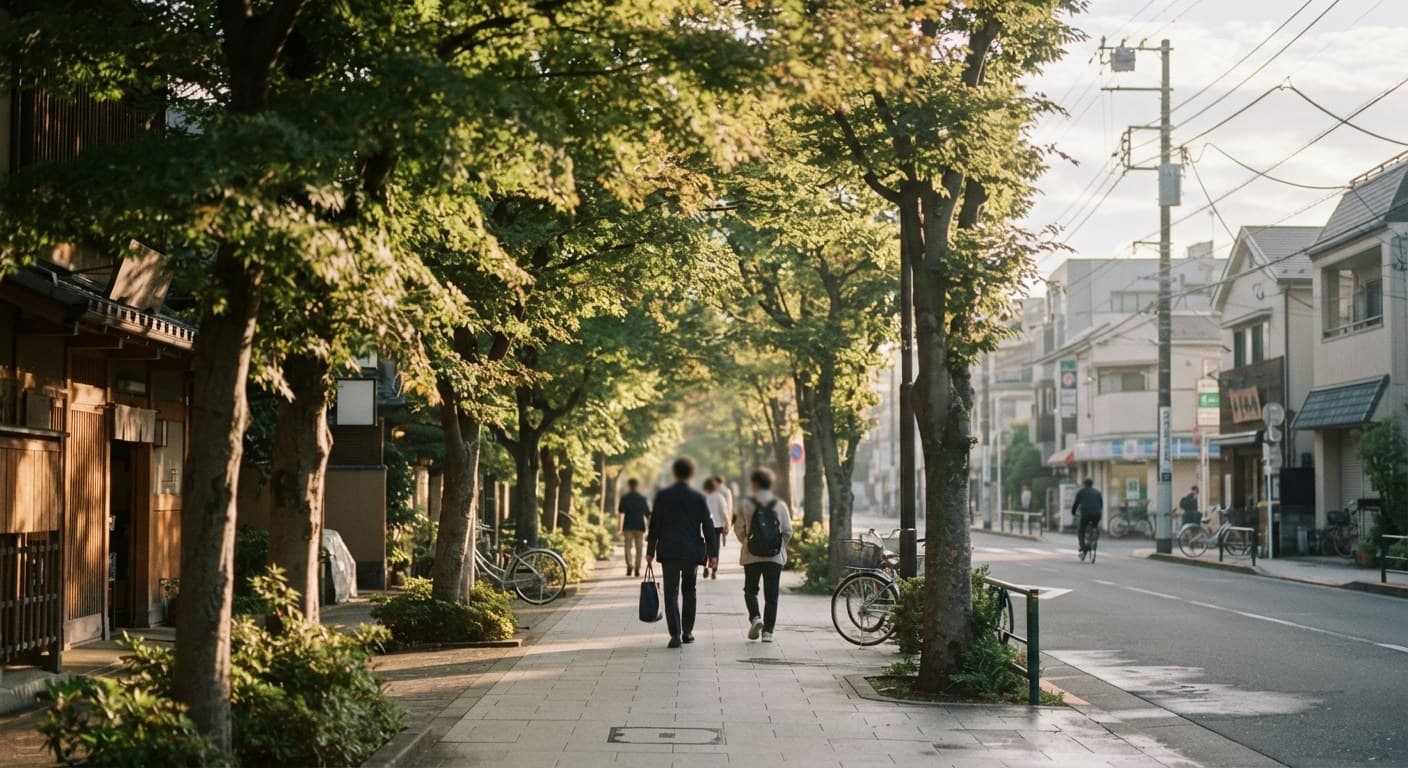
Here is the habit: when I pass someone on the street — a stranger, any stranger — I silently offer them one line. May all good things come to you like an avalanche. No pause in my step, no eye contact required, no change in my face. The person walks on, never knowing. That is the whole practice.
I chose an avalanche on purpose. Blessings, when we bother to think them at all, tend to be cautious — "have a nice day," a teaspoon of goodwill. I wanted the opposite: excess, absurd abundance, good fortune arriving with the momentum of a mountainside letting go. If I am going to wish a stranger well silently — where wishes cost nothing — why wish small?
It began as my own answer to a question every student of the precepts eventually faces. 人に親切に (hito ni shinsetsu ni: be kind to people) is the fifth and final precept, and it is easy to nod at and hard to schedule. Held doors and generous tips need occasions. I wanted a kindness with no occasion — something I could practice on a crowded sidewalk, in a queue, through a bus window. The silent blessing was what I found, and it has been running ever since, like a small program in the background of my days.
Related: The Five Reiki Precepts (Gokai), Explained Line by Line: What Usui Actually Asked of Us explains this in detail.
Why a Silent Blessing Counts as Practice
Kindness scaled down to always-available
The genius of tiny practices is that they remove every excuse. This one requires no time (it fits inside a footstep), no money, no courage, and no cooperation from the world. The traditional forms of Reiki practice — morning precepts, self-treatment, sending distant healing on request — all have their place and their etiquette. But between those anchors lie thousands of ordinary moments, and a practice that lives in those moments changes the texture of a day in a way scheduled practice cannot.
Related: From Quick-Tempered to Calmer: What One of My Students Noticed After Level 1 explains this in detail.
The Japanese weight of unseen good
Japan has an old name for good done without witnesses: 陰徳 (intoku: hidden virtue). The idea, inherited from Buddhist and folk ethics alike, is that a good deed loses something when it is displayed — and keeps a particular purity when no one, not even the beneficiary, knows it happened. A silent blessing is intoku in its purest form. There is no way to be thanked, no way to be seen, no way for the ego to collect its usual commission. Whatever the practice is doing, it is doing it clean.
What it trains in the one who blesses
Let me be honest about mechanisms, as a former engineer: I make no claims about what my sentence does for the stranger. Distant Reiki, in my tradition, is only ever sent when requested — and this is not that. It is a wish, not a treatment. But I can report, from years of daily use, what it does on my side of the sidewalk. It is difficult to silently wish someone an avalanche of good things and simultaneously resent them for walking slowly. The habit interrupts the low-grade adversarial hum a crowded city breeds. Person by person, it recasts strangers from obstacles into recipients — and the one doing the recasting is me.
What Changed, Slowly
What turned my half-belief in these practices into conviction was never a mystical experience. It was my life slowly turning for the better — leaving salaried work, building something of my own, watching it hold. I do not share that as boasting but as the honest shape of my evidence: not lightning, just a long, quiet trend line.
The blessing habit sits inside that trend. And I have watched the same pattern in students. One of mine was quick-tempered, taking every setback badly; after learning Reiki he told me he had become able to see things positively — and then he recommended the practice to his own mother. Watching a student become the one who passes it on is the part I treasure most. Kindness, it turns out, travels exactly the way the precepts hope it does: quietly, person to person, without anyone making an announcement.
FAQ
Q: Do I need to learn Reiki before trying this? A: No. The silent blessing needs no attunement, no training, and no belief. It is simply the fifth precept made portable. If it draws you toward the deeper practice later, wonderful — but it stands on its own.
Q: Isn't this just wishful thinking with extra steps? A: If you strip every metaphysical claim away, what remains is an attention-training habit with a documented human tendency behind it: what we repeatedly direct our mind toward shapes how we experience people. I am comfortable with both readings. The practice does not require you to pick one.
Q: Is a silent blessing the same as sending distant Reiki? A: No, and the distinction matters in my tradition. Distant Reiki is a deliberate practice I only ever perform when someone has asked for it. The blessing is a wish — the kind anyone offers when they say "safe travels" — just made silent, generous, and habitual. Consent applies to treatment, not to goodwill.
Key Insights to Remember
- The precepts become real at the smallest available size. "Be kind to people" stays an ideal until it has a form that fits inside an ordinary moment — and once it does, practice stops being something you schedule and becomes something you are doing anyway.
- Unseen kindness is self-correcting kindness. Because a silent blessing can never be seen, thanked, or performed, it trains generosity without feeding the part of us that wants credit — the exact trap that visible virtue falls into.
- Bless bigger than feels reasonable. The wish costs the same whether you offer a pleasant afternoon or an avalanche of good things. Wishing extravagantly for strangers loosens something stingy in the wisher — and that loosening, repeated across years, may be the practice's real gift.
Sources
About the author

Japanese Reiki Shihan · traditional Usui Reiki, taught and certified in person
- ●Japanese Reiki Shihan (師範 / Reiki Master)
- ●Trained in the traditional Japanese Usui lineage
- ●20+ years of daily practice · teaches in person
- ●Former IT engineer & founder — grounded, no hype
I'm a Japanese Reiki Shihan who learned in the traditional Usui lineage and has practised every morning for over twenty years. My background is in IT and business, not the spiritual scene, so I write about Reiki plainly — what it is, how to practise it, and what it's honestly like — with no medical claims. Based in the Philippines, where I teach in person.
Enjoy this article?
Get honest, grounded writing on traditional Japanese Usui Reiki straight to your inbox.
Related Articles
The Five Reiki Precepts (Gokai), Line by Line
Why 'just for today' carries the whole text, and what each line asks about anger, worry, gratitude, work, and kindness.
7/22/2026

Reiki Training in the Philippines: How to Choose a Course
Choosing Reiki training in the Philippines? Here are seven questions to ask before you book, how the levels are spaced, and what a Makati course involves.
9/24/2026
Usui Reiki Level 1 (Shoden): What the Course Actually Covers in One Day
Usui Reiki Level 1 (Shoden) is one in-person day: one attunement, a self-practice routine, and the Five Precepts. Here is what it covers and leaves out.
9/16/2026

A Reiki Trial That Included a Sham Group
A 2026 trial compared Reiki against sham Reiki in 60 ventilated ICU patients. An honest reading of what the results support.
8/18/2026

What to Do When a Client Falls Asleep During Reiki
People fall asleep during Reiki often, and it is neither a problem nor proof that anything worked. Why it happens, and what to do.
8/18/2026

Why Most Reiki Studies Cannot Be Compared With Each Other
People ask what the research says as though the studies can be added together. Four ordinary differences block comparison.
8/17/2026