Usui Reiki Level 2 (Okuden): What You Learn and When
Usui Reiki Level 2 (Okuden) from a Shihan: what you learn, the 21-day rule after Level 1, what the one-day class covers, and what it does not promise.

Japanese Reiki Shihan (師範) · traditional Usui Reiki · 20+ years of daily practice

Key Takeaways
- Level 2 adds three things: the symbols, distant Reiki (sending Reiki to someone who is not in the room), and treating other people and animals. It does not make you a "stronger" healer, and it is not a medical qualification.
- The usual timing: practice Level 1 every day for at least 21 days first. Most students come back for Level 2 one to three months after Level 1.
- The class itself: in this course, Level 2 is one in-person day of about five hours in Makati, Metro Manila, with 2 to 4 students. The attunement (the ceremony that passes Reiki on to you) cannot be received online.
Key Terms Explained
- 奥伝 (Okuden) / Inner Teachings — Level 2, where the symbols, distant Reiki and work with other people are taught.
- 初伝 (Shoden) / First Teachings — Level 1, where the practice is turned toward yourself.
- 神秘伝 (Shinpiden) / Mystery Teachings — the Master level.
- 靈授 (Reiju) / Spiritual Blessing — the attunement, passed from teacher to student in person.
- 遠隔 (Enkaku) / Distant — sending Reiki to someone who is not in the room.
What Usui Reiki Level 2 actually is
Traditional Usui Reiki is taught in three steps. Each step has a Japanese name and an English translation:
- Shoden (初伝), "first teachings": Level 1.
- Okuden (奥伝), "inner teachings": Level 2.
- Shinpiden (神秘伝), "mystery teachings": the Master level.
So when someone says "Usui Reiki Level 2", they mean Okuden. The name tells you what to expect. Level 1 is where you learn the basics and begin your own daily practice. Level 2 goes one layer deeper: new tools, new ways of using Reiki, and more responsibility toward the people you work with.
In my course, Level 2 is called Level 2 — Okuden. The short description on the Courses page is "The symbols, distant healing, and working with others." Those three phrases are a good map for the rest of this article.
What is different between Level 1 and Level 2
The simplest way to see the difference is to look at what your hands do.
At Level 1, a practitioner places one or both hands on or just above the body for several minutes. At Level 2, a practitioner can also work at a distance, with no touch at all. Wikipedia's summary of Reiki describes the levels in exactly these terms.
That is the practical change. Here is what the Level 2 day covers in this course:
- The Level 2 attunement. An attunement (靈授, reiju) is a short ceremony in which the teacher passes Reiki on to the student in person. Each level has its own.
- Three symbols and how to use them. Symbols are traditionally called shirushi (印), and the matching words are called jumon (呪文) or mantras. This course teaches the three symbols and their use in the room. I do not publish their shapes or sounds here, and the reason is covered below.
- Distant Reiki: the method, and the etiquette of consent. You learn how to send Reiki to someone who is not with you, and just as important, when you are allowed to.
- Treating other people and animals. Level 1 centres on treating yourself. Level 2 is about working with others in a proper, respectful way.
- A Level 2 certificate that names the lineage (the line of teachers your training comes from).
- One 30-minute follow-up call after the class.
Other schools organise Okuden differently, and it helps to see the range. One 8-hour class lists these items: Hatsurei Ho (a meditation), three Reiki symbols and mantras, Enkaku Chiryo Ho (distant treatment), Byosen Reikan Ho (a scanning method for sensing where something feels "off"), Reiju Ho, and discussion of professional practice. Nicholas Pearson's book on the Japanese methods, Foundations of Reiki Ryoho: A Manual of Shoden and Okuden, describes the same scanning idea as exploring a person's energy field to find the trouble spot. The names change from school to school. The core of Okuden stays the same: the symbols, distance work, and a more refined way of sensing and treating.
What Level 2 does not change
Many people hope Level 2 will make Reiki "stronger." This course does not teach that, and I do not promise it.
Here is what stays the same:
- Reiki is still a relaxation practice. It is not a medical treatment. It does not diagnose, cure, or replace care from a doctor. That sentence is printed on the course pages because it is true.
- Relaxing matters more than trying hard. Sitting longer or concentrating harder does not make a session better. My own morning practice takes about five minutes, and that is enough. If a short session is enough for someone with more than 20 years of daily practice, a short session is enough for you.
- Your daily practice is still the foundation. Level 2 gives you more things to do. It does not replace the habit you built after Level 1.
The research picture is also worth knowing before you sign up for anything. The US National Center for Complementary and Integrative Health (NCCIH) states that Reiki has not been clearly shown to be effective for any health-related purpose. It says studies on pain, anxiety and depression have been of low quality with inconsistent results, and that there is no scientific evidence for the energy field Reiki is thought to use. The same page says Reiki has not been shown to have any harmful effects. I think you should hear this from the source, not discover it later. Many people learn Reiki as a calm, steady daily habit and a way of caring for others, and that is how I teach it.
When to take Level 2
The rule in this course is simple: you need Level 1, and you need at least 21 days of daily practice after it.
The 21 days are not a waiting room. They are the actual preparation. When I took my first attunement, I practised about 20 minutes a day for two weeks without missing a day, and honestly, I felt almost nothing at first. What changed me later was not a dramatic event. It was the slow build-up of a habit, and a life that began to turn in a better direction. The 21 days are meant to build exactly that habit. What I ask of students during those weeks is described in The 21 Days After an Attunement: What I Ask Students, and Level 1 itself is covered in Usui Reiki Level 1 (Shoden): What the Course Actually Covers in One Day.
Most students take Level 2 one to three months after Level 1. If you are not ready at three months, that is fine. If you feel no pull toward Level 2 yet, then it is not your time yet. I never push anyone.
If you want to take both levels in one trip, they are held as two separate days, at least 21 days apart.
What a Level 2 day looks like
- Format: in person only, one day of about five hours.
- Place: Makati, Metro Manila. The venue is shared after your booking is confirmed.
- Group size: 2 to 4 students. A one-to-one private class is possible too.
- Booking: a 20% deposit holds your date. You can start from the Courses page or the Contact page.
A small group matters for this level. Working with another person is hands-on, and a class of two to four lets me stand next to each student and answer questions one by one.
Why the attunement and the symbols are in person
You cannot receive the attunement online. In the Japanese tradition it is passed in person, and I teach it that way. There is an online theory course for everything except the attunement, and its fee is deducted from the in-person course price.
The same reasoning applies to the symbols. Traditionally they are not published. They are handed over together with the attunement. Today anyone can find images of them in a search, and that is exactly why receiving them properly, face to face, means something. A picture shows a shape. A teacher shows you how it is held, when it is used, and why you keep it to yourself. The history behind that secrecy is in Reiki Symbols: Why They Were Meant to Be Secret (and What Changed When They Weren't).
Distant Reiki and the rule I teach first
Distant Reiki does not depend on time or place. Some students ask me to send it to their past or future self, and I treat that as a natural request. I have also been asked to send Reiki without a fixed time, then told the time afterwards, and a few people said they felt lighter at that exact moment. I report this as their experience. It is not a scientific result, and it does not replace medical care.
The first rule I teach in the distant part of Level 2 has nothing to do with technique:
- Never send distant Reiki to someone who has not asked for it.
- For a pet, ask the owner. I treat dogs and cats only when the owner has given permission and made the request.
Skill comes second. Respect for the other person's choice comes first. You can read the longer version in How Distant Reiki Works — and Why I Never Send It Uninvited.
Level 1 from another school: can you join?
Usually yes. In this course, there is a short conversation about what you learned, and then you join Level 2 in this lineage. This matters because the word "Reiki" is not controlled by any central authority. Anyone can use the words "reiki" or "reiki master", so two Level 1 certificates from different teachers can mean quite different training. The short conversation lets me find out what you actually practise before building on it.
Other lineages set their own rules. Jikiden Reiki, for example, runs a three-day seminar: Shoden in the evening of day one and the second and third parts on day two, then Okuden on day three. Their rule is that new students must complete the Shoden part before taking the Okuden part, and they do not allow joining or leaving partway. My lineage goes back to Mikao Usui through the traditional Japanese direct-transmission line, not through Western Reiki. If you are choosing a school, compare these rules, not only the price and the certificate.
What comes after Level 2
The next level is Master (Shinpiden). The requirement here is Level 2 plus at least six months of regular practice, and a short conversation beforehand. The Japan retreat is open to all levels.
I became a Shihan because teaching lets me help more people. The same attitude applies from Level 2 onward: each step asks for more responsibility, not just more techniques.
FAQ
Q: How long should I wait between Level 1 and Level 2? A: At least 21 days of daily practice. Most students take Level 2 one to three months after Level 1. If you are booking both levels together, they are two separate days at least 21 days apart.
Q: Can I take Level 2 if I learned Level 1 somewhere else? A: Usually yes. In this course there is a short conversation about what you learned, and then you join Level 2 in this lineage. Other schools have their own rules, and some require you to complete their own Level 1 first.
Q: Can I get the Level 2 attunement online? A: No. In the Japanese tradition the attunement is given in person, and this course teaches it that way. The online theory course covers everything except the attunement, and its fee is deducted from the in-person course price.
Summary and Next Step
Usui Reiki Level 2 (Okuden) is the second of three traditional steps. It adds the symbols, distant Reiki with its etiquette of consent, and working with other people and animals. It does not make Reiki a medical treatment, and it does not promise stronger results. You need Level 1 and at least 21 days of daily practice before you start. In this course it is one in-person day of about five hours in Makati, in a group of 2 to 4 (or one-to-one), with an attunement, three symbols, a certificate that names the lineage, and a 30-minute follow-up call.
If you have finished Level 1 and your daily practice is steady, look at the Level 2 — Okuden course on the Courses page, or send a message from the Contact page with your Level 1 background and your preferred dates. I will reply with the details and the next available day. A 20% deposit holds your date.
Sources
- Courses — Ayama Reiki (Level 2 — Okuden)
- Usui Reiki Ryoho — International House of Reiki
- Reiki classes — Japanese Culture Center
- Foundations of Reiki Ryoho: A Manual of Shoden and Okuden — Nicholas Pearson (Healing Arts Press, 2018)
- Jikiden Reiki seminar information — Jikiden Reiki Institute
- Reiki — Wikipedia
- Reiki — NCCIH (National Center for Complementary and Integrative Health)
About the author
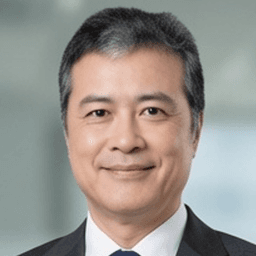
Japanese Reiki Shihan · traditional Usui Reiki, taught and certified in person
- ●Japanese Reiki Shihan (師範 / Reiki Master)
- ●Trained in the traditional Japanese Usui lineage
- ●20+ years of daily practice · teaches in person
- ●Former IT engineer & founder — grounded, no hype
I'm a Japanese Reiki Shihan who learned in the traditional Usui lineage and has practised every morning for over twenty years. My background is in IT and business, not the spiritual scene, so I write about Reiki plainly — what it is, how to practise it, and what it's honestly like — with no medical claims. Based in the Philippines, where I teach in person.
Enjoy this article?
Get honest, grounded writing on traditional Japanese Usui Reiki straight to your inbox.
Related Articles

Reiki Training in the Philippines: How to Choose a Course
Choosing Reiki training in the Philippines? Here are seven questions to ask before you book, how the levels are spaced, and what a Makati course involves.
9/24/2026
Usui Reiki Level 1 (Shoden): What the Course Actually Covers in One Day
Usui Reiki Level 1 (Shoden) is one in-person day: one attunement, a self-practice routine, and the Five Precepts. Here is what it covers and leaves out.
9/16/2026
The 21 Days After an Attunement: What I Ask Students
Why I give new Reiki students an instruction rather than an explanation for their first three weeks, and why I refuse to call any of it purification.
8/14/2026
The Questions I Ask Before Agreeing to Teach
A Japanese Reiki Shihan on the questions asked before accepting a student, and why 'not yet' is sometimes the kindest answer.
8/9/2026
What Reiki Should Cost: Pricing and Red Flags
There is no standard price for Reiki, which is what makes it hard to judge. Four pricing patterns worth walking away from.
8/5/2026
What a Reiki Certificate Should and Shouldn't Mean
A Reiki certificate records that you received reiju in person — it never certifies healing power, and that honest distinction is the heart of the Usui path.
7/10/2026