My 5-Minute Morning Reiki Routine, After 20 Years
After twenty years of daily practice, my morning Reiki takes five minutes at an open window. Why shorter turned out to be enough.

Japanese Reiki Shihan (師範) · traditional Usui Reiki · 20+ years of daily practice

Key Takeaways
| Insight | In short |
|---|---|
| Consistency beats ambition | A short daily practice kept for years does more than a long routine dropped after a month. |
| Words give way to feeling | The practice moves from spoken precepts toward bodily sensing, and that shift takes time rather than effort. |
| Feeling nothing is normal | Little or no sensation in the first weeks is common, and it is not a sign of failure. |
- A short, honest daily practice sustained over years does more than an ambitious routine abandoned after a month.
- Reiki practice tends to move from words toward bodily feeling, and that shift takes time rather than effort.
- Feeling little or nothing during the first weeks of practice is common and is not a sign of failure.
Key Terms Explained
| Term | Reading | Meaning |
|---|---|---|
| 靈氣 | Reiki | Universal Energy |
| 五戒 | Gokai | The Five Precepts |
| 靈授 | Reiju | Attunement |
| 師範 | Shihan | Teacher-Master |
- 靈氣 (Reiki) / Universal Energy — connecting with the energy of the universe and letting it settle your life in a better direction.
- 五戒 (Gokai) / The Five Precepts — Usui's daily principles, traditionally recited morning and evening.
- 靈授 (Reiju) / Attunement — the in-person transmission from teacher to student that opens the practice.
- 師範 (Shihan) / Teacher-Master — the level in the traditional Usui lineage permitted to teach and give reiju.
Five Minutes at an Open Window
| Step | Duration | Note |
|---|---|---|
| Stand facing the open window | A moment | No special posture, no preparation ritual |
| Open the arms wide and let the energy in | About five minutes | Relaxed, not concentrating hard |
| Take it into the body | Same five minutes | A yawn, sometimes a shiver, often arrives here |
| The routine I began with | About twenty minutes | Precepts recited out loud, kept daily for two weeks after my first reiju |
These days my morning practice is about five minutes. I used to recite the precepts out loud, standing there, working through them line by line. Now I simply open my arms wide toward the window, let the energy in, and take it into my body. That is the whole thing.
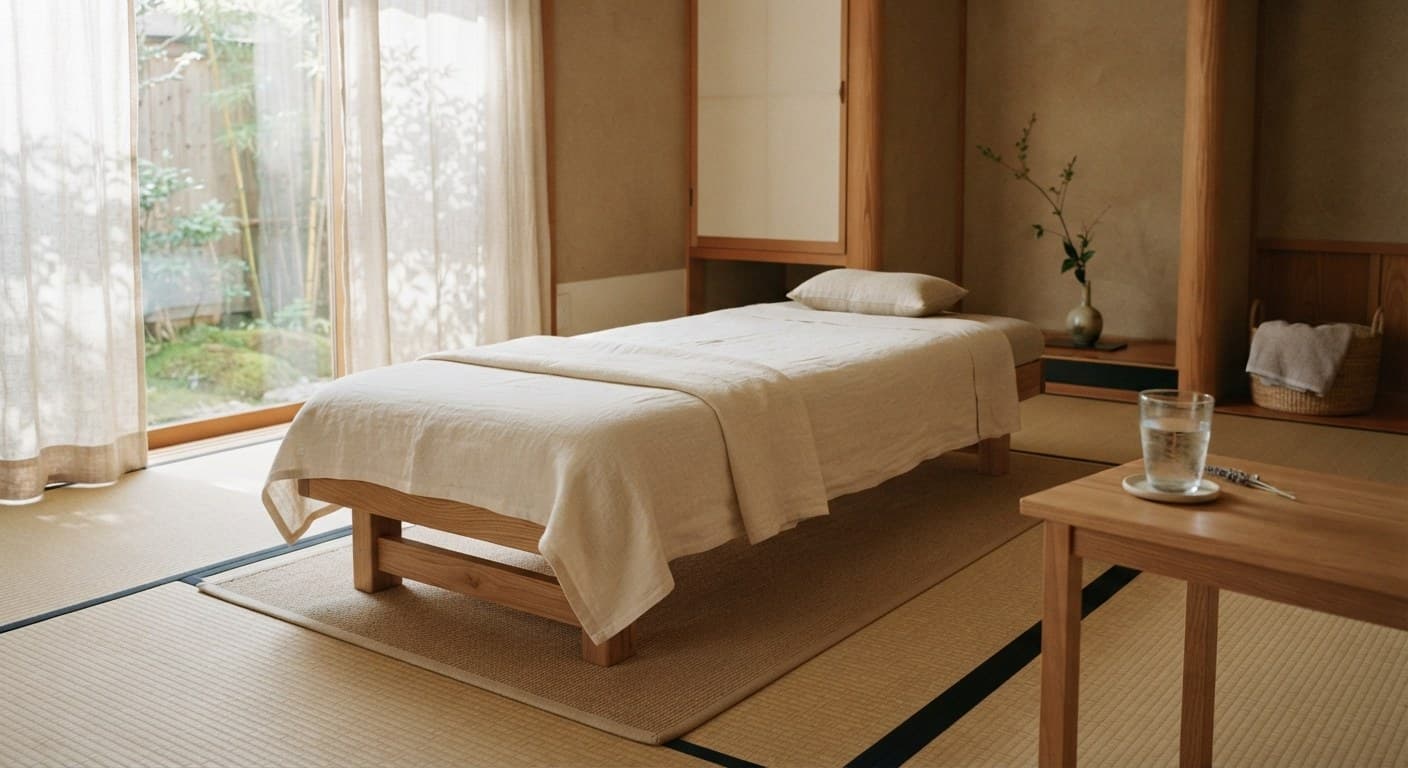
 Five quiet minutes at the window: arms open, letting the energy in.
When I practise, I often shiver, and I almost always yawn. The yawn arrives so reliably that I have come to read it as a sign the energy is being received. It is not dramatic. Nobody watching would think anything was happening at all.
I know how this sounds to someone who has never done it, because I was that person. I did not come to Reiki through the spiritual world. The person who first told me about it was already successful in business, getting real results in the real world, and was not a "spiritual" type at all. My very first impression of Reiki had nothing to do with the mystical image most people expect — and I think that is why I gave it a chance.
After my first attunement, the Level 1 reiju, I kept the simple daily routine — about twenty minutes — for two weeks without missing a day. Honestly, I didn't feel much at first. I say this plainly, because so many introductions promise instant heat or tingling in the palms. Nothing dramatic happened to me in those early weeks. I kept going anyway.
Twenty years later the routine is a quarter of its original length, and it means more to me than it did then.
Related: Yawning and Shivers: The Body Signs You're Receiving Reiki explains this in detail.
What Actually Changed Over Twenty Years
| Angle | Then | Now |
|---|---|---|
| The precepts | Recited out loud, line by line | Felt with the body rather than spoken |
| Length and effort | Longer sitting, harder concentration | About five relaxed minutes |
| Physical signs | Watched for anxiously, rarely noticed | A yawn and sometimes a shiver, read as quiet markers |
From words to body
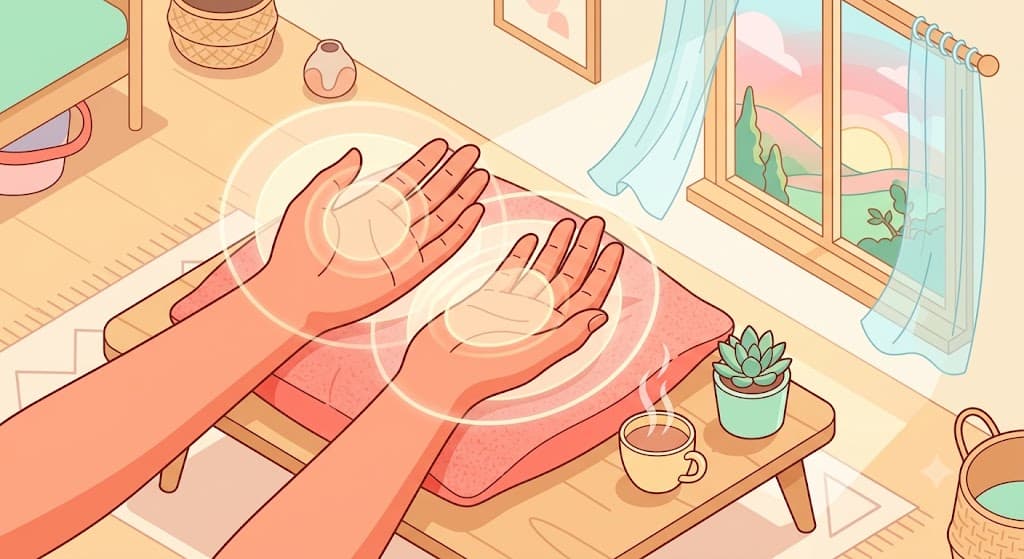 Over the years the practice moved from spoken precepts toward simply feeling with the body.
The shift from reciting the 五戒 (Gokai) / The Five Precepts aloud to simply standing with open arms was not a decision. It happened gradually, the way a language you have spoken for decades stops needing translation.
Early on, the words were scaffolding. They gave the practice a shape and gave my mind something to hold. After all these years I feel the energy with my body rather than through words, and that shift is one quiet sign of how far the practice carries you. I do not think it can be rushed, and I would not tell a beginner to skip the precepts because I no longer say them out loud. They were the road I walked to get here.
Related: Why Relaxation Beats Trying Hard in Reiki: What Twenty Years of Practice Taught Me explains this in detail.
Why shorter, not longer
A common misunderstanding is that the harder you concentrate, or the longer you sit, the more it works. In my experience it is the opposite. Relaxation matters most, and even a short session is enough. My own five honest minutes a morning are the proof.
I worked in IT for a long time before I ever taught Reiki, and engineers are trained to expect effort to scale with output: more hours, more compute, more result. Reiki does not behave that way. Straining at it brings in exactly the tension you are trying to let go of. The practice is receptive, not forceful — you are opening a window, not pushing something through it.
Related: 10-Minute Reiki Study: What the Chicago Data Shows explains this in detail.
The small physical markers
Beginners often ask me, with real worry, whether they are doing it wrong because they feel nothing. This is where the yawn and the shiver earn their place. They are small, physical, repeatable markers. Not proof of anything cosmic. Just a signal from the body that something is being received.
If those markers do not come for you at first, that is fine too. Mine took time. What matters far more than any sensation is whether you actually showed up this morning.
The Engineer's Honest Reckoning
| What I do claim | What I do not claim |
|---|---|
| I feel settled, and lighter | Any medical benefit, cure, or treatment of illness |
| My life slowly turned in a better direction | That Reiki hands you a business, a plan, or a guaranteed outcome |
| Reiki is connecting with the energy of the universe | That it is a religion, or has anything to do with ghosts or the occult |
What turned my half-belief into conviction was not a mystical experience. It was my life slowly turning for the better.
 No hype, no promises: just a short daily practice that quietly steadied the direction of a life.
What looks like a setback is often setting something up. That is a pattern I have come to trust, and five quiet minutes each morning is what taught me to sit still long enough to notice it. A longer sitting would not have taught it any faster; I would simply have skipped more mornings.
I want to be precise about what I am and am not claiming. Five minutes of Reiki in the morning is not medical care, and I make no claims about illness. It does not deliver guaranteed outcomes. What I can say is that I feel settled, and lighter, and that over twenty-odd years my definition of success quietly changed. For me, success isn't money or status. It is being able to live freely and honestly, even with little. More than anything, Reiki is what helped me arrive at that definition and keep living by it.
Reiki is not a religion. It has nothing to do with ghosts or the occult. It is connecting with the energy of the universe and letting it turn my life in a better direction — nothing more mystical than that, and nothing less.
And if none of this interests you right now, I think it simply means it is not your time yet. There is a right moment to learn anything, and when yours comes you will often find you have started before you even decided to. I never push.
FAQ
Q: Is five minutes really enough for a daily Reiki practice?
A: For me, yes — but only after more than twenty years of daily practice built the foundation. If you are starting out, the traditional routine of roughly twenty minutes a day gives you the structure to build on. The length matters far less than the consistency.
Q: I felt nothing after my attunement. Did something go wrong?
A: Almost certainly not. I felt very little in my first two weeks, and I kept the routine going every day regardless. Sensations like a yawn or a brief shiver may come later, or may stay subtle. Feeling nothing is not evidence that nothing is happening.
Q: Do I have to recite the Five Precepts out loud?
A: In the traditional practice, reciting them is where you start, and I recited them out loud for years. Over time the practice tends to move from words toward bodily feeling. Let that shift happen on its own rather than skipping ahead.
Key Insights to Remember
- The direction of a long practice is toward less, not more. What begins as twenty careful minutes with spoken precepts can become five quiet minutes at a window, and the shorter version is not a diluted one. It is what remains after the scaffolding has done its job.
- Trying harder is the one approach that reliably does not work. Reiki asks you to relax and receive, which is difficult for people trained to solve problems by applying more effort. Recognising that took me years, and it is the thing I most want beginners to understand early.
- The evidence I trust is not a sensation but a direction of travel. Being let go from my company, arriving in the Philippines with nothing to do — both looked like losses at the time and turned out otherwise. Daily practice did not cause those outcomes, but it kept me steady enough to keep walking through them.
Sources & References
About the author

Japanese Reiki Shihan · traditional Usui Reiki, taught and certified in person
- ●Japanese Reiki Shihan (師範 / Reiki Master)
- ●Trained in the traditional Japanese Usui lineage
- ●20+ years of daily practice · teaches in person
- ●Former IT engineer & founder — grounded, no hype
I'm a Japanese Reiki Shihan who learned in the traditional Usui lineage and has practised every morning for over twenty years. My background is in IT and business, not the spiritual scene, so I write about Reiki plainly — what it is, how to practise it, and what it's honestly like — with no medical claims. Based in the Philippines, where I teach in person.
Enjoy this article?
Get honest, grounded writing on traditional Japanese Usui Reiki straight to your inbox.
Related Articles
What to Do When a Client Falls Asleep During Reiki
People fall asleep during Reiki often, and it is neither a problem nor proof that anything worked. Why it happens, and what to do.
8/18/2026

Practising Reiki on Family: Why It Is Harder
Giving Reiki to family is harder than to a client, and the difficulty is structural: no appointment, consent muddied by obligation.
8/17/2026

Keeping a Practice Journal: The Habit That Changed Me
I started a practice journal after giving a student a confident number I could not verify. The missed days proved most useful.
8/16/2026
Reiki for a Room, Not a Person: What I Do Not Claim
I practise Reiki in spaces and say so plainly, but I will not tell a client the room has changed. On the word joka.
8/15/2026
When a Client Becomes Emotional: Handling Tears
Why the instinct to ask a crying Reiki client if they are all right is the one a practitioner most needs to unlearn, and what steady hands offer instead.
8/13/2026
Your First Reiki Session, Step by Step
What actually happens in a first Reiki session — the consent question I ask first, why feeling nothing is normal, and the things I never promise.
8/12/2026