Reiki for Dogs and Cats: A Gentle, Consent-First Guide
A consent-first guide to Reiki with dogs and cats: the double consent rule, what a session looks like, and where the vet comes first.

Japanese Reiki Shihan (師範) · traditional Usui Reiki · 20+ years of daily practice
Key Takeaways
- Animal Reiki follows a double consent rule: the owner asks first, and the animal's own behavior — approaching, settling, or walking away — is treated as the second answer. A pet that leaves has ended the session, and that is respected.
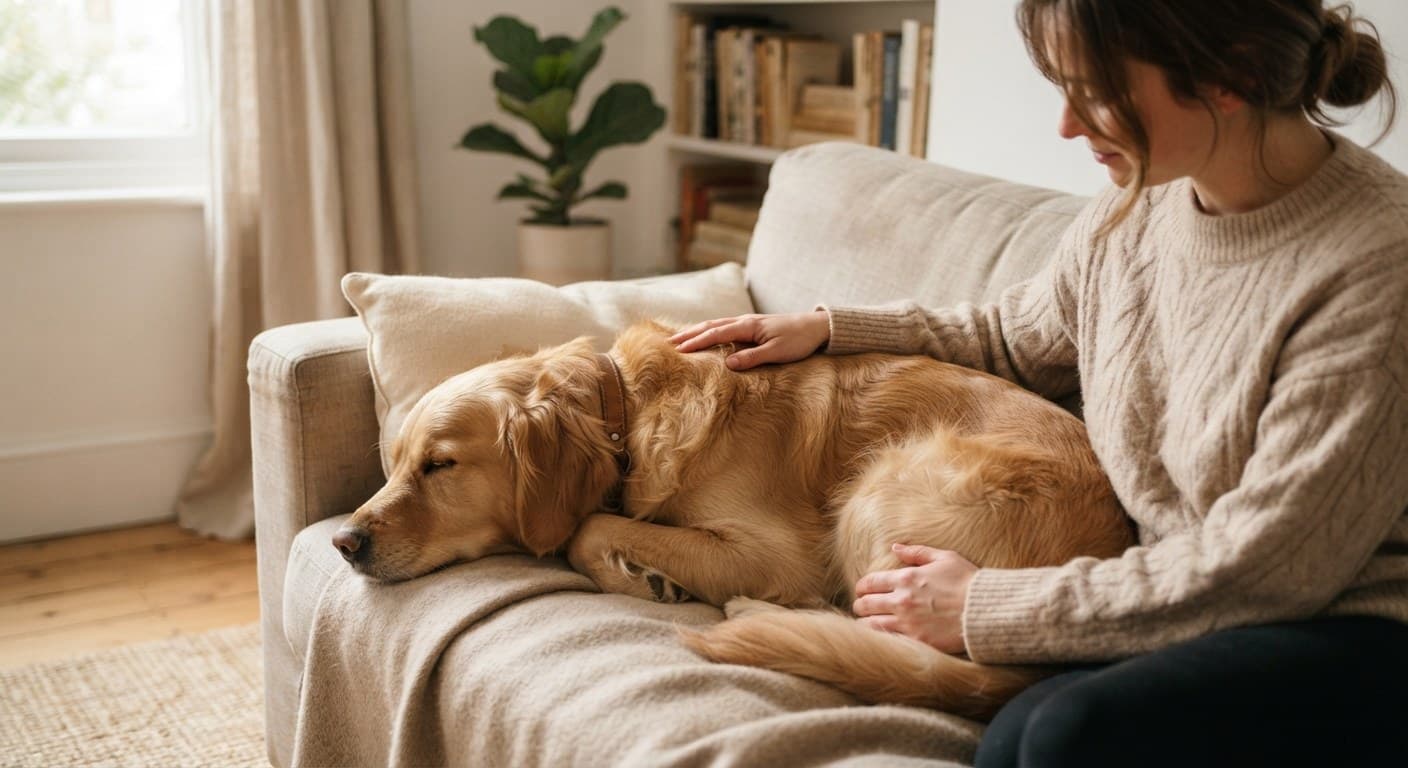
- Sessions are short, quiet, and undramatic. Hands rest lightly on or near the animal, or simply nearby while it relaxes. What you tend to see is settling: a long sigh, a softer posture, sometimes sleep — and sometimes nothing much at all.
- Reiki is a relaxation practice, not medicine. A sick or injured animal needs a veterinarian. Reiki, at most, is calm companionship around the care that professionals provide.
Key Terms Explained
- 靈氣 (Reiki) / Universal Energy — The practice of resting the hands lightly on or near a person or animal, in the traditional Japanese Usui stream.
- 手当て (Teate) / Placing of Hands — The old Japanese word for putting a hand on what hurts; the everyday gesture at the root of hands-on practice.
- 遠隔靈氣 (Enkaku Reiki) / Distant Reiki — Reiki offered at a distance, at the request of the person — or, for animals, the owner — who asks for it.
- 気 (Ki) / Life Energy — The traditional idea of an energy present in living things; in practice, less a theory to argue about than a quality of calm attention.
The Rule I Keep Twice Over
I did not come to animal Reiki through any special ceremony. It grew out of the same rule I keep for people. Distant Reiki is never something I send to a person who has not asked for it, and I hold the same line with animals: I only ever work with a dog or a cat with the owner's permission and at the owner's request.
With animals, though, the owner's request is only half of the answer. A dog cannot tell me in words that it wants quiet company, but it tells me everything with its body. It comes closer, or it does not. It settles, or it stands up and leaves the room. I treat that behavior as the animal's own reply, and it outranks everything else. If a cat walks away in the middle of a session, the session is over. Not paused — over. Working gently with a pet this way can be a lovely first reason for someone to learn Reiki at all, and I say that as someone who teaches it: the animal makes an honest teacher, because it has no interest in being polite to you.
Related: How to Tell If Your Pet Is Open to Reiki: Reading the Signals, Not Projecting Them explains this in detail.
What a Session with a Dog or Cat Actually Looks Like
If you are picturing something elaborate, let me talk you out of it. An animal session is quieter and shorter than a human one, and the animal runs it.
It starts with the room, not the pet. I settle myself first — a few slow breaths, the same way I begin any practice. Animals read tension long before they read intention, and a fidgety human is not a relaxing one to sit beside.
Then the invitation is offered, not imposed. I sit at a small distance and let the dog or cat choose to come closer. Some walk straight over and lean in. Some circle, sniff, and settle an arm's length away. Both are fine. With a pet that stays nearby but not touching, hands simply rest in my lap or hover gently; with one that leans in, hands rest lightly on the back or shoulders — never gripping, never holding the animal in place.
Sessions stay short. Ten or fifteen minutes is plenty for most dogs and cats, and often the animal decides on less. The end of a session is not a timer going off; it is the animal getting up, stretching, and wandering off to inspect its food bowl. That exit is not a failure. It is the clearest feedback you will ever get.
 The animal runs the session: hands rest lightly, and the moment it chooses to leave, the session is over.
For owners who are far away, distant Reiki works the same way it does for people: at the owner's request, with a clear intention held for the animal. What I ask of the owner is the same thing I would ask for any distant session — that the request comes from them, freely, and that nobody is being signed up for something they did not ask about.
Related: Reiki for Shelter Cats: What the Forbes Story Shows explains this in detail.
What I Honestly See — and What I Refuse to Claim
Here is the part I will not dress up. What I typically see in an animal that accepts a session is ordinary and quiet: the breathing slows, the posture loosens, there is often one long sigh, and quite frequently the animal falls asleep. Owners sometimes tell me their pet seemed calmer that evening. That is the honest scale of it — settling, not transformation.
Sometimes nothing visible happens at all. I say this plainly because I remember my own beginning: after my first attunement I kept the simple daily routine, about twenty minutes for two weeks without missing a day, and honestly, I felt very little at first. Nothing dramatic. If I extend that honesty to my own hands, I owe it to your dog as well. An unimpressed cat is not evidence that you are doing it wrong; it is a cat.
 Settling, a sigh, sometimes sleep — and sometimes nothing much at all. Both are honest outcomes.
And the line I hold hardest: Reiki is not veterinary care. If an animal is sick, injured, or behaving strangely, it needs a vet — first, promptly, every time. Research on Reiki, for what it is worth, has not clearly shown effects beyond relaxation even in humans, and I practice with that squarely in view. What I offer a pet is calm, consensual company of a very particular kind. What I will never offer is a reason to delay real medical care.
Related: How Distant Reiki Works — and Why I Never Send It Uninvited explains this in detail.
FAQ
Q: Is Reiki safe for dogs and cats?
A: As practiced gently — light hands, no restraint, the animal free to leave — it is about as low-risk as quiet company gets. The real safety question is never the Reiki; it is whether a genuinely unwell animal is seeing a veterinarian. That must always come first.
Q: My cat won't stay still for a session. Am I doing something wrong?
A: No. A cat that leaves is answering you, and the answer is respected. Try again another day, at a calmer hour, or simply practice on yourself in the same room. Some animals prefer to be near a session rather than in one.
Q: Can Reiki treat my pet's illness instead of the vet?
A: No. Reiki does not diagnose, treat, or cure anything, and I will not frame it that way. See the vet. Reiki can be the quiet hour around proper care, never the replacement for it.
Q: Can you send distant Reiki to my pet?
A: Yes, at your request as the owner — that request is the consent that makes the session possible. I hold the intention you describe, and I make no promises beyond the honest ones: many owners report a calmer animal, and some report nothing in particular.
Key Insights to Remember
- The heart of animal Reiki is consent given twice: once by the owner in words, and continuously by the animal in behavior. Reading and respecting an exit — the stretch, the walk to the food bowl — is not the failure of a session but the correct end of one.
- Keep the practice humble in scale and claim: short sessions, light or hovering hands, and an expectation of settling rather than spectacle. An animal that merely sighs and sleeps has given you the whole result.
- The firmest boundary is the one between relaxation and medicine. A practitioner who loves animals proves it first by insisting on the veterinarian, and only then by offering the quiet hour after.
Sources & References
- Reiki — National Center for Complementary and Integrative Health (NIH) — Overview of Reiki as a complementary practice, including the honest state of the research evidence.
About the author

Japanese Reiki Shihan · traditional Usui Reiki, taught and certified in person
- ●Japanese Reiki Shihan (師範 / Reiki Master)
- ●Trained in the traditional Japanese Usui lineage
- ●20+ years of daily practice · teaches in person
- ●Former IT engineer & founder — grounded, no hype
I'm a Japanese Reiki Shihan who learned in the traditional Usui lineage and has practised every morning for over twenty years. My background is in IT and business, not the spiritual scene, so I write about Reiki plainly — what it is, how to practise it, and what it's honestly like — with no medical claims. Based in the Philippines, where I teach in person.
Enjoy this article?
Get honest, grounded writing on traditional Japanese Usui Reiki straight to your inbox.
Related Articles
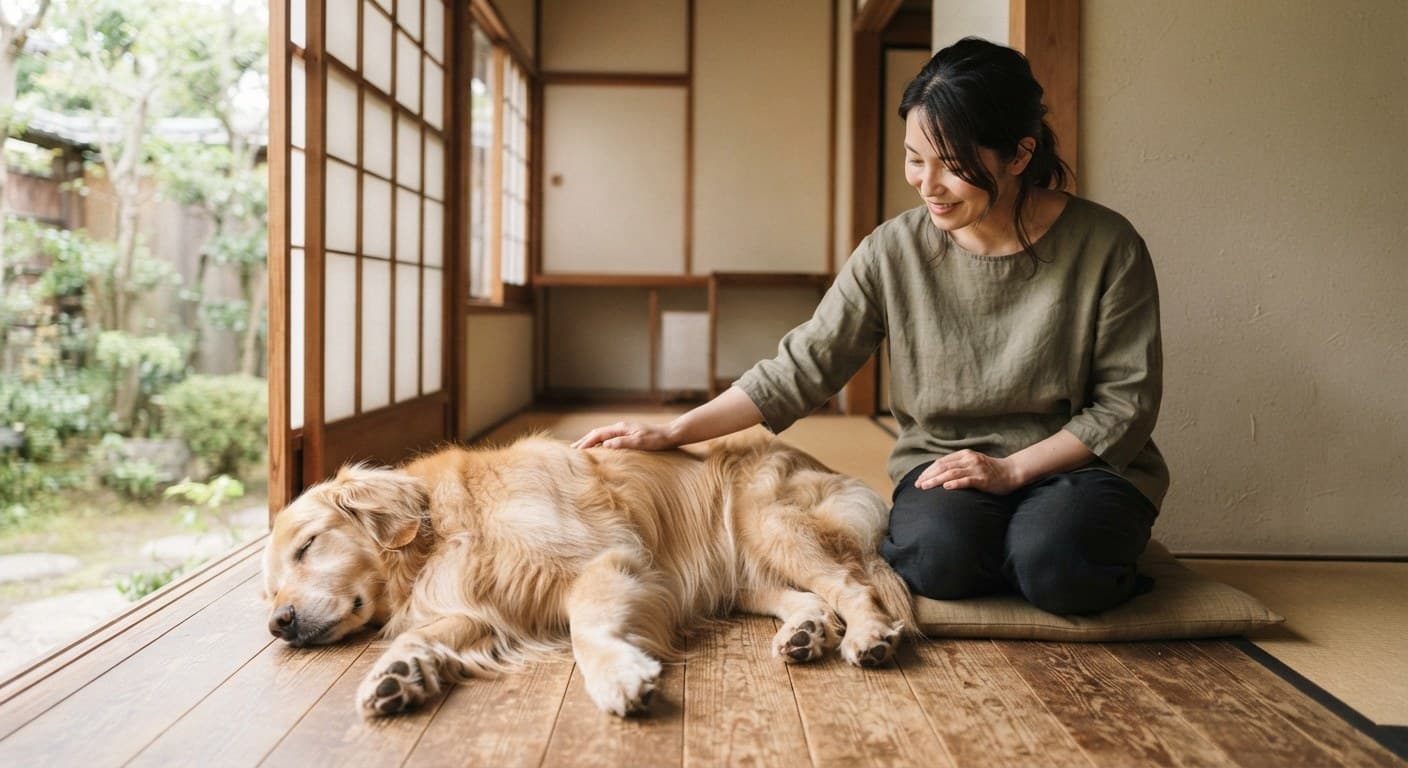
How to Tell If Your Pet Is Open to Reiki
Animals answer with their bodies: approaching and settling mean yes, walking away means not now. Reading consent honestly.
7/21/2026

Reiki Training in the Philippines: How to Choose a Course
Choosing Reiki training in the Philippines? Here are seven questions to ask before you book, how the levels are spaced, and what a Makati course involves.
9/24/2026

Usui Reiki Level 1 (Shoden): What the Course Actually Covers in One Day
Usui Reiki Level 1 (Shoden) is one in-person day: one attunement, a self-practice routine, and the Five Precepts. Here is what it covers and leaves out.
9/16/2026

A Reiki Trial That Included a Sham Group
A 2026 trial compared Reiki against sham Reiki in 60 ventilated ICU patients. An honest reading of what the results support.
8/18/2026

What to Do When a Client Falls Asleep During Reiki
People fall asleep during Reiki often, and it is neither a problem nor proof that anything worked. Why it happens, and what to do.
8/18/2026

Why Most Reiki Studies Cannot Be Compared With Each Other
People ask what the research says as though the studies can be added together. Four ordinary differences block comparison.
8/17/2026