Reiki Symbols: Why They Were Meant to Be Secret
What the secrecy was actually protecting, and why finding the symbols online changes far less than people assume.

Japanese Reiki Shihan (師範) · traditional Usui Reiki · 20+ years of daily practice
Key Takeaways
- The traditional secrecy around Reiki symbols was not about hiding magic words. It was about keeping a symbol attached to the moment and the relationship in which it was given.
- The symbols have been publicly available for decades now, and nothing catastrophic happened — but something quieter was lost, and it is worth naming honestly.
- Knowing what a symbol looks like and being able to use it in practice are different things, in roughly the way that owning sheet music and playing an instrument are different things.
Key Terms Explained
- 靈氣 (Reiki) / Universal Energy — The practice of working with universal energy through quiet, attentive hands.
- 靈授 (Reiju) / Attunement — The transmission a teacher offers a student, traditionally in person and repeated over time rather than given once.
- 師範 (Shihan) / Master-Teacher — A teaching rank in the traditional lineage, carrying responsibility for how the practice is passed on.
- 口伝 (Kuden) / Oral Transmission — Teaching passed by voice and presence rather than by written text, common in traditional Japanese arts.
The Notebook I Was Told Not to Photocopy
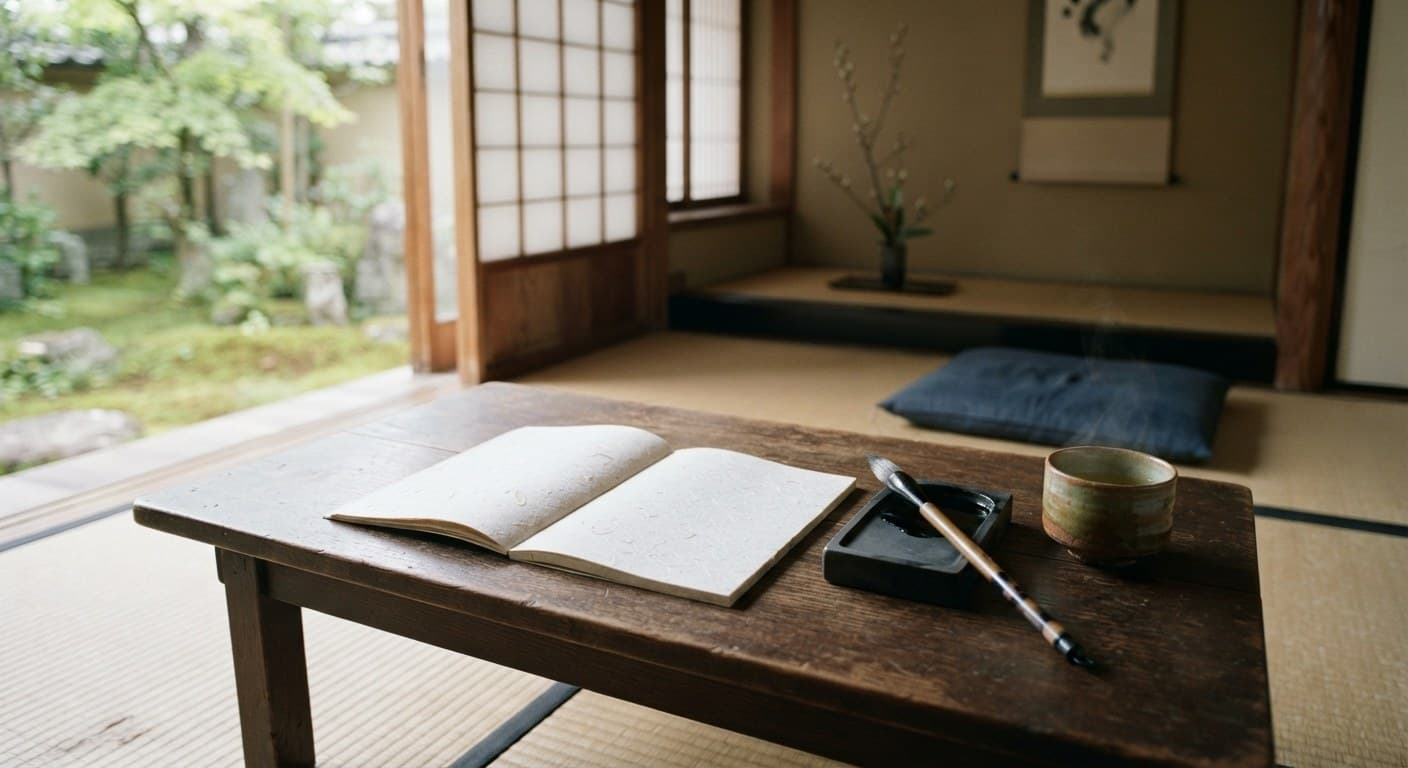
When I received the symbols, my teacher wrote them out by hand, slowly, while I watched.
This was already faintly absurd to me at the time. I had spent my working life as an engineer and a founder; my instinct with any piece of information was to digitise it, back it up, and make it searchable. I remember thinking, with genuine impatience, that a scan would be more accurate than my copying, and that my copying would introduce errors.
My teacher's answer was not mystical, which is why it stayed with me. He said, roughly: the copying is the point. Not the accuracy — the copying.
Then he asked me not to photocopy the page, not to share it, and not to put it online. And for a long time I understood this as a rule about secrecy, which is to say I understood it wrongly.
I want to be honest about the sequence here, because I think it matters. I did not come to Reiki through the spiritual world. I came to it through a businessperson I respected — someone successful, unsentimental, and entirely unlike my idea of a person who would talk about energy. That is the mindset I brought into the room. And in that mindset, "keep this secret" sounded like exactly the kind of thing that makes an outsider suspicious. It sounded like a sales mechanism.
It took me years of daily practice to understand that the instruction was about something much less dramatic, and much more practical.
Related: Why I Teach Reiju (Attunement) In Person, Not Over Zoom explains this in detail.
What the Secrecy Was Actually Protecting
It was never about the information
Here is the plain fact: the Reiki symbols have been published for decades. They are in books, on websites, in videos, and in image searches. Anyone reading this can look at all of them in about ninety seconds, and many of you already have.
This has been true for a long time. Whatever the secrecy was protecting, it was clearly not the shapes themselves, because that battle was lost before most of today's practitioners were born — and, notably, the practice did not collapse when it happened.
So the interesting question is not "how do we put the secret back." It is "what was the secrecy doing, and can that thing survive without it?"
Related: What Actually Happens in a Reiki Attunement (Reiju), and What Doesn't explains this in detail.
It kept the symbol attached to a moment
In traditional Japanese arts, a great deal is transmitted by 口伝 (Kuden) / Oral Transmission — passed by voice and presence rather than by document. This is not because the information is too dangerous to write down. It is because some things do not survive being separated from the situation in which they are given.
A symbol received during 靈授 (Reiju) / Attunement, from a teacher who knows your practice, at a point when you have already been sitting with your hands quiet every morning for months, is a different object from the same shape encountered in a search result between an advertisement and a comment section. The shape is identical. The context is not, and the context was doing most of the work.
Related: A Major Medical System Is Teaching Reiki Over Zoom — and the Detail That Interests Me Most Is the In-Person Ending explains this in detail.
It slowed people down
There is a boring, practical function to secrecy that I have come to respect: it enforces sequence.
If you cannot get the second thing until you have done the first thing, you will do the first thing. Under the older arrangement, a student practised daily, received attunement, sat with that for a while, and only then encountered a symbol. The symbol arrived on top of an established habit.
Now the sequence is frequently reversed. People encounter the symbols first — often before any practice at all — and treat them as the substance of Reiki rather than as a later refinement of it. This is the actual loss, and it has nothing to do with anything being stolen. It is simply that a thing meant to arrive in year two now often arrives in hour one, where it has nothing to sit on.
It signalled that this was a relationship, not a download
The instruction not to photocopy was, I now think, a way of saying: this came to you from a person, and it goes to the next person from a person.
I teach 靈授 in person rather than over video for the same reason, and I have written about that choice elsewhere. It is not that distance makes transmission impossible. It is that the in-person format keeps the practice honest about what it is — an apprenticeship, with a specific person responsible for you — rather than letting it become a file that circulates.
What I Actually Think About It Now
I am not going to pretend I find the current situation tragic. I do not.
The romantic position — that ancient wisdom has been cheapened by the internet — is available, popular, and slightly dishonest. Secrecy also protected some things that deserved no protection: bad teaching, inflated prices, and the reliable business model of selling access to information that costs nothing to copy. When the symbols became public, a certain kind of gatekeeping became unsustainable, and I do not mourn it.
What I would say instead is this. The symbols were never the practice. They are refinements — ways of directing attention — and they do very little for someone who has not yet built the habit they are meant to refine. You can know every symbol perfectly and have no practice at all. You can have a deep, settled, twenty-year practice and use the symbols rarely.
The analogy I keep returning to, from my old life, is documentation. Anyone can read the documentation for a system. Reading it does not make you able to run the system, and it certainly does not make you responsible for it at three in the morning when something breaks. The knowledge was never the scarce part. The hours were.
So my honest answer to a student who says "I already found the symbols online" is: good, that saves us a step, and it changes nothing. Show me your practice. If you have been sitting quietly with your hands for ten minutes each morning for three months, we have something to work with, symbols or no symbols. If you have not, the symbols are decoration on an empty room.
And I still write them out by hand for students, slowly, while they watch. Not because a scan would be less accurate. Because the copying is the point — it is ten minutes in which someone pays close, unhurried attention to something a person gave them. There is no version of that you can download.
FAQ
Q: Is it disrespectful to look up Reiki symbols online before being taught them? A: I do not think so, and objecting to it now would be a bit like objecting to the weather. What matters far more is whether you have an actual daily practice. Curiosity is fine; substituting images for practice is the thing to avoid.
Q: Do the symbols work if you have not received an attunement? A: In the traditional view, the symbols are refinements of a practice that attunement opens, so they are taught after 靈授 rather than before. I would put it more plainly: without an established daily practice behind them, most people find they do very little. That is not a mystical restriction — it is the same reason a technique is not much use before the fundamentals.
Q: Why do some teachers still insist on secrecy? A: Motives vary, and I would be honest about that range. For some it is genuine respect for the transmission and its sequence. For others it is a business model. It is reasonable to ask a teacher directly why they teach the way they do, and a good teacher will give you a straight answer.
Key Insights to Remember
- The secrecy around Reiki symbols was protecting context, not content. Once you see that, the fact that the shapes are public stops being alarming — and the real question becomes whether your practice arrived in the right order, not whether your information did.
- The most common modern mistake is treating symbols as the substance of Reiki rather than as refinements of an existing habit. A symbol placed on top of no practice is decoration; a symbol placed on top of two years of quiet mornings is a tool.
- What cannot be copied, and never could be, is the relationship: a specific teacher who knows your practice and takes responsibility for how it was passed to you. That was the actual thing the old rules were built around, and it is still available to anyone willing to do the slow part.
Sources
About the author

Japanese Reiki Shihan · traditional Usui Reiki, taught and certified in person
- ●Japanese Reiki Shihan (師範 / Reiki Master)
- ●Trained in the traditional Japanese Usui lineage
- ●20+ years of daily practice · teaches in person
- ●Former IT engineer & founder — grounded, no hype
I'm a Japanese Reiki Shihan who learned in the traditional Usui lineage and has practised every morning for over twenty years. My background is in IT and business, not the spiritual scene, so I write about Reiki plainly — what it is, how to practise it, and what it's honestly like — with no medical claims. Based in the Philippines, where I teach in person.
Enjoy this article?
Get honest, grounded writing on traditional Japanese Usui Reiki straight to your inbox.
Related Articles
Byosen: Sensing With the Hands, and Its Limits
What byosen and hibiki mean in traditional Japanese Reiki, why feeling nothing is normal, and the one boundary I teach.
8/10/2026
Why I Became a Reiki Master
A Shihan on why he trained to teach, and the part he did not expect: beginners' questions exposed how much was habit.
8/2/2026

How a Successful Businessman First Introduced Me to Reiki
I did not come to Reiki through the spiritual world. How a credible businessman changed what I thought it was.
8/1/2026
What Usui Shiki Ryoho Really Means
Usui Shiki Ryoho simply means the Usui-style method — a Japanese Reiki Shihan reads the name of traditional Reiki plainly, without hype or mysticism.
7/4/2026
Reiki's Round Trip: Leaving Japan and Coming Back
Reiki began in Japan, crossed to the West with Hawayo Takata, and returned home reshaped — a practice of connecting with energy that no one culture owns.
7/3/2026
Japanese vs Western Reiki: 7 Differences That Matter
Traditional Japanese and Western Reiki share one founder but differ in reiju, the Five Precepts, and intuition over fixed hand positions — not in raw power.
7/1/2026