Reiki Has Nothing to Do With Ghosts or the Occult
Why Reiki has nothing to do with ghosts, spirits, or the occult — where the confusion comes from, and what the practice is.

Japanese Reiki Shihan (師範) · traditional Usui Reiki · 20+ years of daily practice

When people first hear the word Reiki, a certain image often forms: candles, crystals, ghosts, spirits, something out of a horror film or a séance. I understand why — the word sounds mysterious, and it shares shelf space in bookshops with topics that have nothing to do with it. So let me say it plainly, as a Reiki Shihan (師範: master-teacher) of more than twenty years: Reiki has nothing to do with ghosts, spirits, or the occult. This article explains what Reiki actually is, why the confusion happens, and why the practice is far more ordinary — and more grounded — than its spooky reputation suggests.
Key Takeaways
- Reiki does not involve ghosts, spirits, possession, fortune-telling, or anything supernatural in that sense. It is a calm practice of connecting with a universal energy to help life feel more settled.
- The confusion comes from the word sounding mysterious and from Reiki being shelved, marketed, and lumped together with occult topics it has no real connection to.
- Understood honestly, Reiki is closer to a quiet daily habit — like a breathing practice — than to anything from a ghost story.
Key Terms Explained
- 靈氣 (Reiki) / Universal Energy — The practice of connecting with a universal, life-giving energy through calm, intentional attention and touch.
- 霊 (Rei) / Spirit, Universal — The first character in Reiki; it can mean "spirit," which is one root of the misunderstanding, but here it points to something universal, not to ghosts.
- 氣 (Ki) / Life Energy — The same "ki" as in everyday Japanese words for mood, health, and vitality; utterly ordinary in Japanese life.
- 手当て (Teate) / Placing the Hands — Literally "hand-placing"; the plain, homely gesture at the heart of the practice.
The Word That Scares People Before They Meet the Practice
I have lost count of how many people have told me, a little nervously, that they were curious about Reiki but worried it involved "spirits" or "the dark side." I never laugh at this. The worry is reasonable if the only thing you have to go on is the sound of the word and the company it keeps on a bookshop shelf.
Here is the honest truth of how I came to it. I did not arrive at Reiki through the spiritual world at all. The person who first told me about it was someone already successful in ordinary business, getting real results in the real world — not a mystical type in the least. That mattered enormously to me. My very first impression of Reiki had nothing to do with ghosts, séances, or anything supernatural. It was a practical man telling me about something that had steadied his life. After more than twenty years of daily practice, what Reiki is to me is simple: connecting with the energy of the universe and letting it turn my life in a better direction. Nothing more mystical than that, and nothing less.
Related: Is Reiki a Religion? No — Here's What It Actually Is explains this in detail.
Where the Ghost Confusion Actually Comes From
One Character, Two Meanings
Part of the trouble lives inside the word itself. The first character of 靈氣 (Reiki) is 霊 (rei), which can indeed be translated as "spirit" — and in other contexts it does appear in Japanese words for ghosts. But in Reiki, that character points to something universal and life-giving, not to the restless dead. The second character, 氣 (ki), is one of the most ordinary words in the Japanese language: it is the "ki" in the everyday words for mood, weather, health, and energy. Japanese people say it dozens of times a day without a thought. Strip away the exotic translation, and Reiki is far closer to "universal energy" than to anything ghostly.
Related: My 5-Minute Morning Reiki Routine, After 20+ Years: Why It Got Shorter, Not Longer explains this in detail.
The Bookshop Problem
The second source of confusion is simply where Reiki gets placed. In many bookshops and online stores, Reiki sits next to tarot, crystals, ghost-hunting, and the occult, because that is how retailers group "alternative" topics. Proximity on a shelf becomes guilt by association. But being filed near a subject is not the same as being that subject. Reiki has no ghosts, no spirits to summon, no fortunes to tell. It got sorted into the wrong drawer, and the label stuck.
What Reiki Actually Looks Like
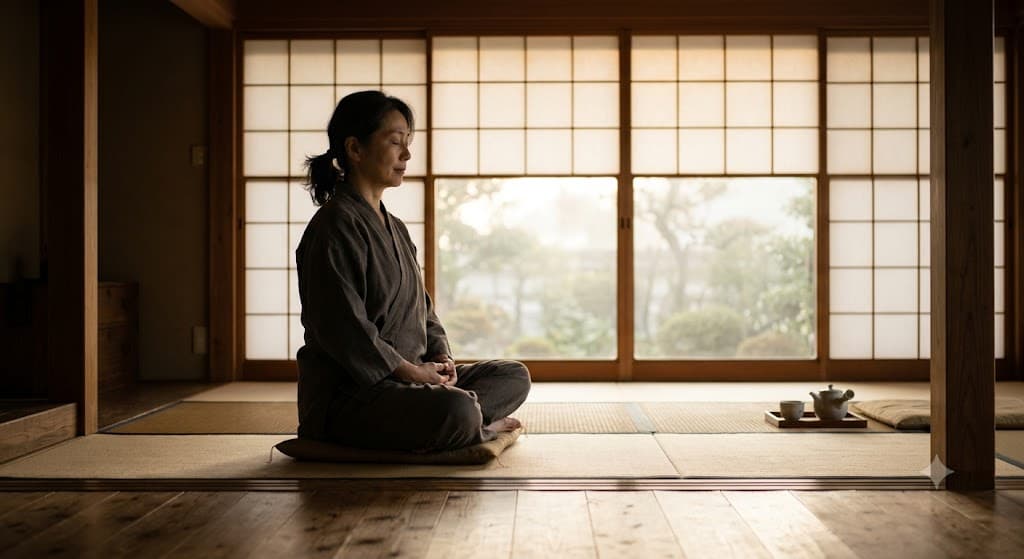
Strip away the reputation and watch a real session, and there is nothing eerie to see. A person rests, comfortable and clothed. The practitioner brings calm, still attention and gentle 手当て (teate: placing the hands). It is quiet. It is unhurried. It looks, frankly, a little boring from the outside — much more like someone resting than like anything from a horror film. The drama exists only in the word, never in the room.
Related: Does Reiki Actually Work? A Grounded Reading explains this in detail.
An Honest, Grounded Word
I spent years of my working life as an engineer, and that rational habit never left me. So I want to be as clear with the skeptic as with the nervous beginner. Reiki is not a doorway to the supernatural, and I would never claim it lets anyone contact spirits, read the future, or do anything from a ghost story. It also does not remove or fix any illness — it is a practice of relaxation and calm attention, nothing more and nothing less.
What it offers is genuinely modest: a quieter mind, a lighter mood, a body that has stopped bracing for a while. There is nothing to be afraid of here, and nothing occult to accept. If the spooky reputation has kept you at arm's length, I hope this sets it down. And if Reiki still is not for you, that is completely fine — there is a right time and a right practice for everyone, and no one should feel pushed.
FAQ
Q: Does Reiki involve contacting spirits or ghosts?
A: No. Reiki has nothing to do with ghosts, spirits, or the dead. It is a calm practice of connecting with a universal energy to help you feel more settled. Anyone framing it as spirit-contact is misdescribing it.
Q: Is Reiki part of the occult or fortune-telling?
A: No. It only tends to sit near those topics on shelves and in marketing, which creates a false association. Reiki has no divination, no summoning, and no supernatural claims of that kind.
Q: The word has "spirit" in it — doesn't that mean something ghostly?
A: The character can mean "spirit," but here it points to something universal and life-giving, not to ghosts. The second character, ki, is an utterly ordinary Japanese word for energy or mood. Together they mean something much closer to "universal energy."
Q: So what actually happens in a Reiki session?
A: A person rests comfortably while the practitioner brings calm, still attention and gentle hand-placing. It is quiet and unhurried — closer to resting than to anything dramatic. There is nothing eerie to it at all.
Key Insights to Remember
- The scary reputation of Reiki lives entirely in the word and its shelf placement, never in the practice itself. Watch a real session and you see someone resting quietly, not anything from a ghost story.
- The confusion has a traceable source: one character that can mean "spirit," and a retail habit of filing Reiki next to the occult. Neither fact makes Reiki supernatural — they just make it easy to misunderstand.
- Understood plainly, Reiki is grounded and ordinary: a calm daily practice of connecting with universal energy, offering rest and a settled mind, with no ghosts, no fortune-telling, and no promises it cannot keep.
Sources & References
About the author

Japanese Reiki Shihan · traditional Usui Reiki, taught and certified in person
- ●Japanese Reiki Shihan (師範 / Reiki Master)
- ●Trained in the traditional Japanese Usui lineage
- ●20+ years of daily practice · teaches in person
- ●Former IT engineer & founder — grounded, no hype
I'm a Japanese Reiki Shihan who learned in the traditional Usui lineage and has practised every morning for over twenty years. My background is in IT and business, not the spiritual scene, so I write about Reiki plainly — what it is, how to practise it, and what it's honestly like — with no medical claims. Based in the Philippines, where I teach in person.
Enjoy this article?
Get honest, grounded writing on traditional Japanese Usui Reiki straight to your inbox.
Related Articles

An Engineer's Honest Take on Reiki
Two short lists: what I am willing to claim about Reiki after twenty years of daily practice, and what I refuse to say.
7/30/2026
Do You Have to 'Believe' in Reiki for It to Work?
No, you do not have to believe in Reiki for a session to be worth doing. How openness differs from faith, and the placebo question.
7/28/2026
Is Reiki a Religion? No — Here's What It Actually Is
Reiki is not a religion — it has no deity, doctrine, or worship. What it actually is, and why it sits beside any faith.
7/25/2026
I Don't Feel Anything: Why That's Normal at First
After my first attunement I felt almost nothing for two whole weeks, and that is normal — here is what Reiki quietly does before you ever notice it.
7/12/2026
Who Was Mikao Usui? Reiki's Founder Beyond the Legends
Mikao Usui was a Japanese seeker who framed Reiki as connecting with universal energy, and much of the legend around him was added long after his death.
7/1/2026