Reiki's Round Trip: Leaving Japan and Coming Back
Reiki began in Japan, crossed to the West with Hawayo Takata, and returned home reshaped — a practice of connecting with energy that no one culture owns.

Japanese Reiki Shihan (師範) · traditional Usui Reiki · 20+ years of daily practice
Key Takeaways
- The lineage behind most modern Reiki runs through Takata's Hawaiian students, which is why "authentic" and "Japanese" are not always the same word.
- Traditional Japanese Usui Reiki and Western Reiki differ in emphasis and technique, yet both rest on the same idea of connecting with universal energy — neither is a fake version of the other.
- Attunement given in person by a teacher remains the heart of the tradition, which is why symbols now floating around online are not a shortcut to what is actually passed on.
Key Terms Explained
- 靈氣 (Reiki) / Universal Energy — both the practice of connecting with universal life energy and the name for that energy itself.
- 臼井靈氣療法 (Usui Reiki Ryōhō) / Usui Reiki Healing Method — the system founded by Mikao Usui in Japan in the 1920s.
- 靈授 (Reiju) / Attunement — the in-person transmission through which a teacher opens a student to Reiki.
- 師範 (Shihan) / Master-Teacher — a teacher in the Usui lineage qualified to give reiju and train others.
The Businessman Who Told Me About Reiki First
| At a glance | Detail |
|---|---|
| How I met Reiki | Through a grounded businessman, not a spiritual teacher |
| First impression | Practical and everyday, not mystical |
| Why it matters | It mirrors how the practice actually spread — person to person |
I did not arrive at Reiki through the spiritual world. The person who first told me about it was someone already successful in business, getting real results in the ordinary, practical world — not a "spiritual" type at all. That single fact shaped everything that came afterward, because my very first impression of Reiki had nothing to do with the mystical image most people expect.
 Reiki reached most people the practical way — person to person, not through mystery.
I mention this because it mirrors the history of the practice itself. Reiki is often imagined as something exotic and secret, handed down in candlelit rooms. The truth is more grounded and, to me, more interesting. The way I met it — through a level-headed person who simply found it useful — is close to the way it actually spread across the world: person to person, often through people who wanted something that worked in daily life, not a religion and not the occult. Understanding how a Japanese practice left home, changed shape abroad, and eventually came back is a good way to see Reiki plainly, without the fog.
Related: Who Was Mikao Usui? Separating Reiki's Founder From the Legends explains this in detail.
The Path From Kurama to Hawaii and Back
| Stage | Who | What happened |
|---|---|---|
| Origin (1920s) | Mikao Usui | Developed the system in Japan and founded a Tokyo society |
| Bridge | Chujiro Hayashi | Organised hand positions and treatment in his own clinic |
| Crossing (late 1930s) | Hawayo Takata | Carried a reshaped Reiki to Hawaii and the wider world |
| Return (1990s) | Japanese and Western teachers | Reconnected and blended both streams |
From Usui to Hayashi in Japan
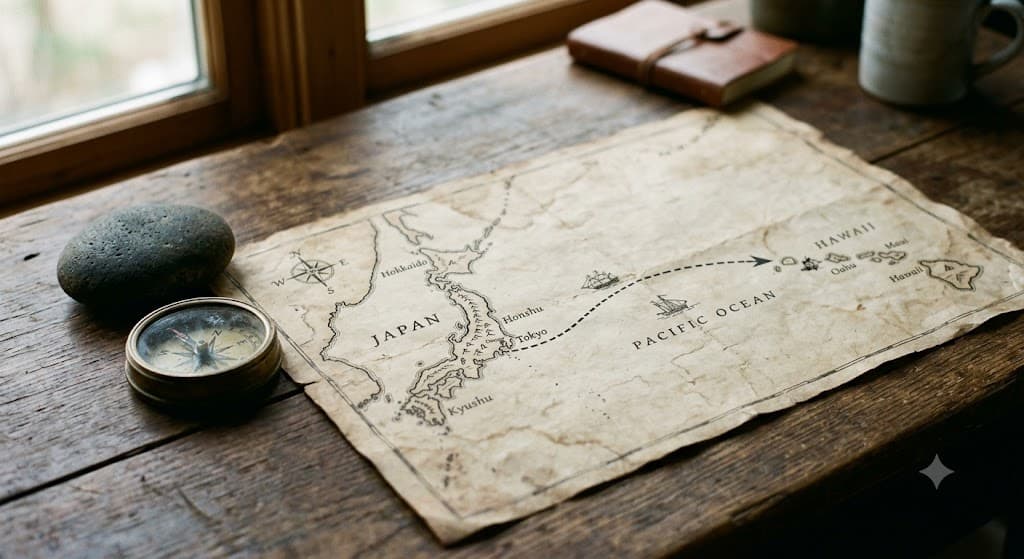 From Usui in Japan to Takata in Hawaii and back again — Reiki's long round trip.
Reiki as a named system was developed by Mikao Usui in Japan in the 1920s. The traditional account places a turning point at Mount Kurama in 1922, after which he began teaching and founded a society in Tokyo to pass on his 臼井靈氣療法 (Usui Reiki Ryōhō) / Usui Reiki Healing Method. He taught a large number of students before his death in 1926, and a handful reached the teaching level.
One of those students, Chujiro Hayashi, a former naval physician, opened his own clinic in Tokyo and organised the practice into clearer hand positions and treatment sequences. He is the bridge between Usui's teaching and what would later reach the West. Worth noting: Usui's system used only three symbols, the ones still taught at the second level, and no separate "master symbol." The tradition was compact, not elaborate.
Related: Traditional Japanese vs Western Reiki: 7 Differences That Actually Matter explains this in detail.
Takata's Crossing and the Western Reshaping
Hawayo Takata, a Japanese-American woman from Hawaii, studied with Hayashi in the mid-1930s and returned home, carrying Reiki across the Pacific in the late 1930s. She practised, opened clinics, and eventually trained a small group of teachers. Through them, the practice reached the mainland United States, then Europe, then much of the world.
Something important happened in that crossing. Takata adapted how she presented Reiki, and she did not pass on every Japanese technique she had learned. The years around the Second World War were not kind to anything visibly Japanese, and that hostility is one reason the Western version travelled lighter — simplified, reframed, and in places dressed in language that would sit more comfortably with an American audience. This is where Western Reiki and the Japanese original began to diverge. Neither is dishonest; they simply grew under different conditions.
Related: Lili Reinhart, Reiki Master: A Careful Reading explains this in detail.
The Return: Japanese and Western Reiki Meeting Again
For decades after Takata's death in 1980, the West and Japan had little contact. Many Western practitioners genuinely believed the tradition had died out in its home country. Then, in the 1990s, Japanese teachers and Western researchers reconnected, compared notes, and discovered the practice had been quietly alive in Japan all along. Some Japanese teachers deliberately folded useful Western developments back into their teaching — a modern Reiki built openly from both streams.
That is the round trip. A Japanese practice left home, was reshaped abroad, spread to more than a hundred countries, and then came back to meet the tradition it had grown out of. As a 師範 (Shihan) / Master-Teacher in the traditional Usui lineage, I find this history clarifying rather than embarrassing. It also explains something practical about 靈授 (Reiju) / attunement. The symbols were traditionally meant to be kept private, passed only through attunement in person. These days a quick search turns up plenty of images, which is exactly why receiving them properly, from a teacher, in the same room, still matters. The picture is not the transmission.
A Detour That Set Something Up
| Honest point | What I actually say |
|---|---|
| On evidence | Not medical care; has not been shown to cure or treat illness |
| What comes through | No harm shown; people often feel relaxed and settled |
| On effort | Harder is not better — relaxation matters most |
| On timing | If it does not draw you now, it is simply not your time yet |
My background is in IT and engineering, and that leaves a habit hard to shake: I want to know what a thing actually does before I trust it. So let me be honest about the evidence. Reiki has not been clearly shown to be effective for any specific health condition. Much of the research is small or of mixed quality, the results are inconsistent, and there is no scientific proof of a measurable "energy field." Reiki is not medical care and has not been shown to cure or treat illness. What does come through is that it appears to do no harm, and people often come away feeling relaxed and settled. That is the honest floor I stand on, and I would rather stand there than oversell.
 After years of practice, a short, relaxed session matters more than long, forced effort.
The history has a second lesson that the engineer in me quietly respects. When Reiki left Japan, it looked, from a purist's angle, like a loss — techniques dropped, framing changed, the source seemingly forgotten. In fact that detour is what carried the practice around the world and eventually brought it back stronger. I have lived a smaller version of the same pattern. When I moved to the Philippines, I arrived with no plan: no work, nothing to do, no one who needed me. More than ten years later I realised that moving here was exactly what opened the biggest opportunities of my life. What looks like a setback is often setting something up.
The other thing worth saying plainly: harder is not better. A common misunderstanding is that the longer you sit or the more you strain, the more it works. In my experience it is the opposite. Relaxation matters most, and even a short session is enough. After more than twenty years, what Reiki is to me is simple — connecting with the energy of the universe and letting it turn my life in a better direction. Nothing more mystical than that, and nothing less. If it does not interest you right now, I take that to mean it is not your time yet. There is a right moment for anything, and I never push.
FAQ
Q: Is Western Reiki "less authentic" than traditional Japanese Reiki?
A: No. Western Reiki descends directly from Hawayo Takata, who learned in Japan, so it is a real branch of the same tree. It simply grew under different conditions and dropped or changed some techniques along the way. Traditional Japanese Reiki keeps more of the original framing, but "different" is a fairer word than "better."
Q: Why do the Reiki symbols appear in online searches if they are meant to be private?
A: The symbols were traditionally passed only in person through attunement, not published. Images circulate online now, but seeing a symbol is not the same as receiving the transmission that gives it meaning. That is why in-person attunement from a teacher still matters.
Q: Do I need to learn the Japanese style to practise properly?
A: Not necessarily. Both the Japanese and Western streams rest on the same core of connecting with universal energy. What matters more than the label is receiving attunement in person from a teacher you trust, and keeping a simple daily practice. If the traditional Japanese approach draws you, that is a fine place to start — but it is not a requirement for the practice to feel settling.
Key Insights to Remember
- Lineage is messier than the tidy stories suggest. The Reiki that reached the world travelled through one person's adaptation in Hawaii, not a straight line from a Japanese master's classroom. Knowing this makes you a calmer, clearer student, because you stop chasing a purity that never quite existed and start valuing what actually gets passed on.
- The divergence between Japanese and Western Reiki is a feature, not a scandal. A practice that can bend to a new culture and still return to its roots is a resilient one. Holding both streams honestly is more useful than insisting only one is real.
- Honesty about the evidence and honesty about the tradition go together. Reiki is not medical care and has not been shown to cure illness, yet many people find it relaxing and steadying, and it has travelled far on that quiet, human value. Saying exactly what it does and does not do is not a weakness of the practice — it is what keeps it trustworthy.
Sources & References
About the author
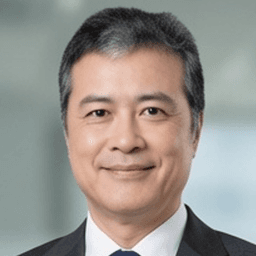
Japanese Reiki Shihan · traditional Usui Reiki, taught and certified in person
- ●Japanese Reiki Shihan (師範 / Reiki Master)
- ●Trained in the traditional Japanese Usui lineage
- ●20+ years of daily practice · teaches in person
- ●Former IT engineer & founder — grounded, no hype
I'm a Japanese Reiki Shihan who learned in the traditional Usui lineage and has practised every morning for over twenty years. My background is in IT and business, not the spiritual scene, so I write about Reiki plainly — what it is, how to practise it, and what it's honestly like — with no medical claims. Based in the Philippines, where I teach in person.
Enjoy this article?
Get honest, grounded writing on traditional Japanese Usui Reiki straight to your inbox.
Related Articles
Byosen: Sensing With the Hands, and Its Limits
What byosen and hibiki mean in traditional Japanese Reiki, why feeling nothing is normal, and the one boundary I teach.
8/10/2026
Why I Became a Reiki Master
A Shihan on why he trained to teach, and the part he did not expect: beginners' questions exposed how much was habit.
8/2/2026
How a Successful Businessman First Introduced Me to Reiki
I did not come to Reiki through the spiritual world. How a credible businessman changed what I thought it was.
8/1/2026
Reiki Symbols: Why They Were Meant to Be Secret
What the secrecy was actually protecting, and why finding the symbols online changes far less than people assume.
7/29/2026
What Usui Shiki Ryoho Really Means
Usui Shiki Ryoho simply means the Usui-style method — a Japanese Reiki Shihan reads the name of traditional Reiki plainly, without hype or mysticism.
7/4/2026
Japanese vs Western Reiki: 7 Differences That Matter
Traditional Japanese and Western Reiki share one founder but differ in reiju, the Five Precepts, and intuition over fixed hand positions — not in raw power.
7/1/2026