Byosen: Sensing With the Hands, and Its Limits
What byosen and hibiki mean in traditional Japanese Reiki, why feeling nothing is normal, and the one boundary I teach.

Japanese Reiki Shihan (師範) · traditional Usui Reiki · 20+ years of daily practice
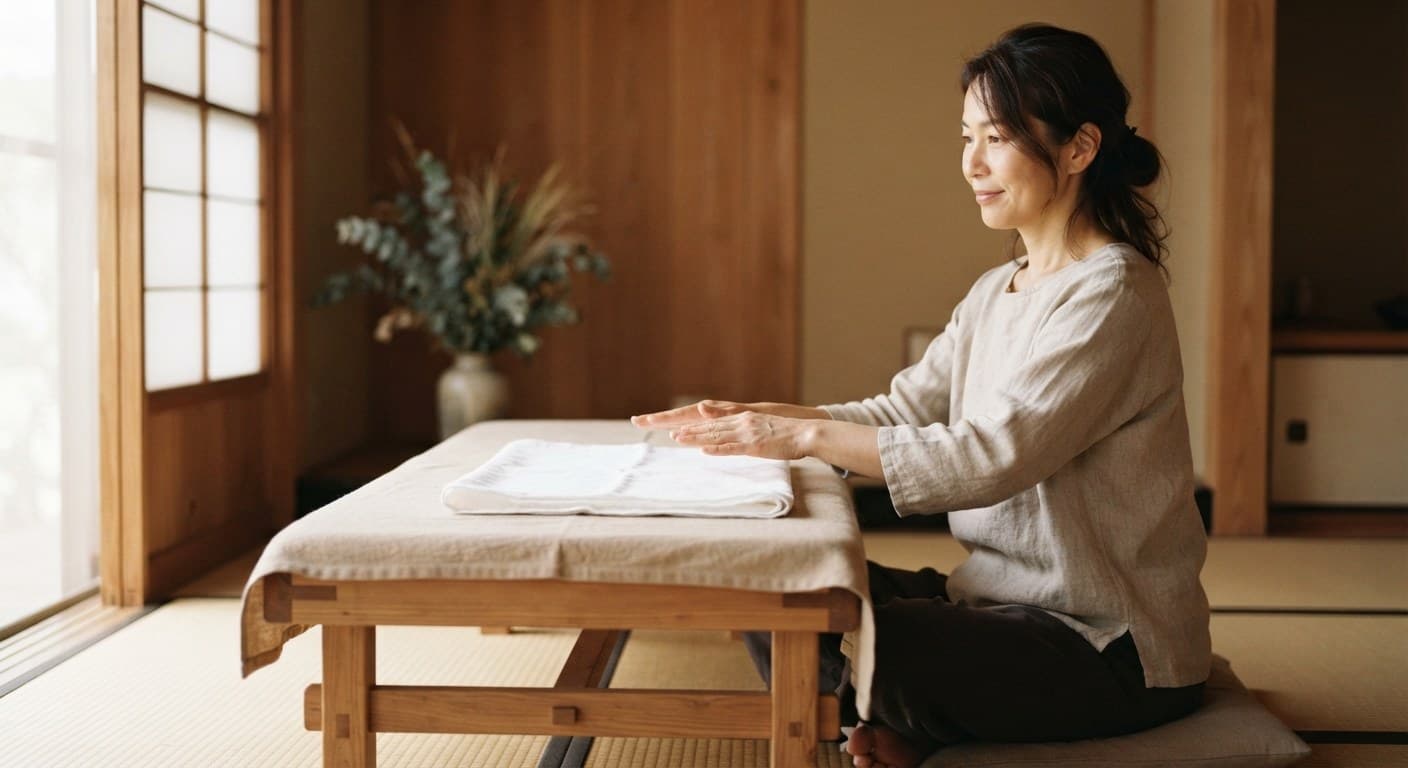
Students ask about this within the first month, almost without exception. They have read that a Reiki practitioner can "scan" a body and feel where something is wrong. They want to know whether they will develop that, and whether they are failing if they do not.
The traditional Japanese word for what they are asking about is 病腺 (Byōsen). It is a real part of the Usui tradition, taught in Japanese lineage material long before the practice reached the West. It is also the single concept I am most careful about when I teach it, because the honest version and the popular version are not the same thing.
Key Takeaways
- 病腺 (Byōsen) describes sensations a practitioner may notice in the hands during a session — warmth, tingling, a pulling feeling. It is a sensation, not a diagnosis, and the tradition never treated it as one.
- Many practitioners feel nothing for months, and some feel very little for years. This is normal and is not a sign that the practice is failing or that the person is unsuited to Reiki.
- The most important skill around byōsen is not sensitivity. It is restraint — knowing what you may say to the person on the table, and what you must never say.
Key Terms Explained
- 病腺 (Byōsen) / Sensation of Imbalance — sensations felt in the practitioner's hands during a session, described in traditional Japanese Reiki teaching.
- 響き (Hibiki) / Resonance — the traditional word for the quality of that sensation, often described as a kind of echo or pulsing.
- 靈氣 (Reiki) / Universal Energy — the practice of connecting with universal energy so that life settles.
- 手当て (Teate) / Placing the Hand — the older Japanese word for treatment, literally "hand placement."
- 師範 (Shihan) / Teacher — a qualified teacher in the tradition, permitted to give attunements.
The Question I Get in Week Three
It arrives in almost the same words every time. A student finishes a self-practice session, sits back, and says: I don't think I'm feeling anything. Is it working?
Sometimes the opposite happens. A student places her hands on a friend's shoulder, feels a distinct warmth under one palm, and comes to the next class convinced she has found something. She wants to know what it means. Should she tell her friend? Should her friend see a doctor?
Both students are asking the same underlying question, and both deserve the same honest answer. What follows is roughly what I say.
What the Tradition Actually Describes
The Sensations Have Names
Japanese Reiki teaching does not treat hand sensation as mystical or rare. It treats it as ordinary information, and it gives that information names.
病腺 (Byōsen) is the general term for a noticed sensation. 響き (Hibiki), literally resonance or echo, describes its quality — practitioners report warmth, coolness, tingling, a pulsing, a feeling of the hand being drawn downward or held in place. The vocabulary is specific because the sensations were common enough to need vocabulary.
What the traditional material describes is a practitioner noticing something and staying there a little longer. That is the whole instruction. Notice, remain, continue.
Related: I Don't Feel Anything: Why That's Completely Normal in Your First Weeks of Reiki explains this in detail.
What It Is Not For
Here is the part that gets lost in translation.
The tradition does not say the sensation identifies an illness. It does not say a warm palm means inflammation, or a pulling feeling means an organ needs attention. Those mappings were added later, mostly outside Japan, and they are not supportable.
A sensation in your hand is information about your hand. It may be about your attention, the temperature of the room, the person's body heat, how long you have been holding the position, or something you cannot name. Treating it as a reading of another person's health is a step the tradition never took, and I do not take it either.
Related: Traditional Japanese vs Western Reiki: 7 Differences That Actually Matter explains this in detail.
Why Feeling Nothing Is Not a Problem
The instruction in traditional practice is to place the hands and stay. Nothing in that instruction requires sensation.
I have taught students who felt nothing for a year and whose clients consistently reported feeling settled and lighter afterwards. I have also met practitioners with vivid hand sensations whose sessions were rushed and unfocused. There is no reliable relationship between how much a practitioner feels and how much a recipient gets.
When a student is anxious about feeling nothing, that anxiety is usually the thing interfering. Looking for a sensation is a form of effort, and effort is the opposite of what the hands are meant to be doing.
Related: Reiki in a Cancer Center: Reading CURE's Interview explains this in detail.
What I Will Not Claim About It
I spent my working life in engineering before I taught Reiki, and that background makes me uncomfortable with a specific move: taking a subjective sensation and treating it as a measurement.
Here is the problem in plain terms. If I place my hand on your shoulder and feel warmth, I have one data point, from one observer, with no control, no baseline, and a strong expectation of what I might find. In any other context I would call that unusable. The sensation is real — I am not disputing that I feel it. What I dispute is that it tells me anything about you.
So my rule when I teach is a boundary, not a technique.
You may say what you noticed about your own hands. "My hand felt warm there, so I stayed longer." That is honest and it is true.
You may not tell someone what it means for their body. Not as a suggestion, not as a hint, not as a question with an obvious implication. A practitioner saying "I felt something around your chest — have you had that checked?" can frighten a person for weeks over nothing, and can just as easily give false reassurance to someone who genuinely should see a doctor.
You always refer medical questions to medical professionals. Reiki is not medical care and does not replace it. That sentence belongs in the session, not just in the disclaimer.
I teach in the Philippines, where many students come to Reiki alongside a strong practice of prayer and family care. The impulse to tell someone what you sensed comes from kindness. It is still the wrong move, and being clear about that early saves a great deal of trouble later.
FAQ
Q: How long does it take before I feel byōsen? A: There is no standard timeline, and it varies widely between people. Some notice sensations in the first few sessions, others after many months, and some practitioners describe only very subtle differences even after years of practice. None of these outcomes indicates a problem with your practice or your attunement, and I would not use sensation as a measure of progress.
Q: If I feel something strongly in one spot, does that mean the person is unwell there? A: No, and this is the most important thing to understand about byōsen. The sensation is information about your own hands and attention, not a reading of another person's body. Traditional teaching says to stay there a little longer, and stops at that. Any question about health belongs with a doctor, not with a pair of hands.
Q: Should I tell the person what I felt during their session? A: You may describe your own experience — that your hand felt warm somewhere, so you stayed there longer. You should not interpret it for them or imply anything about their health. That line matters, because a casual comment from a practitioner can worry someone for weeks, or worse, discourage them from getting something properly checked.
Key Insights to Remember
- The tradition treated hand sensation as ordinary, not exceptional. It gave the sensations names — 病腺 (byōsen), 響き (hibiki) — precisely because practitioners noticed them often enough for shared vocabulary to be useful. Rarity and mystique were added later, and they made the concept harder to teach honestly.
- Sensitivity and quality are separate things. A practitioner who feels a great deal is not more effective than one who feels little, and treating sensation as a scoreboard makes students anxious about the wrong thing. Presence and steadiness are what the recipient actually experiences.
- The real skill in byōsen is knowing where to stop. Noticing is easy and can be trained. Declining to interpret what you noticed — especially when someone is looking at you expectantly, hoping you will tell them something — is the harder discipline, and it is the one that protects the person on the table.
Sources
About the author
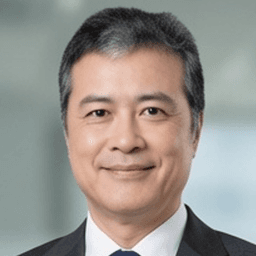
Japanese Reiki Shihan · traditional Usui Reiki, taught and certified in person
- ●Japanese Reiki Shihan (師範 / Reiki Master)
- ●Trained in the traditional Japanese Usui lineage
- ●20+ years of daily practice · teaches in person
- ●Former IT engineer & founder — grounded, no hype
I'm a Japanese Reiki Shihan who learned in the traditional Usui lineage and has practised every morning for over twenty years. My background is in IT and business, not the spiritual scene, so I write about Reiki plainly — what it is, how to practise it, and what it's honestly like — with no medical claims. Based in the Philippines, where I teach in person.
Enjoy this article?
Get honest, grounded writing on traditional Japanese Usui Reiki straight to your inbox.
Related Articles
Why I Became a Reiki Master
A Shihan on why he trained to teach, and the part he did not expect: beginners' questions exposed how much was habit.
8/2/2026

How a Successful Businessman First Introduced Me to Reiki
I did not come to Reiki through the spiritual world. How a credible businessman changed what I thought it was.
8/1/2026
Reiki Symbols: Why They Were Meant to Be Secret
What the secrecy was actually protecting, and why finding the symbols online changes far less than people assume.
7/29/2026
What Usui Shiki Ryoho Really Means
Usui Shiki Ryoho simply means the Usui-style method — a Japanese Reiki Shihan reads the name of traditional Reiki plainly, without hype or mysticism.
7/4/2026
Reiki's Round Trip: Leaving Japan and Coming Back
Reiki began in Japan, crossed to the West with Hawayo Takata, and returned home reshaped — a practice of connecting with energy that no one culture owns.
7/3/2026
Japanese vs Western Reiki: 7 Differences That Matter
Traditional Japanese and Western Reiki share one founder but differ in reiju, the Five Precepts, and intuition over fixed hand positions — not in raw power.
7/1/2026